


Inoculation is one of the most important metallurgical treatments used to control the solidification of cast iron. It can influence graphite nucleation, eutectic solidification, undercooling, and ultimately the microstructure and quality of the casting.
But how can a foundry determine whether an inoculation treatment is actually working?
One practical method is thermal analysis.
By comparing cooling curves before and after inoculation, a foundry can observe changes in characteristic temperatures and solidification behavior. Research on both gray and ductile cast iron has shown that inoculation can significantly influence cooling-curve parameters such as eutectic undercooling and recalescence.
The basic relationship can be summarized as:
Inoculation → More effective graphite nucleation → Changed solidification behavior → Changed cooling curve

What Is Inoculation in Cast Iron?
Inoculation is a metallurgical treatment in which a relatively small amount of an inoculating material is added to molten cast iron to promote favorable nucleation during solidification.
In many foundry processes, inoculants are based on ferrosilicon systems containing active elements such as calcium, barium, aluminum, zirconium, rare-earth elements, or other additions depending on the application.
The purpose is not simply to change the bulk chemical composition of the iron.
Instead, inoculation is primarily intended to influence how the iron solidifies.
A well-controlled inoculation treatment can promote graphite nucleation and reduce excessive eutectic undercooling. This can help reduce the tendency toward undesirable carbide formation and support a more favorable graphite structure.
The effectiveness of inoculation depends on many factors, including:
- Base iron chemistry
- Carbon equivalent
- Sulfur and residual elements
- Inoculant type
- Addition rate
- Addition method
- Treatment temperature
- Holding time after inoculation
- Pouring conditions
- Casting section size
Therefore, simply increasing the amount of inoculant does not automatically produce a better result.
Why Does Inoculation Change the Cooling Curve?
To understand the effect, it helps to think about what happens during solidification.
When molten cast iron cools, the temperature falls until solidification begins. During eutectic solidification, graphite and austenite form and release latent heat.
The resulting temperature-time curve contains characteristic features associated with these transformations.
If graphite nucleation is insufficient, the melt may need to undercool further before enough eutectic cells can nucleate.
Inoculation increases the number or effectiveness of available nucleation sites.
As a result, eutectic solidification can begin under more favorable conditions.
This changes characteristic points on the cooling curve.
Research on inoculated gray cast iron has specifically identified changes in eutectic undercooling and recalescence as important indicators of inoculation effects.
The Main Cooling-Curve Parameters Affected by Inoculation
Not every thermal-analysis system uses exactly the same parameters, but several cooling-curve characteristics are particularly useful when evaluating inoculation.
Eutectic Undercooling
Eutectic undercooling is one of the most important indicators.
In simple terms, it describes how far the melt cools below a reference equilibrium eutectic temperature before significant eutectic solidification develops.
A high degree of undercooling can indicate insufficient nucleation and a greater tendency toward undesirable solidification behavior.
Effective inoculation generally reduces excessive undercooling by providing more effective nucleation sites.
This is one of the reasons thermal analysis can be useful for evaluating inoculation potential.
Studies on gray cast iron have found that inoculation changes the degree of eutectic undercooling and related cooling-curve characteristics.
Minimum Eutectic Temperature
The minimum eutectic temperature is another important point on the cooling curve.
When nucleation is improved, the eutectic reaction can begin under different thermal conditions.
Consequently, the minimum eutectic temperature may shift.
The exact direction and magnitude of the change depend on:
- Iron chemistry
- Silicon content
- Inoculant chemistry
- Inoculation level
- Sampling conditions
- Thermal-analysis system
For this reason, foundries should not interpret one temperature value in isolation.
Trend monitoring is often more useful than a single measurement.
Recalescence
After the eutectic reaction begins, the release of latent heat can cause the temperature of the sample to rise temporarily.
This phenomenon is known as recalescence.
The cooling curve therefore reaches a minimum and then rises toward a higher temperature before continuing through solidification.
Inoculation can change the temperature and magnitude of this recalescence.
Studies on inoculated cast irons have identified recalescence-related parameters as useful indicators of the effect of inoculation.
For foundries, this provides another way to compare:
Before inoculation → After inoculation
What Does an Inoculated Cooling Curve Look Like?
The exact shape depends on the alloy and measurement system, so there is no single “perfect” cooling curve for every cast iron.
However, when comparing otherwise consistent samples, an effective inoculation treatment may produce measurable changes such as:
- Reduced excessive eutectic undercooling
- Increased eutectic-related temperatures
- Changed recalescence behavior
- Changed solidification characteristics
- Improved indicators of graphite nucleation
For ductile iron, published research has shown that inoculation can increase eutectic freezing temperatures and reduce undercooling, while also affecting graphite nodule formation.
The important point is that the curve should be interpreted as a set of related parameters, not simply by looking at whether the line “looks good.”
Gray Iron: How Inoculation Changes the Cooling Curve
In gray iron, inoculation is commonly used to improve graphite nucleation and control the solidification structure.
Insufficient inoculation can be associated with excessive undercooling and a greater risk of undesirable carbide formation, particularly under conditions where the melt has a low nucleation potential.
Thermal analysis can help identify these changes.
For example, studies of inoculated gray iron have found that parameters related to:
- Eutectic undercooling
- Recalescence
- Start of eutectic solidification
- End of solidification
can respond to inoculation treatment.
This makes cooling-curve analysis useful for monitoring the consistency of an inoculation process.
Ductile Iron: Why the Effect Can Be Even More Important
In ductile iron, graphite morphology is particularly important.
The number, size, and distribution of graphite nodules are closely related to the solidification process.
Inoculation promotes conditions favorable for graphite nucleation, and thermal analysis can provide information about changes in the solidification pattern.
Research on ductile cast iron has reported relationships between inoculation, cooling-curve parameters, and graphite characteristics such as nodule count and nodularity.
However, thermal analysis should not be interpreted as a direct replacement for metallographic examination.
A cooling curve can provide valuable process information, but final graphite morphology should still be verified using appropriate metallographic methods when required.
Why Inoculation Does Not Always Produce the Same Cooling Curve
One of the most important practical points is that inoculation effectiveness is not determined by inoculant addition alone.
Several variables can influence the result.
Inoculant Type
Different inoculant chemistries can produce different nucleation responses.
Addition Rate
Too little inoculant may provide insufficient nucleation sites.
More is not necessarily better, however. Excessive addition may introduce unnecessary costs or undesirable metallurgical effects.
Base Iron Condition
The same inoculant can behave differently in different base irons.
Carbon, silicon, sulfur, oxygen, residual elements, charge materials, and melting history can all affect inoculation response.
Treatment Temperature
Temperature affects dissolution and the effectiveness of the treatment.
Holding Time
The beneficial effect of inoculation can change with time after treatment.
This is often described as fading.
Pouring Conditions
The time between inoculation and pouring matters.
A sample taken immediately after treatment may not represent the same condition as metal poured after a longer delay.
Inoculation Fading: Why Timing Matters
One common problem in production is assuming that once iron has been inoculated, its condition will remain unchanged until pouring.
In reality, the effect of inoculation can decrease with time.
This means a foundry may obtain a very favorable cooling curve immediately after treatment but a different result later in the pouring sequence.
Therefore, when using thermal analysis to monitor inoculation, the sampling time must be controlled.
A useful production comparison might be:
Before inoculation → Immediately after inoculation → Near pouring
This can help the foundry understand how the melt changes during the production cycle.
Can Thermal Analysis Tell You If Inoculation Is Working?
Yes, but it should be used as a process-control tool rather than a single pass/fail test.
A better approach is to establish baseline data.
For example:
- Measure the untreated base iron.
- Record the cooling curve.
- Apply the normal inoculation treatment.
- Take another sample using the same procedure.
- Compare characteristic parameters.
- Repeat this over multiple heats.
- Correlate the thermal-analysis results with casting quality and metallography.
This creates a historical reference for the foundry.
Instead of asking:
“Is this cooling curve good?”
the better question becomes:
“Is this cooling curve consistent with the melt condition that has previously produced acceptable castings?”
That is much more useful for production control.
Keep the Sampling Conditions Consistent
This is especially important.
A cooling curve does not depend only on the metallurgy of the melt.
It can also be affected by the measurement conditions.
For example:
- Sample mass
- Pouring temperature
- Filling height
- Cup design
- Thermocouple position
- Sampling location
- Time between treatment and sampling
can influence the recorded curve.
Recent research specifically investigated the influence of sample mass and pouring temperature when using thermal analysis to estimate gray iron inoculation potential. The study found that some parameters were more robust than others under controlled variations, highlighting the importance of consistent sampling conditions.
Therefore:
If you want to compare cooling curves, keep the measurement conditions as consistent as possible.
Otherwise, a difference in the curve may come from the sampling procedure rather than the inoculation treatment.
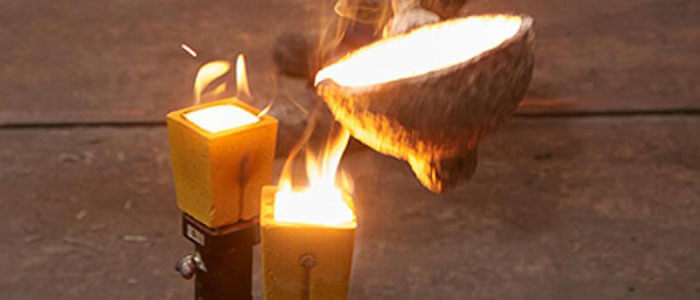
A Practical Thermal Analysis Workflow for Inoculation Control
A foundry can establish a simple monitoring procedure:
Step 1 — Analyze the Base Iron
Take a representative sample before inoculation.
Record the cooling curve and relevant parameters.
Step 2 — Apply the Inoculant
Use the established inoculant type, addition rate, and treatment method.
Step 3 — Control the Timing
Record the time between inoculation and thermal-analysis sampling.
Step 4 — Take a Second Sample
Use the same cup type and sampling procedure.
Step 5 — Compare the Curves
Focus on selected parameters such as:
- Eutectic undercooling
- Minimum eutectic temperature
- Recalescence
- End-of-solidification characteristics
Step 6 — Compare With Production Results
Connect the thermal-analysis data with:
- Metallography
- Hardness
- Chill tendency
- Casting defects
- Mechanical properties
- Other quality indicators
Step 7 — Establish a Process Window
After enough historical data are collected, the foundry can define a practical range for its own production process.
What Should You Do If the Cooling Curve Does Not Improve?
If inoculation produces little or no expected change, do not immediately assume that the inoculant itself is defective.
Check the entire process.
Check the base iron
Review:
- CE
- Silicon
- Sulfur
- Residual elements
- Charge materials
- Melting conditions
Check the inoculant
Review:
- Type
- Particle size
- Storage condition
- Addition rate
- Supplier consistency
Check the treatment
Review:
- Addition method
- Treatment temperature
- Mixing
- Treatment timing
- Fading time
Check the thermal-analysis procedure
Review:
- Cup type
- Cup condition
- Sample mass
- Pouring temperature
- Sampling location
- Thermocouple response
- Analyzer settings
This is important because a poor cooling curve does not automatically mean poor inoculant.
The entire measurement and metallurgical process needs to be considered.
Thermal Analysis + Spectrometer: A Better Way to Control Inoculation
Thermal analysis becomes even more useful when combined with chemical analysis.
The spectrometer can help answer:
Is the chemical composition within the required range?
Thermal analysis can help answer:
How is the melt behaving during solidification?
Together, they provide complementary information.
A practical control system may therefore look like:
Spectrometer → Chemistry
Thermal Analysis → Solidification Behavior
Metallography → Final Graphite Structure
Casting Inspection → Final Product Quality
This multi-level approach is more informative than relying on a single measurement.
The Role of the Thermal Analysis Cup
Because thermal analysis depends on cooling-curve measurement, the sampling cup is an important part of the measurement system.
The cup should provide a consistent testing environment and work correctly with the selected thermal-analysis system.
Factors such as:
- Cup design
- Thermocouple configuration
- Cup dimensions
- Material
- Analyzer compatibility
- Sample volume
can affect measurement consistency.
For this reason, foundries should avoid changing thermal-analysis cups casually when comparing historical data.
If the cup design or thermocouple configuration changes, the foundry should verify that the resulting measurements remain comparable.
For more information, see:
How to Choose a Thermal Analysis Cup for Cast Iron
SF-Foundry also supplies thermal-analysis cups for molten iron analysis. The appropriate product depends on the analyzer, application, measurement requirements, and sampling procedure.

The Most Important Takeaway
Inoculation does not simply “add silicon” to cast iron.
Its more important role is to influence the nucleation and solidification behavior of the melt.
Thermal analysis provides a practical way to observe this effect through changes in the cooling curve.
The most useful indicators may include:
- Eutectic undercooling
- Minimum eutectic temperature
- Recalescence
- Solidification characteristics
- End-of-solidification behavior
However, the interpretation must consider the complete process.
A cooling curve should be compared under consistent sampling conditions and correlated with chemical analysis, metallography, and actual casting performance.
For foundries using thermal analysis as part of production control, this turns the cooling curve from a simple temperature graph into a practical process-monitoring tool.
Frequently Asked Questions
Does inoculation increase the eutectic temperature of cast iron?
In many cast iron systems, effective inoculation can increase characteristic eutectic temperatures and reduce excessive undercooling. The exact response depends on the iron chemistry, inoculant, treatment method, and measurement conditions.
Does inoculation reduce undercooling?
Effective inoculation generally aims to reduce excessive eutectic undercooling by improving graphite nucleation. However, the measured response depends on the specific cast iron and inoculation system.
Can a cooling curve show whether inoculation is effective?
It can provide useful evidence of inoculation effectiveness. Changes in eutectic undercooling, recalescence, and other characteristic parameters can be monitored. For reliable process control, these measurements should be correlated with production and metallographic results.
Does more inoculant always produce better results?
No. Inoculation effectiveness depends on inoculant type, addition rate, base iron condition, treatment temperature, timing, and other factors. Increasing the addition rate does not automatically improve the casting.
How long does the inoculation effect last?
The effective period depends on the iron, inoculant, treatment method, temperature, and process conditions. The effect can decrease with time, so the interval between inoculation and pouring should be controlled.
Can thermal analysis replace metallography?
No. Thermal analysis is a process-control and solidification-analysis tool. Metallography remains important when the foundry needs to directly evaluate graphite morphology, matrix structure, or other microstructural characteristics.
Why should thermal-analysis cups be kept consistent?
Changes in cup design, sample mass, pouring conditions, or thermocouple configuration can affect cooling curves. Consistent sampling conditions make it easier to distinguish actual metallurgical changes from measurement variation.
Related Articles
- Thermal Analysis vs. Spectrometer for Cast Iron: Which Method Should You Use?
- Understanding Cooling Curves in Thermal Analysis of Cast Iron
- How to Measure Carbon Equivalent in Cast Iron
- What Is Carbon Equivalent (CE) in Cast Iron and Why Does It Matter?
- How to Choose a Thermal Analysis Cup for Cast Iron
- Thermal Analysis Cups (Sampling Cups): What Foundries Need to Know
If you need thermal-analysis cups for cast iron production, provide your thermal analyzer model, cup specification, cast iron grade, sampling method, and measurement requirements so the appropriate cup configuration can be evaluated.