



NSiC Riser Tubes / Stalk Tubes for Low-Pressure Aluminum Casting
SF-Foundry supplies nitride-bonded silicon carbide (NSiC) riser tubes for low-pressure aluminum casting applications. Also known as stalk tubes or riser pipes, these ceramic tubes provide a controlled passage for molten aluminum between the holding furnace and casting system.
Nitride-bonded silicon carbide is a silicon carbide-based ceramic material bonded with a silicon nitride phase. It combines the high-temperature characteristics of silicon carbide with the structural stability and thermal performance of the nitride bonding system.
SF-Foundry provides NSiC riser tubes according to the dimensions, connection requirements and installation conditions of different low-pressure casting systems.
- NSiC Riser Tubes for Low-Pressure Aluminum Casting
- Technical Data
In a low-pressure aluminum casting system, the riser tube is directly exposed to molten aluminum and repeated thermal cycling during production. The tube must maintain its shape and provide a stable passage for molten metal throughout the casting process.
NSiC is suitable for riser tube applications where resistance to high temperature, thermal cycling, molten-metal erosion and wear is required.
The final riser tube design should be selected according to the casting machine, holding furnace, aluminum alloy, operating conditions and existing tube configuration.
The following technical data applies to the specified NSiC material.
| Property | Value |
|---|---|
| Compressive Strength | >120 MPa |
| Flexural Strength | >40 MPa |
| Bulk Density | 2.4–2.65 g/cm³ |
| Porosity | 20%* |
| Thermal Conductivity at 1200°C | 15 W/m·K |
| Thermal Shock Resistance | >20 cycles* |
* Test conditions and applicable material grade should be confirmed for the specific riser tube configuration.
These values describe the material characteristics and should not be treated as guaranteed performance values for every finished riser tube. Final product dimensions, material grade and technical requirements should be confirmed according to the specific application.

What Is Nitride-Bonded Silicon Carbide?
Nitride-bonded silicon carbide (NSiC) is a ceramic material system based primarily on silicon carbide with a silicon nitride bonding phase.
The material is produced through processes including raw material mixing, forming, drying and nitridation. The resulting ceramic structure combines the characteristics of silicon carbide and silicon nitride for demanding high-temperature applications.
For aluminum foundries, NSiC can be used for components that require thermal stability, mechanical strength and resistance to molten-metal exposure, including riser tubes and other refractory components.
Key Material Characteristics of NSiC Riser Tubes
High Mechanical Strength
The specified NSiC material provides a compressive strength above 120 MPa and a flexural strength above 40 MPa.
These mechanical properties support the use of NSiC in refractory components that need to maintain structural integrity under demanding high-temperature operating conditions.
Thermal Shock Resistance
Riser tubes are repeatedly exposed to heating and cooling during aluminum casting. Resistance to thermal shock is therefore an important consideration when selecting the ceramic material.
The specified NSiC material demonstrates more than 20 thermal shock cycles under the 1000°C-to-20°C test condition.
Actual performance can vary according to material grade, tube geometry, installation method and operating conditions.
Resistance to Molten Metal Erosion and Corrosion
Nitride-bonded silicon carbide provides resistance to erosion and corrosion when exposed to molten metals, including aluminum, lead, zinc and copper.
For aluminum casting, this characteristic is important because the riser tube is directly exposed to molten aluminum during operation.
High-Temperature Stability
Silicon carbide is a high-temperature ceramic material, while the silicon nitride bonding system contributes to the stability of the ceramic structure.
This makes NSiC suitable for refractory components used in demanding high-temperature environments and repeated thermal cycles.
Wear Resistance
NSiC provides good wear resistance for refractory applications exposed to repeated molten-metal flow and thermal cycling.
This characteristic can help maintain the dimensional stability of ceramic passages during service.

NSiC Riser Tube Design and Customization
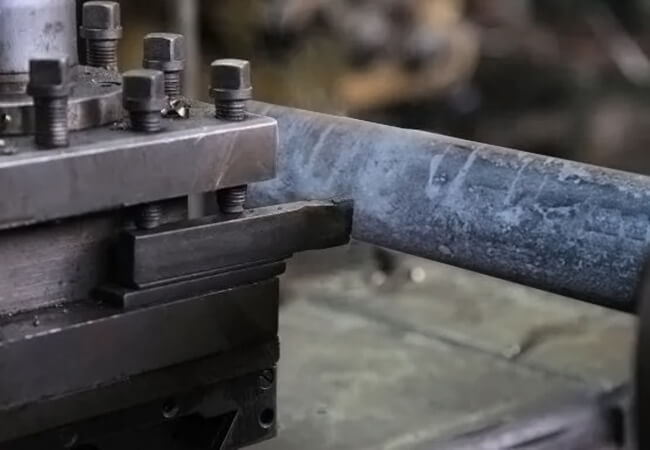
Riser tubes are equipment-specific ceramic components. Their dimensions and end configurations depend on the low-pressure casting machine and the connection between the holding furnace and casting system.
Customization may include:
- Outer diameter
- Inner diameter
- Tube length
- Wall thickness
- End geometry
- Connection dimensions
- Installation clearance
- Special-shaped configurations
For replacement applications, the existing riser tube, dimensional drawing or installation photos can help confirm the required configuration.
How Does an NSiC Riser Tube Work?
In a typical low-pressure aluminum casting system, the lower end of the riser tube is connected to the holding furnace and the upper end connects to the casting system.
When pressure is applied to the molten aluminum in the furnace, the metal rises through the ceramic tube and enters the mold.
The riser tube therefore provides a stable passage for molten aluminum between the furnace and casting system.
Because the tube is exposed to molten aluminum and repeated thermal cycling, both material selection and installation configuration are important for reliable operation.


Applications
NSiC riser tubes are intended for equipment-specific low-pressure aluminum casting applications.
Typical applications include:
- Low-pressure aluminum casting
- Aluminum alloy casting
- Automotive aluminum casting
- Aluminum wheel casting
- Automated low-pressure casting systems
- High-volume aluminum casting
- Other molten aluminum transfer applications
The actual suitability of an NSiC riser tube should be evaluated according to the casting machine, aluminum alloy, operating temperature, pressure cycle and installation configuration.
What Information Should You Send When Ordering?
Because riser tubes are closely related to the casting equipment, the more installation information you provide, the easier it is to identify the correct configuration.
Please provide any of the following information available:
- Existing riser tube dimensions
- Outer diameter and inner diameter
- Required tube length
- Wall thickness
- End or connection dimensions
- Casting machine model
- Holding furnace configuration
- Aluminum alloy being cast
- Operating temperature
- Photos of the existing installation
- Product drawings
- Existing riser tube sample
- Required quantity
If you are replacing an existing tube, a clear photo together with several key dimensions can help us understand the required design before quotation.

SF-FOUNDRY Related Aluminum Casting Components


Why Choose SF-Foundry?
SF-Foundry supplies ceramic and refractory components for aluminum foundry applications, including filtration, melt treatment, low-pressure metal delivery, furnace applications and temperature measurement.
For customers working with low-pressure aluminum casting systems, we can evaluate riser tube requirements together with other ceramic components used in the casting process.
Looking for nitride-bonded silicon carbide riser tubes for low-pressure aluminum casting?
Send us your riser tube drawing, dimensions, existing sample or equipment information. Our team can evaluate the required material, dimensions and configuration for your application.
Contact SF-Foundry for a customized NSiC riser tube solution.
Email: info@sf-foundry.com
WhatsApp: +8618636913699
An NSiC riser tube is a riser or stalk tube made from nitride-bonded silicon carbide. It is used to transfer molten aluminum from the holding furnace to the mold in low-pressure casting systems.
NSiC stands for Nitride-Bonded Silicon Carbide. It is a ceramic material system consisting primarily of silicon carbide with a silicon nitride-based bonding phase.
No. Although both materials are used for low-pressure aluminum casting, they are different ceramic material systems. NSiC combines silicon carbide with a silicon nitride bonding phase, while a silicon nitride riser tube is primarily based on silicon nitride ceramic.
Yes. Riser tube dimensions and connection details can be customized according to the customer’s equipment, drawing, sample and installation requirements.
In low-pressure aluminum casting, the terms riser tube and stalk tube are often used for the same or closely related molten-metal transfer component. Terminology can vary by equipment manufacturer and market, so the equipment configuration should be checked when ordering.
The choice depends on the casting equipment, operating conditions, molten aluminum environment, thermal cycling, required service performance and cost considerations. SF-Foundry can evaluate the application based on your existing tube dimensions, equipment information and operating conditions.
Yes. If you provide the existing tube, drawing, dimensions or installation photos, SF-Foundry can evaluate the required material and configuration for a replacement riser tube.