


If you have ever stood in front of a selection of zirconia ceramic foam filters wondering whether to choose 10 PPI or 30 PPI, you are not alone. PPI (pores per inch) is one of the most critical factors in molten metal filtration, yet there is no one-size-fits-all answer. The right PPI depends on your alloy type, casting geometry, quality requirements, and flow rate needs.
What Is PPI and Why Does It Matter?
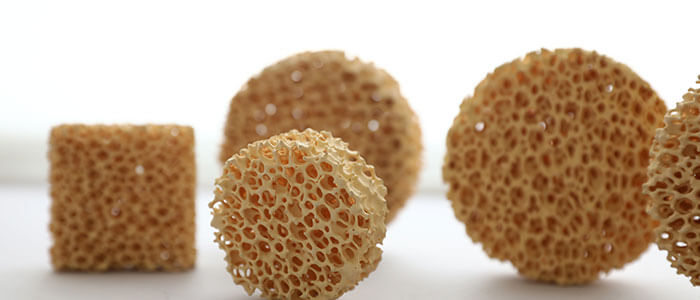
PPI stands for pores per inch. It measures the number of pores in a ceramic foam filter per linear inch. A 10 PPI filter has coarse, widely spaced pores; a 50 PPI filter has fine, tightly spaced pores.

The fundamental trade-off:
| PPI Range | Flow Rate | Filtration Efficiency | Best For |
|---|---|---|---|
| 10–20 PPI | High | Lower | Coarse filtration, high throughput |
| 30–50 PPI | Lower | Higher | Fine filtration, precision castings |
A 10 PPI filter will capture larger inclusions, typically >1–2 mm–. A 20 PPI filter captures medium-sized inclusions. A 30 PPI filter can capture finer inclusions, sometimes down to 0.1–0.3 mm depending on the filter quality.
Choosing the right PPI is about balancing cleanliness with flowability. Too coarse and inclusions pass through; too fine and the mold may not fill properly, leading to misruns or cold shuts.
Why Zirconia for Steel and High-Temperature Alloys?
Zirconia (ZrO₂) ceramic foam filters are specifically engineered for molten steel and high-temperature alloy casting. They offer:
-
Maximum working temperature of 1700°C
-
Open porosity of 75–85% for efficient filtration
-
Filtration efficiency ≥80% for inclusions <10 µm
-
Excellent thermal shock resistance (≥7 cycles at ΔT >1000°C)
-
Chemical inertness to Fe, Ni, Cr, and Co alloys
For most aluminum work, alumina filters in the 20–40 PPI range are standard. For cast iron, silicon carbide (SiC) filters are typically used. But for steel, stainless steel, alloy steel, and nickel-based superalloys, zirconia is the material of choice due to its superior high-temperature performance and chemical stability.
Quick Reference: PPI Selection by Alloy Type
The following table provides a cross-reference guide for selecting the appropriate PPI based on your specific alloy:
| Alloy Family | Pouring Temperature | Recommended PPI | Notes |
|---|---|---|---|
| Carbon Steel | 1550–1650°C | 10–15 | Coarse filtration, high flow required |
| Alloy Steel | 1550–1650°C | 10–20 | Slightly finer for inclusion control |
| Stainless Steel | 1550–1650°C | 10–20 | Similar to alloy steel |
| Steel – Thin Wall (<10mm) | 1550–1650°C | 15–20 | Balance flow and cleanliness |
| Ductile Iron | 1400–1500°C | 10 | Coarse filtration, high flow |
| Ductile Iron – Thin Wall (<8mm) | 1400–1500°C | 20–30 | Finer for better cleanliness |
| Gray Iron | 1350–1450°C | 20 | Medium filtration |
| Copper (Pure) | 1150–1200°C | 15–20 | Use zirconia filters |
| Brass | 950–1050°C | 15–20 | Zirconia or SiC |
| Bronze | 1050–1150°C | 15–20 | Zirconia recommended |
| Aluminum (Primary) | 680–750°C | 20–30 | Standard for most aluminum castings |
| Aluminum (Recycled/High Scrap) | 680–750°C | 30–40 | Higher inclusion load requires finer filtration |
| Aluminum – Thin Wall (<5mm) | 700–750°C | 20–30 | Use coarser PPI to ensure flow |
| Magnesium | 650–750°C | 20–30 | Similar to aluminum |
| Nickel Alloys (Inconel, etc.) | 1450–1550°C | 10–20 | Use zirconia filters |
Detailed Selection Guide by Alloy Category
Steel and Alloy Steels
Steel castings require zirconia filters due to the high pouring temperatures (1550–1650°C). The PPI selection depends on the specific steel grade and casting requirements:
-
Carbon steel → 10–15 PPI: The high flow rate needed for carbon steel castings favors coarser pore structures.
-
Alloy steel → 10–20 PPI: Slightly finer filtration helps control non-metallic inclusions common in alloyed grades.
-
Stainless steel → 10–20 PPI: Stainless steels benefit from inclusion removal to prevent surface pitting and improve corrosion resistance.
-
Thin-wall steel castings (<10mm) → 15–20 PPI: A finer filter is needed for cleanliness, but not so fine that it impedes flow into thin sections.
For steel casting applications, zirconia filters are typically available in pore densities ranging from 10 to 60 PPI. However, the most commonly used ranges for steel are 10–20 PPI.
Cast Iron
While silicon carbide filters are the traditional choice for cast iron, zirconia filters can also be used in certain high-temperature or high-purity iron applications.
-
Ductile iron → 10 PPI: The nodular graphite structure and typically thicker sections favor high flow rates with coarse filtration.
-
Gray iron → 20 PPI: Gray iron castings often benefit from medium-pore filters to remove sand inclusions and oxides while maintaining good flow.
Some sources indicate that 10 PPI filters are regularly used for ductile iron, while 20 PPI filters are used for gray iron. For thin-wall ductile iron castings (<8mm wall thickness), a finer 20–30 PPI filter may be considered.
Copper and Copper Alloys
Copper alloys have lower pouring temperatures than steel, allowing for finer filtration without the same risk of freeze-off:
-
Pure copper → 15–20 PPI
-
Brass → 15–20 PPI
-
Bronze → 15–20 PPI
Zirconia filters are recommended for bronze applications, while either zirconia or silicon carbide can be used for brass. Some references suggest 30 PPI filters can be used for copper alloy castings.
Aluminum Alloys
Although zirconia is typically not the first choice for aluminum (alumina filters are more common and cost-effective), the PPI principles still apply:
-
Primary aluminum (clean melt) → 20–30 PPI
-
Recycled aluminum (higher inclusion load) → 30–40 PPI
-
Thin-wall aluminum castings (<5mm) → 20–30 PPI (coarser to ensure flow)
The standard PPI range for aluminum filtration is typically 20–40 PPI.
Nickel-Based Superalloys (Inconel, Hastelloy, etc.)
Nickel alloys are cast at high temperatures (1450–1550°C) and require zirconia filters:
-
Recommended PPI → 10–20 PPI
-
Note: Superalloys often have stringent cleanliness requirements due to their use in aerospace and energy applications. The coarser PPI (10–15) is often preferred to maintain adequate flow, combined with proper gating system design.
Key Factors Beyond PPI
While PPI is critical, the following factors should also be considered when selecting a zirconia ceramic foam filter:
1. Filter Size and Thickness
The filter dimensions must match your gating system. Common sizes include 50×50×22 mm, 75×75×25 mm, and 100×100×25 mm. Filter thickness affects filtration capacity—thicker filters provide more surface area for inclusion capture but increase pressure drop.
2. Casting Weight
Larger castings require filters with sufficient filtration capacity. For a 10 PPI zirconia filter:
-
50×50×22 mm → filtration capacity of approximately 35–110 kg
-
75×75×25 mm → filtration capacity of approximately 85–255 kg
3. Pouring System Design
The filter should be properly seated in the gating system to prevent bypass flow. Common installation locations include the pouring cup, vertical runner, or horizontal runner.
4. Inclusion Level
Melt with higher inclusion loads may benefit from finer PPI or multiple filtration stages. For critical applications, dual-stage filtration (coarse PPI followed by fine PPI) can be considered.
Common Selection Mistakes to Avoid
Based on industry experience, over 80% of filtration-related casting defects can be traced to either PPI being too coarse (inclusions passing through) or PPI being too fine (misruns or cold shuts).
Pore Size Too Small
Using a filter with too fine a pore structure can cause the molten metal to freeze before filling the mold, especially in thin sections or with lower superheat.
Wrong Material
Using an alumina filter for steel casting is more than a poor choice—at 1500°C+, the alumina will not survive the thermal and chemical conditions–. Always match the filter material to your alloy.
Poor Installation
Gaps around the filter will allow metal to bypass it, rendering the filter ineffective. Ensure proper seating and sealing in the gating system.
Ignoring Casting Geometry
Thin-wall castings require careful PPI selection. What works for a 50 mm thick section may cause freeze-off in a 5 mm section.
Summary: Decision Flow for PPI Selection
-
Identify your alloy → Determine if zirconia is the appropriate material (steel, stainless steel, alloy steel, nickel alloys).
-
Check pouring temperature → Higher temperatures allow for slightly finer PPI without freeze-off risk.
-
Evaluate casting wall thickness → Thin sections require coarser PPI to maintain flow.
-
Assess quality requirements → Higher quality standards (aerospace, pressure-tight components) may justify finer PPI or dual-stage filtration.
-
Consider inclusion load → Recycled or less-clean melts benefit from finer filtration.
-
Match filter size to casting weight → Ensure sufficient filtration capacity.
Final Recommendations
| If You Are Casting… | Start With… | Then Consider… |
|---|---|---|
| Carbon steel, thick section | 10 PPI | 15 PPI for higher quality |
| Stainless steel | 10–15 PPI | 20 PPI for thin sections |
| Ductile iron | 10 PPI | 20 PPI for thin-wall applications |
| Gray iron | 20 PPI | 10–15 PPI for very large castings |
| Copper/bronze | 15–20 PPI | 30 PPI for high-cleanliness requirements |
| Nickel superalloys | 10–15 PPI | 20 PPI for smaller, precision castings |
This guide provides general recommendations based on industry practice. For specific applications, we recommend consulting with your filter supplier to confirm the optimal PPI, size, and material for your casting process.
Email: info@sf-foundry.com
WhatsApp: 8618636913699