


When selecting a ceramic foam filter for your foundry, the material choice is just as critical as the pore size (PPI). While both silicon carbide (SiC) and alumina (Al₂O₃) are widely used in metal casting filtration, they serve very different purposes. Alumina filters are the workhorse of non-ferrous metal filtration—particularly aluminum—while silicon carbide filters are engineered for the demanding temperatures and chemical aggressiveness of iron and copper casting.
Using an alumina filter in an iron or copper casting application is not just suboptimal—it can ruin an entire casting run. This article explains why silicon carbide is the superior choice for iron and copper casting and why alumina belongs in aluminum foundries.
At a Glance: The Core Difference
| Property | Alumina (Al₂O₃) | Silicon Carbide (SiC) |
|---|---|---|
| Maximum Service Temperature | ~1,100–1,200°C | ~1,500°C |
| Thermal Shock Resistance | Moderate | Excellent |
| Thermal Conductivity | Low | High (120–180 W/m·K) |
| Compressive Strength | ~2,750 MPa | ~3,900 MPa |
| Chemical Stability | Good with aluminum | Excellent against iron/cast iron |
| Relative Cost | Low | Medium |
| Primary Applications | Aluminum, Magnesium alloys | Gray iron, Ductile iron, Copper alloys |
Temperature Resistance: The Fundamental Difference
Iron casting typically requires pouring temperatures of 1,350–1,450°C. Copper alloys are poured at similarly high temperatures, often around 1,200–1,500°C depending on the specific alloy.
Silicon carbide filters are designed for continuous operation at 1,500°C and can briefly withstand up to 1,560°C. Some SiC formulations maintain mechanical strength up to 1,530°C, with the best grades handling up to 1,650°C. This provides a comfortable safety margin above iron and copper pouring temperatures.
Alumina filters, by contrast, top out around 1,100–1,200°C. Standard alumina filters are rated for continuous service up to 1,100–1,200°C–. At iron pouring temperatures of 1,350°C+, you are already 400–500°C past the material’s safe limit. The result? The filter cracks, spalls, breaks apart—and those fragments become new inclusions inside your casting.
The verdict: For iron and copper casting temperatures, alumina is simply not rated for the job. SiC is.
Thermal Shock Resistance: Surviving the First Contact
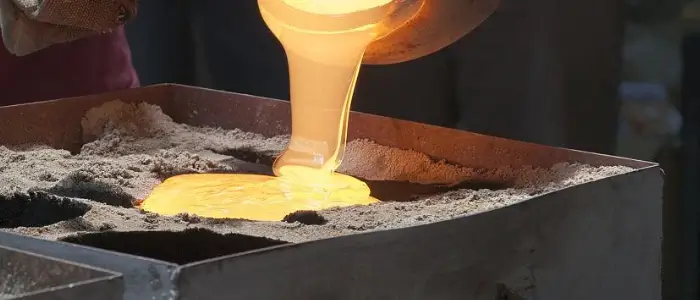
Iron and copper pouring is not a gentle, gradual process. The first metal hits the filter in a sudden rush—hot and fast. That temperature difference can crack a filter that isn’t designed for it.
Silicon carbide has excellent thermal shock resistance. Due to its low thermal expansion coefficient, SiC possesses among the highest calculated thermal shock resistance of any ceramic foam material–. Tests show SiC filters withstand rapid temperature changes above 1,200°C and can endure multiple thermal cycles—for example, up to six cycles at 1,100°C.
Alumina has only moderate thermal shock resistance and requires careful preheating to avoid failure. Thermal shock and softening can compromise the integrity of an alumina filter, potentially inducing contamination into the melt.
The verdict: In high-temperature iron and copper casting, thermal shock is a constant threat. SiC handles it; alumina struggles.
Thermal Conductivity: Keeping the Metal Flowing
This is where SiC truly separates itself from alumina.
Silicon carbide is highly thermally conductive—at 120–180 W/m·K, SiC moves heat fast. The filter primes quickly once molten metal hits it, with less hesitation at the pour. This high conductivity keeps the metal stream temperature stable through the filter body, cutting the risk of early solidification blocking the pore network mid-cast.
Silicon carbide is thermally conductive, whereas most other ceramic foam filters (including alumina) are insulating oxide ceramics.
Alumina, by contrast, has low thermal conductivity. When a high-temperature iron or copper melt hits an alumina filter, the temperature differential can cause localized overheating and thermal stress—conditions that lead to cracking and filter failure.
The verdict: SiC’s thermal conductivity promotes stable flow and reduces freezing risk. Alumina’s insulating nature works against it in high-temperature applications.
Chemical Stability: Resisting Aggressive Melts
Iron and copper melts are chemically aggressive. Slag, dross, and various oxides will attack a filter that isn’t resistant.
Silicon carbide has excellent corrosion resistance to molten iron, copper, and their by-products. It doesn’t degrade, doesn’t shed particles into your casting, and doesn’t react with the metal. SiC filters are specifically designed to withstand attack and corrosion from molten iron liquid. They resist chemical attack from molten iron and its alloys, effectively removing inclusions and reducing trapped gas.
Alumina, while chemically stable with aluminum alloys, is not suitable for iron, steel, or high-temperature copper alloys. It can react with the aggressive components of iron and copper melts, leading to filter degradation and contamination.
The verdict: SiC is chemically matched to iron and copper. Alumina is not.
Mechanical Strength: Withstanding the Flow
Filters must resist erosion and withstand metal flow pressure. The mechanical demands of iron and copper casting—with their higher density and flow force—are significantly greater than aluminum.
Silicon carbide boasts compressive strength of approximately 3,900 MPa. Flexural strength reaches 490–600 MPa. In multi-shift operations with continuous pours, SiC filters don’t deform, don’t creep, and hold their shape under load, shift after shift.
Alumina maxes out at approximately 2,750 MPa compressive strength—a significant gap. One drawback of highly porous foam filters is their mechanical properties, mainly crushing strength. Poor mechanical properties can reduce the continuity of metallurgical processes and filtration efficiency by introducing debris from foams into melts.
The verdict: SiC is substantially stronger and more durable under the mechanical demands of iron and copper casting.

Application-Specific Comparison
For Iron Casting (Gray Iron, Ductile Iron, Malleable Iron)
Silicon carbide is the established industry standard. SiC ceramic foam filters are specifically designed to improve the quality of nodular, grey, and malleable iron castings. They withstand the high temperatures required for molten iron casting, up to 2,800°F (1,450°C). SiC filters provide a smooth laminar flow of molten metal and prevent the ingress of slag, magnesium reaction products, inoculant residues, or sand grains into the mold cavity.
Alumina is simply not rated for iron casting temperatures. Using an alumina filter in iron casting means operating hundreds of degrees above its safe limit—a recipe for filter failure and casting defects.
For Copper Alloy Casting (Copper, Bronze, Brass)
Silicon carbide is the recommended material for copper alloy casting. SiC filters withstand the use temperature of approximately 1,500°C required for copper alloys–. They effectively remove oxidized mixtures and other non-metallic mixtures from copper melts, reducing turbulence and purifying the molten metal.
Alumina may be suitable for low-temperature copper alloys below 1,100°C, but for the vast majority of copper, bronze, and brass casting—which requires higher temperatures—alumina is insufficient.
For Aluminum Casting (The Exception)
It’s worth noting that for aluminum casting, alumina is actually the preferred and most cost-effective choice. Alumina filters are chemically inert with aluminum alloys, match the temperature requirements perfectly (aluminum is poured at ~700–800°C), and cost significantly less.
The key takeaway: Use the right tool for the right job. Alumina for aluminum. Silicon carbide for iron and copper.
Comparative Summary
| Casting Application | Recommended Filter | Why |
|---|---|---|
| Gray Iron | SiC | Withstands 1,450°C+; resists slag and chemical attack |
| Ductile Iron | SiC | Handles thermal shock; prevents Mg reaction product ingress |
| Copper/Brass/Bronze | SiC | Rated for ~1,500°C; resists copper melt corrosion |
| Aluminum | Alumina | Cost-effective; chemically inert; matches temperature range |
| Steel | Zirconia | Highest temperature rating (~1,700°C) |
Conclusion
Choosing between silicon carbide and alumina ceramic foam filters comes down to one question: what metal are you pouring?
For iron and copper casting, silicon carbide is the clear winner. It withstands the higher temperatures (1,500°C+ vs. alumina’s 1,100–1,200°C limit), survives thermal shock that would crack alumina, resists chemical attack from aggressive melts, and offers superior mechanical strength. SiC filters are purpose-built for these demanding applications.
For aluminum casting, alumina is the more economical and perfectly adequate choice.
The wrong choice has consequences: Using an alumina filter in iron or copper casting means operating far beyond its safe temperature limit. The filter cracks, spalls, and breaks apart—creating new inclusions in your casting. Instead of solving your quality problems, you’ve created new ones.
Make the right choice: Choose silicon carbide for iron and copper. Choose alumina for aluminum. And if you’re casting steel, consider zirconia.
About SF-Foundry
SF-Foundry specializes in manufacturing high-quality silicon carbide ceramic foam filters designed for ductile iron, grey iron, and non-ferrous alloy castings. With excellent resistance to attack and corrosion from molten iron and copper liquids, SF-Foundry SiC filters effectively remove inclusions, reduce trapped gas, provide laminar flow, and deliver significantly cleaner metal.
Contact SF-Foundry for custom SiC foam filter solutions:
WhatsApp: 8618636913699
Email: info@sf-foundry.com