


A ceramic riser tube is a component used in certain aluminum casting systems to provide a controlled passage or connection for molten aluminum.
Because riser tubes are installed as part of specific casting equipment, their requirements can vary considerably from one application to another. Tube dimensions, installation method, operating conditions, and equipment configuration all need to be considered when selecting a suitable component.
For customers sourcing a replacement or customized ceramic riser tube, understanding its application is an important first step.
What Is a Ceramic Riser Tube?
A ceramic riser tube is a tubular ceramic component used in relevant molten-aluminum handling or casting equipment.
Its exact function depends on the equipment and process in which it is installed.
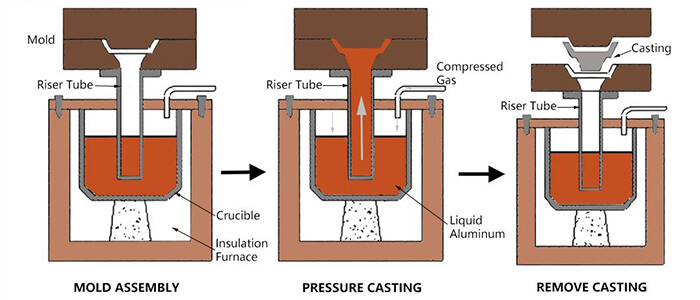
A ceramic riser tube may be required where a component needs to:
- Provide a defined passage for molten aluminum
- Connect different parts of a casting system
- Operate in an environment involving molten aluminum
- Maintain a specified internal and external geometry
- Fit a particular piece of casting equipment
The exact design should therefore be determined according to the actual application rather than by tube dimensions alone.
Where Are Ceramic Riser Tubes Used?
Ceramic riser tubes are generally associated with aluminum casting equipment where a ceramic tube is required for molten-metal handling.
The actual installation can vary depending on:
- Equipment design
- Casting process
- Tube dimensions
- Installation position
- Connection configuration
- Production requirements
For this reason, customers should provide equipment information when requesting a quotation for a riser tube.
A photograph of the installation position can be particularly useful when the exact application is difficult to describe.
Why Is the Riser Tube Geometry Important?
A ceramic riser tube is not simply a generic ceramic pipe.
Its dimensions must correspond to the equipment in which it is installed.
Important dimensions may include:
- Outside diameter
- Inside diameter
- Overall length
- Wall thickness
- End configuration
- Taper
- Mounting dimensions
- Connection dimensions
For replacement components, even a relatively small dimensional difference may affect installation.
This is why a technical drawing or an accurate measurement of the existing component is strongly recommended.

What Should You Consider When Selecting a Ceramic Riser Tube?
Several factors should be reviewed before ordering.
1. Component Dimensions
Start with the basic dimensions:
Outside diameter × inside diameter × length
If the tube has additional features, include those dimensions as well.
If you have a technical drawing, send it to the supplier instead of relying only on a written description.
2. Installation Method
Explain how the tube is installed.
For example:
- How is the tube supported?
- How does it connect with other components?
- Is it inserted into another part?
- Are there specific mounting dimensions?
- Does the tube need to be replaced regularly?
This information helps the supplier understand the actual mechanical requirements.
3. Equipment Information
Provide the equipment manufacturer and model if available.
Also provide:
- Installation position
- Existing component specifications
- Equipment drawings
- Relevant connection dimensions
Equipment information is particularly important for customized replacement tubes.
4. Aluminum Casting Conditions
Provide the application information you know, such as:
- Aluminum alloy
- Operating temperature
- Production cycle
- Heating and cooling conditions
- Approximate contact conditions with molten aluminum
You do not need to provide information that is unavailable. However, any relevant process information can help the supplier evaluate the requirement.
Aluminum Titanate Riser Tubes for Aluminum Casting
SF-Foundry supplies aluminum titanate riser tubes for relevant aluminum casting applications.
When ordering an aluminum titanate riser tube, customers should provide the required dimensions and application information whenever possible.
For a customized requirement, useful information includes:
- Technical drawing
- Outside diameter
- Inside diameter
- Length
- Wall thickness
- Equipment information
- Installation position
- Required quantity
If the component is a replacement for an existing tube, photos and measurements of the current part are also useful.
How Do You Know If You Need a Customized Riser Tube?
A standard specification may not always match the equipment you are using.
You may need a customized ceramic riser tube if:
- Your equipment uses a non-standard size.
- The existing tube has a special end configuration.
- The required length is different from standard dimensions.
- The tube has specific mounting features.
- You are replacing a discontinued component.
- Your equipment requires a specific dimensional tolerance.
In these situations, send the supplier the existing component or a technical drawing.
Customization should be based on actual equipment requirements rather than simply changing dimensions without considering the installation.
Replacing an Existing Ceramic Riser Tube
If you are looking for a replacement, you can make the quotation process easier by providing information about the current tube.
Ideally, send:
1. A photo of the complete tube
This shows the overall shape.
2. Photos of both ends
These can show connection and end configurations.
3. Basic dimensions
Measure the outer diameter, inner diameter, and length.
4. Installation photos
Show where the tube is installed.
5. Equipment information
Provide the machine manufacturer and model if available.
6. The reason for replacement
Tell the supplier whether you are replacing the tube because of damage, availability, dimensional requirements, or another reason.
If the original drawing is available, send it with the inquiry.
What Problems Can Occur With the Wrong Riser Tube?
A ceramic riser tube must match the application and equipment.
An incorrect specification may result in problems such as:
- The tube cannot be installed correctly.
- The component does not fit the existing equipment.
- Connections do not match.
- The internal passage does not meet the required dimensions.
- Replacement takes longer because additional modification is required.
For this reason, it is better to confirm the actual dimensions and application before ordering rather than selecting a tube based only on a general product description.
Ceramic Riser Tube Inquiry Checklist
Before sending an inquiry, prepare the following information:
| Information | Importance |
|---|---|
| Tube type | Essential |
| Outside diameter | Essential |
| Inside diameter | Essential |
| Length | Essential |
| Wall thickness | If applicable |
| End configuration | Important |
| Installation dimensions | Important |
| Equipment model | Recommended |
| Aluminum alloy | Recommended |
| Operating conditions | Recommended |
| Existing component photos | Very useful |
| Technical drawing | Very useful |
| Required quantity | Essential |
| Delivery destination | Recommended |
If you do not have every item on the list, do not wait until everything is available.
Send the information you already have and ask the supplier what additional details are required.
Ceramic Riser Tube vs. Other Ceramic Components
It is important to distinguish a riser tube from other ceramic components used in aluminum casting.
For example:
- A riser tube is a tubular component used according to the requirements of the relevant equipment.
- A dosing tube is used in a molten-aluminum dosing application.
- A sprue bushing is designed for a different installation and connection requirement.
Although these components may all involve molten aluminum, they should not be treated as interchangeable products.
The correct component should be selected according to its function and installation position.
Aluminum Casting Ceramic Components from SF-Foundry
SF-Foundry provides ceramic components for aluminum casting applications, including:
For customized requirements, customers can provide technical drawings, dimensions, equipment information, photos of existing components, and application details.
This information helps us understand the actual requirement before preparing a quotation.
Request a Customized Ceramic Riser Tube
Looking for a ceramic riser tube for aluminum casting?
Send us your drawing, dimensions, photos, equipment information, required quantity, and application details.
If you are replacing an existing riser tube and do not have a technical drawing, photos and measurements of the current component are also welcome.
Contact SF-Foundry to discuss your aluminum casting ceramic riser tube requirement and request a quotation.
Email: info@sf-foundry.com
WhatsApp: +8618636913699