


Aluminum build-up on a pouring ladle can increase cleaning requirements and make routine maintenance more difficult. For foundries using automatic pouring equipment, recurring residue is worth investigating because it may indicate changes in surface condition, operating practices, or other process factors.
However, aluminum build-up does not always have a single cause. Before changing the ladle or its operating procedure, it is important to identify where the residue forms and review the conditions under which it occurs.
This guide outlines practical checks for foundries using automatic pouring ladles for aluminum casting.
Identify Where Aluminum Build-Up Occurs
Start by documenting the location and appearance of the residue.
Check whether the accumulation is concentrated around:
- The inner wall of the ladle
- The pouring lip
- Areas near the bottom of the ladle
- Localized areas where the surface appears different from the surrounding material
Record whether the problem appeared gradually or began after a change in production conditions.
Photographs taken during scheduled inspections can help operators compare the surface condition over time. Follow site safety procedures when inspecting equipment that has handled molten aluminum. Never touch or clean a hot ladle unless the approved procedure specifically permits it.
Inspect the Ladle Surface and Coating
The surface condition is an important part of aluminum-ladle performance.
Some ceramic-fiber composite pouring ladles use a boron nitride (BN) coating designed to reduce aluminum adhesion. If the coating becomes damaged or deteriorates, the affected area may behave differently from the original surface.
During an inspection, look for:
- Visible peeling or flaking
- Uneven surface wear
- Exposed areas that differ from the original finish
- Localized damage near the pouring lip or inner wall
These observations do not, by themselves, establish the cause of aluminum build-up. Ask the supplier to assess whether the surface condition is acceptable and whether any corrective action is appropriate.
Do not apply an additional coating or repair material without confirming compatibility with the ladle’s construction and the manufacturer’s instructions.
Review the Operating Conditions
Operating conditions should be reviewed alongside the ladle’s physical condition.
Useful information includes:
- Actual molten aluminum temperature
- Pouring frequency and production cycle
- Aluminum alloy being handled
- Duration of operation
- Changes in the pouring sequence
- Any recent changes in equipment settings
Compare the current conditions with the established operating procedure and the supplier’s specifications.
Avoid assuming that increasing or decreasing the temperature will solve the problem. Temperature changes can affect the wider casting process and should only be made within approved operating limits.
Check Cleaning and Handling Practices
Cleaning methods should be suitable for the ladle material and surface coating.
Aggressive scraping, unsuitable tools, or unapproved chemical treatments may damage a surface or coating that is intended to resist aluminum adhesion.
Review whether the current procedure specifies:
- When cleaning should take place
- Which tools are permitted
- How residual aluminum should be handled
- How the ladle should be inspected after cleaning
- Which conditions require the equipment to be removed from service
Do not attempt to remove solidified aluminum using improvised methods. Follow your foundry’s approved procedures and the supplier’s instructions.
Determine Whether the Problem Is Recurring
A one-time accumulation and a recurring problem may require different investigations.
Keep a simple record of:
| Item to record | Why it helps |
|---|---|
| Date and operating shift | Identifies when the problem occurs |
| Location of build-up | Helps compare affected areas |
| Ladle operating history | Provides context for surface changes |
| Process conditions | Helps identify changes in operation |
| Cleaning performed | Documents maintenance actions |
| Surface condition after cleaning | Helps track deterioration over time |
If the build-up repeatedly returns in the same location, provide these records to the equipment or ladle supplier.
The purpose is not to assume that the ladle has failed, but to establish whether the issue is related to surface condition, operating practices, or another part of the process.
When Should You Contact the Pouring Ladle Supplier?
Request a technical assessment if:
- Aluminum build-up continues despite following the approved cleaning procedure.
- The coating shows visible damage or deterioration.
- The pouring lip or another critical area has changed noticeably.
- The residue appears to affect normal pouring operation.
- Cracks or other structural damage are observed.
If structural integrity or safe operation is in doubt, follow your site’s procedures for removing the equipment from service.
When contacting the supplier, include photographs, the ladle model, operating conditions, the location of the build-up, and a description of when the problem started. This information is more useful than simply reporting that aluminum sticks to the ladle.
Choosing a Suitable Automatic Pouring Ladle
For aluminum casting applications, ladle material, surface design, equipment compatibility, and operating conditions all need to be considered.
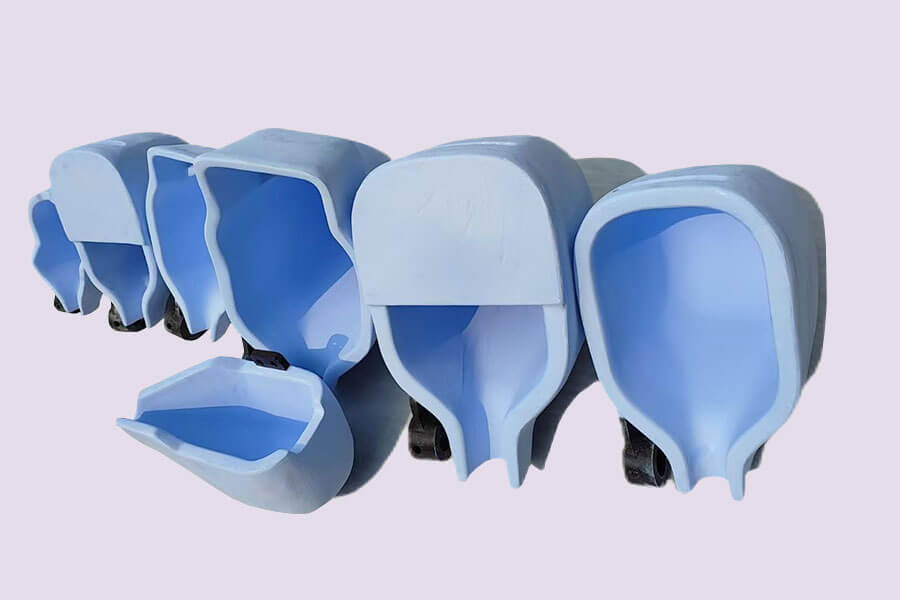
SF-Foundry supplies automatic pouring ladles made from ceramic-fiber composite material, with a boron nitride (BN) surface coating specified for reducing aluminum adhesion.
When evaluating a replacement or customized ladle, confirm:
- Required capacity
- Mounting bracket and equipment interface
- Main dimensions and pouring geometry
- Actual operating temperature
- Production cycle and usage conditions
- Material and coating specifications
The suitability of a particular design should be confirmed against the requirements of the intended application.

Automatic Pouring Ladles from SF-Foundry
SF-Foundry supplies automatic pouring ladles for aluminum and aluminum alloy casting applications. Customization options listed for the product include ladle capacity and bracket type.
If your foundry is experiencing recurring aluminum build-up, send us photographs of the affected areas, the ladle’s main dimensions, and a description of the operating conditions.
Our team can review the information and discuss whether a product assessment or customized replacement should be considered.
Request a Quote
Product page: https://sf-foundry.com/auto-pour-ladle/
Email: info@sf-foundry.com
Frequently Asked Questions
Does aluminum build-up always mean the pouring ladle needs replacement?
No. The cause should be investigated first. Surface condition, operating practices, and cleaning procedures may all need to be reviewed before deciding whether replacement is appropriate.
Can a BN coating help reduce aluminum adhesion?
A boron nitride coating is used on SF-Foundry’s automatic pouring ladle to help reduce aluminum adhesion. Actual performance depends on the product specification and operating conditions.
Should I change the molten aluminum temperature to prevent build-up?
Do not change the temperature solely on the basis of aluminum build-up. Review the established operating procedure and consult the relevant technical personnel before making process adjustments.
What information should I send when reporting aluminum build-up?
Provide photographs, the ladle model or dimensions, the location of the residue, operating conditions, cleaning history, and details of any recent process changes.
Can SF-Foundry supply a replacement automatic pouring ladle?
SF-Foundry lists automatic pouring ladles for aluminum casting and offers customization options including capacity and bracket type. Share your equipment details and operating requirements so suitability can be reviewed.