


Ceramic tubes are used in a range of molten aluminum handling and aluminum casting applications. Depending on the equipment, a ceramic tube may serve as a riser tube, dosing tube, sprue bushing, thermocouple protection tube, or another customized component.
Choosing the right ceramic tube is not simply a matter of selecting a ceramic material. The application, molten aluminum conditions, dimensions, installation method, thermal cycling, and equipment design all need to be considered together.
This guide explains the main factors to consider when selecting a ceramic tube for molten aluminum applications.

Start With the Application
The first question is not necessarily “Which ceramic material should I choose?”
It is:
Where will the ceramic tube be used?
Different components have different functions and operating conditions.
For example, a ceramic tube may be used as:
- An aluminum titanate riser tube
- An aluminum titanate dosing tube
- An aluminum titanate sprue bushing
- A thermocouple protection tube
- A customized molten aluminum transfer component
The required material and dimensions may differ depending on the function of the component.
Therefore, the supplier should understand the application before recommending a material or design.
Consider the Molten Aluminum Contact Conditions
A ceramic component that comes into direct contact with molten aluminum needs to be evaluated according to the actual operating environment.
Important information may include:
- Aluminum alloy being processed
- Working temperature
- Contact time
- Frequency of molten aluminum contact
- Molten metal flow conditions
- Heating and cooling cycles
- Continuous or intermittent operation
These factors can affect the suitability of a ceramic tube for a particular application.
If you are replacing an existing component, information about the original component and its operating history can also be useful.
Choose the Ceramic Material According to the Application
Different ceramic materials have different properties.
For molten aluminum applications, aluminum titanate is one material that may be considered for selected ceramic components.
However, it should not be assumed that aluminum titanate is automatically suitable for every aluminum casting application.
Material selection should consider:
- Thermal properties
- Thermal shock requirements
- Operating temperature
- Molten metal contact
- Equipment design
- Expected operating conditions
- Component geometry
For this reason, a supplier should evaluate the actual application rather than selecting a material based only on the product name.
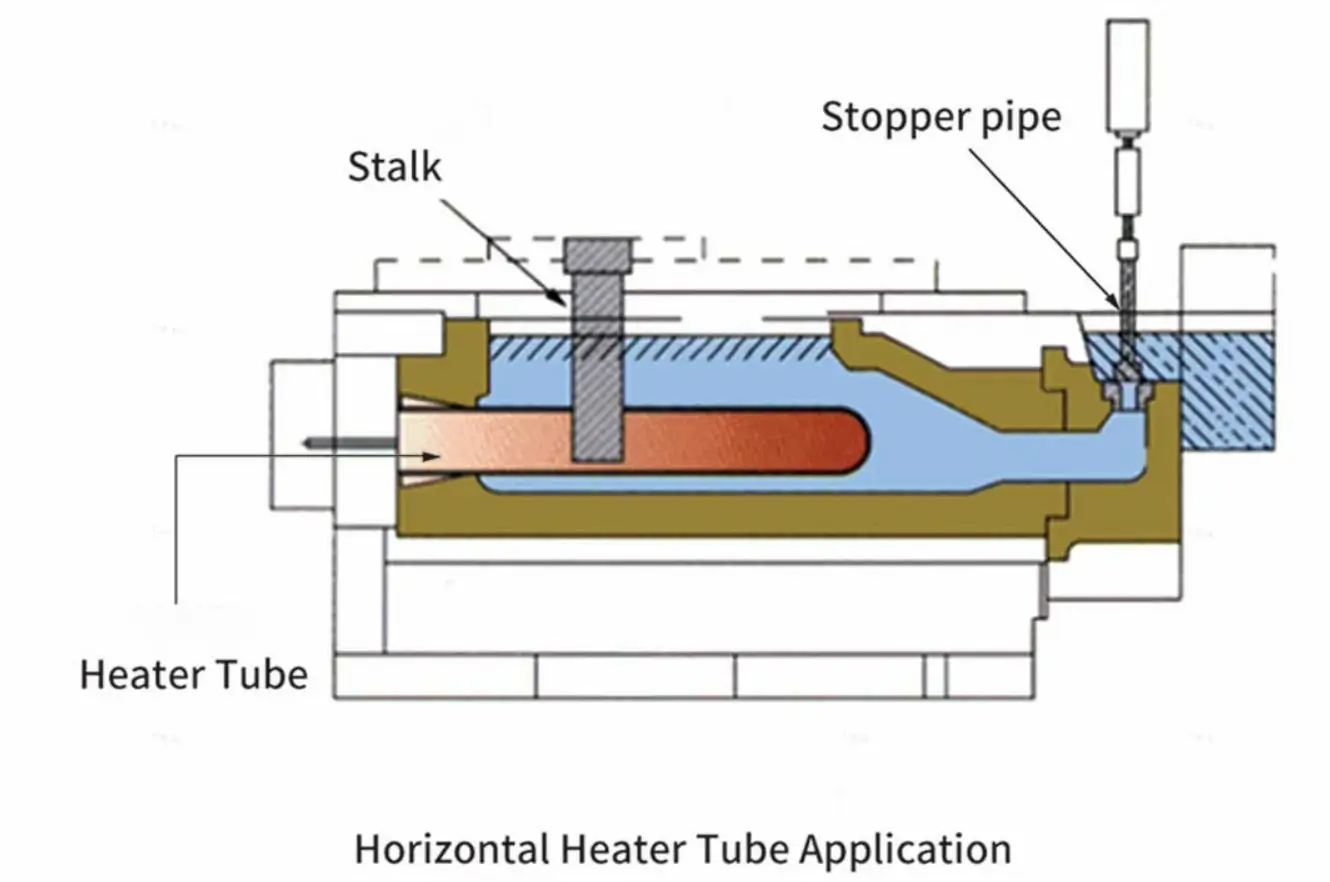
Check the Tube Dimensions Carefully
Even when the ceramic material is suitable, the component may not work correctly if the dimensions do not match the equipment.
Depending on the application, important dimensions may include:
- Outside diameter
- Inside diameter
- Overall length
- Wall thickness
- Connection dimensions
- End configuration
- Installation dimensions
For replacement components, it is recommended to compare the new component with the original part before production.
A technical drawing is especially useful for customized ceramic tubes.
Consider Thermal Cycling
Ceramic components used with molten aluminum may experience repeated temperature changes.
For example, a component may be exposed to:
Heating → molten aluminum contact → cooling → reheating
The actual thermal cycle depends on the equipment and production process.
Therefore, when selecting a ceramic tube, consider not only the maximum operating temperature but also how frequently the component is heated and cooled.
Thermal shock resistance and thermal expansion characteristics may become important factors depending on the application.
Consider the Installation Method
The way a ceramic tube is installed can also affect the product design.
Before ordering, check:
- How the tube is positioned
- How it is connected to other components
- Whether sealing is required
- Whether the tube is fixed or replaceable
- Available installation space
- Connection dimensions
- Whether the component needs a special end configuration
This information is particularly important for customized riser tubes, dosing tubes, and sprue bushings.
A ceramic tube may be technically suitable in terms of material but still require a different design to fit the equipment.
Consider the Internal Diameter
For tubes that form part of a molten aluminum passage, the internal diameter is an important design dimension.
The required internal diameter depends on the equipment and application.
It may affect the available flow passage and must therefore be matched to the original equipment design.
When replacing an existing ceramic tube, do not provide only the outside diameter.
The supplier may also need:
- Inside diameter
- Wall thickness
- Tube length
- Connection dimensions
- Internal geometry
Providing complete dimensional information can reduce the risk of producing an incompatible replacement component.
Standard Ceramic Tube or Customized Component?
Some applications may use standard components, while others require customized ceramic tubes.
A customized component may be more appropriate when:
- The equipment uses a special tube size
- The original component has a non-standard geometry
- The installation space is limited
- A special connection is required
- You are replacing an existing OEM component
- The equipment manufacturer specifies particular dimensions
For customized orders, a technical drawing is the preferred starting point.
However, if a drawing is not available, photographs and measurements of the existing component can also help with an initial evaluation.
Match the Ceramic Tube to the Equipment
The same type of ceramic tube may be used differently in different casting systems.
Therefore, when requesting a quotation, it is useful to provide equipment information whenever possible.
Useful information may include:
- Equipment type
- Equipment manufacturer
- Equipment model
- Installation location
- Photos of the installation position
- Existing component drawings
- Existing component dimensions
This allows the supplier to understand the relationship between the ceramic tube and the equipment.
What Information Should You Send to a Ceramic Tube Supplier?
If you want to purchase a customized ceramic tube for molten aluminum, try to provide the following information.
Product Information
- Product name or intended function
- Drawing
- Outside diameter
- Inside diameter
- Length
- Wall thickness
- Connection dimensions
Application Information
- Aluminum casting application
- Equipment type
- Aluminum alloy
- Working temperature
- Operating cycle
- Molten aluminum contact conditions
Purchasing Information
- Required quantity
- Target delivery schedule
- Existing supplier specifications, if available
- Photos of the existing component
The more complete the information, the easier it is for the supplier to evaluate the requirement.
Common Mistakes When Selecting a Ceramic Tube
Several common mistakes can make ceramic component sourcing more difficult.
Choosing Only by Material Name
“Aluminum titanate” does not automatically mean that a component is suitable for every molten aluminum application.
The material must be considered together with the actual operating conditions.
Providing Only One Dimension
Providing only the outside diameter is usually insufficient for a customized ceramic tube.
The inside diameter, length, wall thickness, and connection dimensions may also be important.
Ignoring Thermal Cycling
Two applications may have similar working temperatures but very different heating and cooling cycles.
Thermal cycling should therefore be considered during product selection.
Ordering Without Checking the Installation
A ceramic tube may have the correct material and basic dimensions but still be unsuitable if the connection or installation configuration is different.
Providing installation information can help prevent this problem.
Which Ceramic Tube Do You Need?
The correct ceramic component depends on its function.
For example:
Riser Tube
Used in selected molten aluminum transfer and aluminum casting systems.
[Aluminum Titanate Riser Tube]
Dosing Tube
Used in selected aluminum dosing and molten metal handling equipment.
[Aluminum Titanate Dosing Tube]
Sprue Bushing
Used in selected low-pressure aluminum casting systems.
[Aluminum Titanate Sprue Bushing]
Thermocouple Protection Tube
Used to protect a thermocouple in selected high-temperature applications.
[Thermocouple Protection Tube]
If you are unsure which ceramic component is appropriate for your equipment, providing the application and existing component information is a good starting point.
Customized Ceramic Tubes for Molten Aluminum
SF-Foundry supplies customized ceramic components for selected aluminum casting and molten aluminum handling applications.
We can evaluate requirements based on:
- Technical drawings
- Existing component dimensions
- Application information
- Equipment information
- Photos
- Required quantity
Customized ceramic components can be considered for both new equipment and replacement applications.
Request a Quote
Looking for a ceramic tube for molten aluminum?
Send us your drawing, dimensions, application, equipment information, and required quantity.
If you do not have a complete technical drawing, you can also send photos and the dimensions of your existing component.
SF-Foundry can review the available information and confirm the suitable manufacturing options for your application.
Email: info@sf-foundry.com