


Start by Identifying the Required Material Condition
In aluminum casting applications, fiberglass mesh can be supplied in different material conditions depending on the customer’s manufacturing process.
Some customers require uncoated fiberglass mesh because they intend to apply the necessary coating and carry out further processing locally. Others need a semi-finished material that already contains resin but has not yet been fully cured. This allows them to shape the material and complete the required heating or curing process.
If these differences are not clarified during the inquiry stage, the supplier and customer may have different expectations about the delivered product. For example, a customer may expect resin-treated mesh that is ready for a particular forming process, while the supplier provides dry, uncoated fiberglass mesh.
Although both products may be described as fiberglass mesh, they are not interchangeable when the customer’s process requires a specific material condition.
Matching the Fiberglass Mesh to the Customer’s Process
Uncoated fiberglass mesh
Uncoated fiberglass mesh may be suitable when the customer plans to carry out subsequent coating or processing independently. Important specifications include mesh opening size, material form, cut-piece dimensions, and roll width and length.
The supplier should also confirm which processing steps will be performed by the customer and which will be completed before shipment.
Resin-containing, uncured material
When a customer requires resin to be integrated into the fiberglass mesh before final curing, further technical clarification is necessary. The resin system, material condition, forming method, and heating or curing requirements should be reviewed together.
If the customer plans to shape the material using a press, the supplier must determine whether the proposed material condition is appropriate for that process. The term “resin-containing” alone is not enough to establish compatibility.

Finished coating systems
Customers may also have requirements related to flame behavior or gas generation during casting. These requirements need to be defined using specific evaluation criteria and test conditions.
The final performance of fiberglass mesh products may depend on the reinforcement, coating formulation, processing conditions, and actual operating environment. Therefore, the suitability of the finished product should not be assumed solely from the technical information available for the base material.
Using Samples to Reduce Material Selection Risks
During a fiberglass mesh project with a customer in Mexico, we discussed starting with an available 1.0 × 1.0 mm mesh opening for preliminary evaluation rather than waiting for a 1.2 × 1.2 mm specification.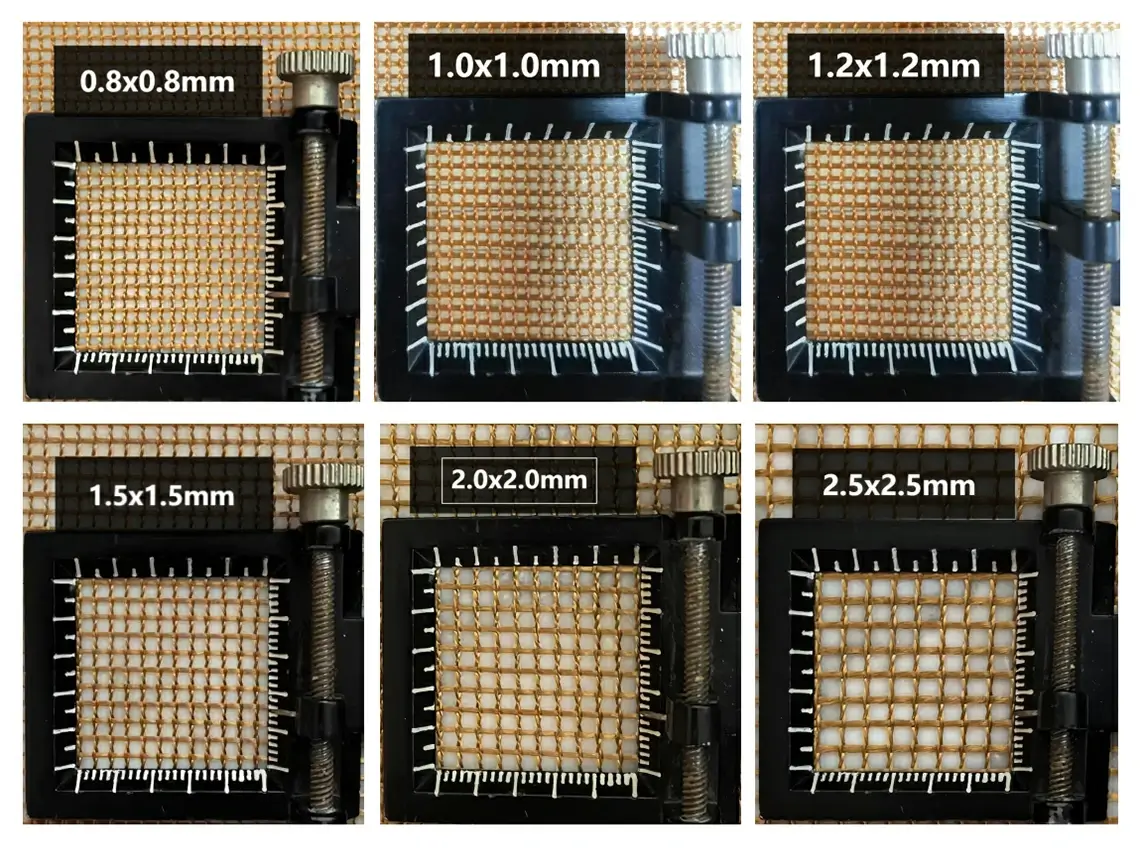
The customer agreed to begin with the available material to help evaluate the basic structure and process compatibility. We then continued discussing the required mesh specifications and the condition of the material to be supplied.
This project illustrates why fiberglass mesh selection should involve more than confirming one dimensional parameter. The material condition, downstream processing method, sample evaluation, and future purchasing requirements should all be considered.
At SF-Foundry, we can work with customers to clarify mesh specifications, supply forms, and sample arrangements based on their intended applications. By clearly identifying whether the supplied material is uncoated, semi-finished, or coated, we help reduce the risk of receiving a product that does not match the customer’s processing expectations.
Clear technical communication before production makes sample evaluation more efficient and provides a stronger foundation for subsequent product development.