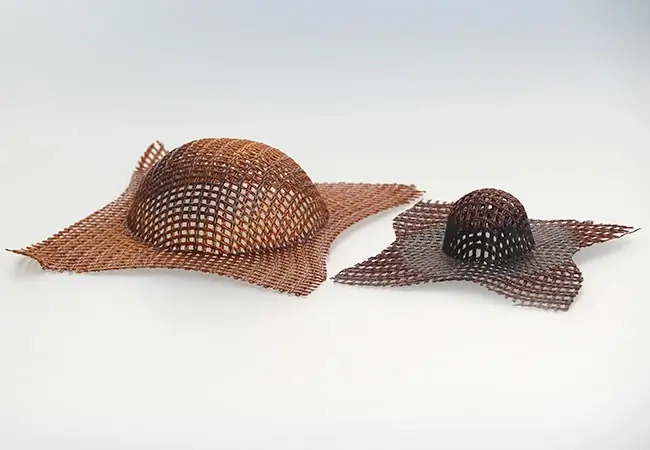


The Customer’s Challenge: Developing a Custom Product Without a Physical Sample
In aluminum casting applications, some customers require specially designed reinforced fiberglass mesh caps. Unlike standard industrial products, these components may have unique shapes and dimensions that are not available from regular product catalogs.
In many cases, customers can only provide product photos, videos, or preliminary sketches. They may not have the original sample or a complete technical drawing available. Although these references help suppliers understand the general product structure, they cannot fully reveal dimensional tolerances, installation requirements, or all the details needed for accurate reproduction.
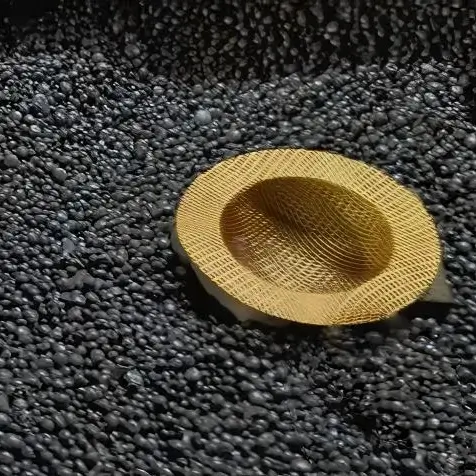
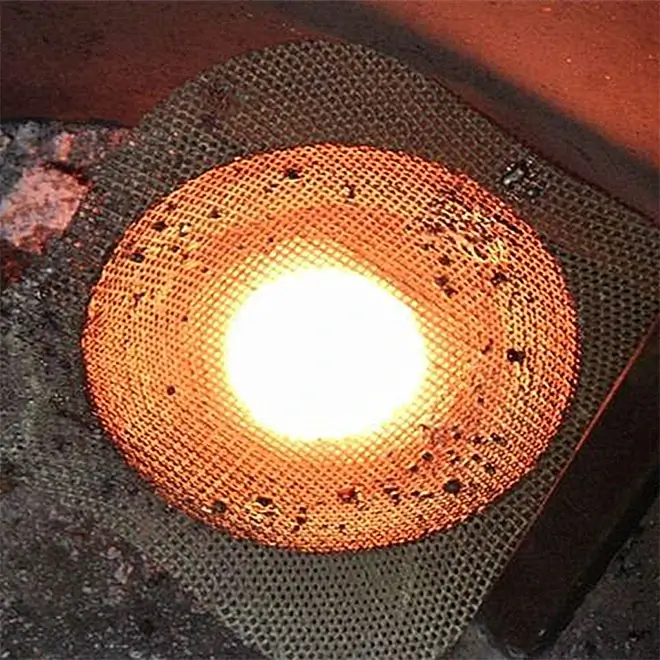
For custom fiberglass mesh caps, starting production based only on appearance can create unnecessary risks. Differences in the inner diameter, cap depth, or flange dimensions may affect installation and require further adjustments. The challenge is therefore to begin development efficiently while managing the limitations of incomplete technical information.
Our Approach: Using Preliminary Samples to Move the Project Forward
During a custom fiberglass mesh cap project with a customer in Mexico, the customer was unable to provide a physical reference sample but needed products for an initial evaluation.
Instead of treating the available photos as a complete technical specification, we proposed reviewing the existing references and preparing preliminary samples based on the information available. We also explained that the first batch would be intended for initial evaluation and might require adjustments before regular production.
To improve dimensional accuracy, we recommended confirming several critical parameters:
- Mesh opening size
- Inner diameter of the cap
- Depth of the cap
- Dimensions of the outward-flanged edge
Even without a formal engineering drawing, the customer could potentially measure these dimensions manually from an existing product and provide photographs showing the measurements. If a physical sample becomes available later, it can be measured more accurately to support further optimization.
This step-by-step approach allows the project to move forward without creating unrealistic expectations about the first samples.
How a Supplier Can Reduce Development Risks
Custom fiberglass mesh cap development requires more than manufacturing capability. It also requires careful technical communication and realistic project planning.
A supplier should evaluate whether an existing structure can be used, whether modifications are necessary, and whether new tooling may be required. The purpose and limitations of the initial samples should also be clearly communicated.
At SF-Foundry, we can support customers with drawing reviews, specification confirmation, sample planning, and subsequent production discussions. As more technical information becomes available, we can work with customers to evaluate potential adjustments.
For custom fiberglass composite products, successful cooperation does not mean guaranteeing a perfect match from the beginning. It means establishing clear expectations, identifying the information that is still missing, and using a structured sample evaluation process to move toward a suitable solution.