


When the cheaper filter isn’t actually cheaper—a data-driven analysis for foundry decision-makers
Every foundry manager has faced this question: Should you invest in higher-cost ceramic foam filters, or stick with the more affordable fiberglass mesh?
At first glance, the answer seems obvious. Fiberglass mesh filters cost significantly less per piece—typically 40–60% less than ceramic alternatives. But unit price is only one piece of the puzzle. The real question is total cost of ownership (TCO) : what does each filter actually cost you over the full production cycle, including scrap reduction, rework, machining, and customer returns?
Understanding the Two Technologies
Before comparing costs, it’s essential to understand how each filter works—because their filtration mechanisms fundamentally affect both performance and economics.
Ceramic Foam Filters (CFF)
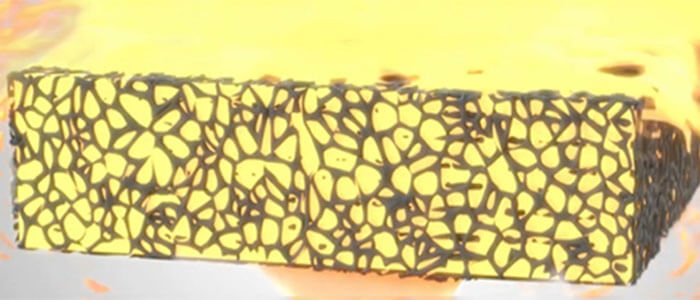
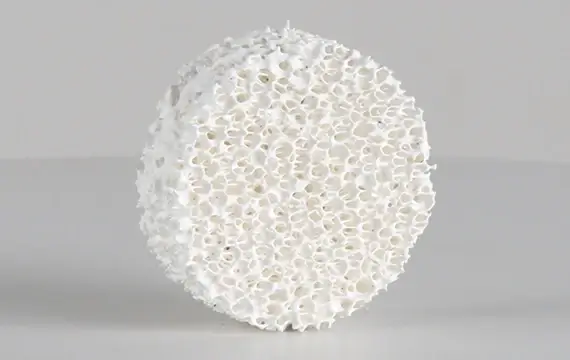
Alumina ceramic foam filters are three-dimensional, open-cell structures manufactured by impregnating polyurethane foam with ceramic slurry, followed by drying and high-temperature firing. The result is a rigid ceramic skeleton with interconnected pores—essentially a complex 3D maze.
Filtration mechanism: CFFs operate through depth filtration. Inclusions are trapped not just on the surface but throughout the entire thickness of the filter via four simultaneous mechanisms:
-
Mechanical sieving—particles larger than pore openings are physically blocked
-
“Filter cake” formation—accumulated inclusions refine the pore channels
-
Adsorption—the tortuous 3D channel provides enormous surface area for particles to adhere
-
Flow rectification—turbulent flow is converted into laminar flow
Key capabilities:
-
Removes inclusions down to 15–20 microns
-
Filtration efficiency for 15–20 micron impurities: 98.3%
-
Maximum working temperature: ≤1100°C to ≤1200°C (depending on grade)
-
Available in pore densities from 10–60 PPI (pores per inch)
-
Porosity: 80–90%
-
Thermal shock resistance: 6 cycles from 1100°C to room temperature
-
Room temperature compressive strength: ≥0.8 MPa
-
Volume density: 0.36–0.50 g/cm³
Fiberglass Mesh Filters
Fiberglass mesh filters are two-dimensional woven screens made from high-silica fiberglass yarn, coated with heat-resistant resins. Think of them as a high-temperature window screen.
Filtration mechanism: Mesh filters operate through surface filtration—mechanical interception of particles larger than the mesh opening. They function as a sieve, capturing inclusions only at the surface of the mesh.
Key capabilities:
-
Removes macro-inclusions only (typically >100 microns; mesh openings typically 0.8–2.5 mm²)
-
Temperature limit: 700–850°C (E-glass); high-silica versions up to higher temperatures for short duration
-
No preheating required
-
Typical thickness: approximately 0.5 mm
Total Cost of Ownership: The Full Picture
To determine which filter truly saves you money, you must look beyond the purchase price. The complete TCO includes:
-
Filter purchase cost – per-piece price × number of filters used
-
Scrap reduction value – reduction in scrap rate × casting value
-
Rework and machining cost – welding, repairs, secondary operations
-
Productivity impact – changes in cleaning time, machining time
-
Warranty/customer return cost – avoided returns and complaints
Let’s examine each component.
Component 1: Filter Purchase Cost
| Cost Component | Ceramic Foam Filter | Fiberglass Mesh |
|---|---|---|
| Unit price | $1.50–$15.00 (depends on size and PPI) | ~40–60% lower than ceramic |
| Cost per kg | $2.00–$3.50/kg | $0.80–$1.20/kg |
| Cost reduction vs. ceramic | Baseline | 50–80% lower filtration costs |
Verdict on purchase cost: Fiberglass mesh wins decisively on upfront cost. For high-volume production where filters are consumed in large quantities, this difference is substantial.
However—and this is critical—purchase cost is typically the smallest component of total casting cost. The value of the casting itself, the cost of scrap, and the labor for rework often dwarf the filter cost by orders of magnitude.
Component 2: Scrap Reduction Value
This is where the economics shift dramatically.
Ceramic foam filters have been shown to deliver significant scrap reduction:
-
Alumina CFFs achieve 98.3% filtration efficiency for impurities down to 15–20 microns
-
By removing fine inclusions and converting turbulent flow to laminar flow, they reduce defects such as gas porosity, slag inclusions, and pinholes
-
The result: reduced scrap rates, improved surface quality, and decreased machining losses
-
A well-matched filtration system delivers substantial scrap reduction across critical casting applications
Fiberglass mesh filters offer more modest scrap reduction:
-
Typical scrap reduction potential: 30–50% (compared to no filtration)
-
Effective for removing coarse slag and macro-inclusions only
-
Cannot address micro-porosity or fine inclusion-related defects
The math behind the difference: Consider an aluminum foundry producing 10,000 castings per month, with an average casting value of $50. At a 10% scrap rate, monthly scrap cost is $50,000.
| Scenario | Scrap Rate | Monthly Scrap Cost | Savings vs. No Filter |
|---|---|---|---|
| No filter | 10.0% | $50,000 | — |
| With fiberglass mesh | 6.0% (40% reduction) | $30,000 | $20,000/month |
| With ceramic foam | 2.5% (75% reduction) | $12,500 | $37,500/month |
The ceramic foam filter delivers an additional $17,500 per month in scrap savings—far more than the difference in filter purchase costs.
Component 3: Rework and Machining Costs
Inclusions don’t just cause scrap—they also increase machining costs, tool wear, and rework labor.
Ceramic foam filters:
-
Improve castingsurface quality and mechanical properties
-
Reduce machining losses and lower energy consumption
-
Increase labor productivity
Fiberglass mesh filters:
-
Burn out completely during casting, leaving negligible residue
-
Do not contaminate returns
-
However, cannot remove fine inclusions that cause machining issues
Labor impact: Ceramic foam filters require preheating to prevent thermal shock and cracking (typical recommendation: preheat to ≥600°C for 30–45 minutes), adding preparation time. Fiberglass mesh requires no preheating and can be cut with scissors, taking less than 5 minutes.
While fiberglass mesh has a clear advantage in handling simplicity, this labor cost is typically minor compared to the value of scrap reduction.
Component 4: The Hidden Costs of Inadequate Filtration
Perhaps the most overlooked TCO factor is the cost of defects that don’t cause immediate scrap but lead to:
-
Customer returns and warranty claims
-
Reduced mechanical properties (fatigue strength, ductility)
-
Rejection in pressure testing or machining
Fiberglass mesh cannot remove fine inclusions or prevent micro-porosity. For castings that will be:
-
Pressure-tested
-
Extensively machined
-
Used in safety-critical applications (aerospace, automotive structural)
…fiberglass mesh may not provide enough protection. The cost of a single returned shipment or failed component can exceed the annual savings from choosing the cheaper filter.
When Each Filter Makes Economic Sense
Choose Fiberglass Mesh When:
-
High-volume, cost-sensitive production—thousands of castings per day where every penny counts
-
Standard aluminum castings with low quality requirements
-
Non-critical components where macro-inclusions are the primary defect concern
-
Low baseline scrap rates (below 3–5%)
-
High-pressure die casting where mesh is placed in the biscuit/runner for economy

Choose Ceramic Foam Filters When:
-
Producing high-integrity castings for aerospace, automotive safety, or critical applications
-
Scrap rates exceed 5% —the scrap reduction pays for the filter many times over
-
Fine inclusion control is required (15–20 micron filtration)
-
98.3%+ filtration efficiency is required for high-quality output
-
Micro-porosity is a problem
-
Maximizing mechanical properties (surface quality, strength) is a priority
-
Casting critical aluminum components for EV battery housings, motor castings, or structural parts
Quick Reference: TCO Comparison Summary
| Factor | Ceramic Foam Filter | Fiberglass Mesh |
|---|---|---|
| Unit cost | Higher ($1.50–$15.00) | Lower (40–60% less) |
| Filtration efficiency | 98.3% (down to 15–20μm) | Moderate (>100μm only) |
| Maximum working temperature | ≤1100°C to ≤1200°C | 700–850°C |
| Porosity | 80–90% | N/A (woven mesh) |
| Thermal shock resistance | 6 cycles / 1100°C to RT | Limited |
| Compressive strength (RT) | ≥0.8 MPa | N/A |
| Preheating required | Yes (≥600°C, 30–45 min) | No |
| Installation time | 15–25 minutes | <5 minutes |
| Best application | Critical, high-integrity castings | High-volume, standard castings |
| TCO winner when… | Scrap rates >5% | Scrap rates <5%, high volume |
Conclusion
The choice between alumina ceramic foam filters and fiber glass filter isn’t about which filter is “better”—it’s about which filter is better for your specific operation.
Fiberglass mesh is the clear winner on unit cost and simplicity. For high-volume production of non-critical aluminum castings where macro-inclusions are the primary concern, it delivers excellent value at the lowest possible consumable cost per casting.
However, ceramic foam filters deliver superior total cost of ownership in a different set of circumstances. With 98.3% filtration efficiency for impurities down to 15–20 microns, 80–90% porosity, and proven thermal shock resistance of 6 cycles from 1100°C, they are purpose-built for high-quality aluminum and non-ferrous alloy casting. When scrap rates exceed 5%, when fine inclusion control is required, or when producing critical components for aerospace, automotive, or structural applications, the scrap reduction and quality improvements from ceramic foam filtration more than justify the higher upfront cost.
The key takeaway: Don’t make your decision based on filter price alone. Calculate your complete TCO—including scrap, rework, machining, and customer return costs—to determine which filter truly delivers the best value for your foundry.
Need help calculating the TCO for your specific operation? Our team can provide a customized analysis based on your casting alloy, production volume, and current scrap rates. [Contact us for a consultation.]
Email: info@sf-foundry.com
WhatsApp: 8618636913699