


When purchasing ceramic tubes for aluminum casting equipment, buyers may encounter terms such as dosing tube, riser tube, stalk tube, feed tube, and lift tube.
These terms can sometimes refer to similar-looking ceramic components, but they should not automatically be treated as interchangeable.
The correct tube depends on the equipment design, position in the molten-metal flow path, connection structure, dimensions, and casting process.
This guide explains the difference between dosing tubes and riser tubes and what information you should provide when selecting a replacement ceramic tube for aluminum casting equipment.
What Is a Dosing Tube?
A aluminum titanate dosing tube is a ceramic component used in equipment designed to control or deliver a measured amount of molten aluminum.
In a dosing system, molten aluminum is transferred from a heated or holding chamber through a designated flow path to the casting equipment.
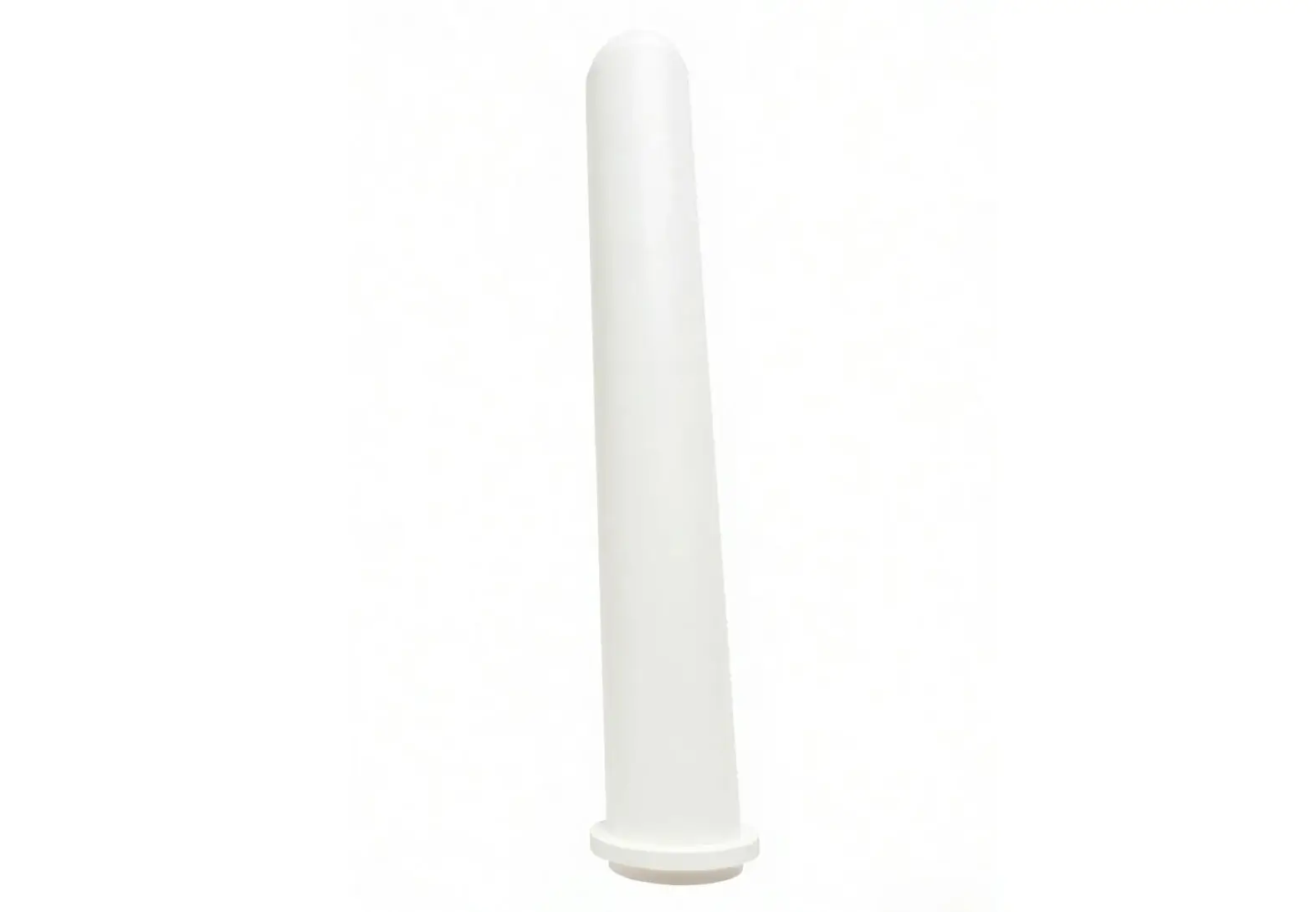
The dosing tube therefore forms part of the molten-metal delivery system.
Depending on the equipment design, the tube may need to withstand:
- Repeated contact with molten aluminum
- High operating temperatures
- Thermal cycling
- Continuous or intermittent production
- Mechanical loads during installation and operation
Aluminum titanate is one material used for dosing tubes because of its low thermal expansion and good thermal shock resistance.
However, the exact material and dimensions should be selected according to the specific equipment and operating conditions.
What Is a Riser Tube or Stalk Tube?
A aluminum titanate riser tube, often called a stalk tube in low-pressure aluminum casting, is a ceramic passage used to connect the molten aluminum in a holding furnace to the casting system.
In a typical low-pressure casting process, pressure applied to the molten aluminum in the furnace pushes the metal upward through the riser or stalk tube and into the mold.
The tube therefore forms an important part of the molten-metal delivery path between the furnace and mold.
Common terms may include:
- Riser tube
- Stalk tube
- Feed tube
- Lift tube
The exact terminology varies between equipment manufacturers and casting applications.
Dosing Tube vs. Riser Tube: What Is the Difference?
The most important difference is the equipment and process in which the tube is used.
| Factor | Dosing Tube | Riser / Stalk Tube |
|---|---|---|
| Main function | Controlled molten-metal delivery or dosing | Transfer of molten metal from furnace toward the mold |
| Typical equipment | Dosing furnace / dosing system | Low-pressure casting furnace |
| Process | Controlled dosing / metal delivery | Low-pressure metal filling |
| Position | Depends on equipment design | Typically connects furnace melt to casting system |
| Material | Depends on operating conditions | Depends on operating conditions |
| Shape | Equipment-specific | Equipment-specific |
| Dimensions | Usually customized | Usually customized |
The distinction is therefore not simply based on the ceramic material.
Two tubes may look similar but have completely different dimensions, connections or installation positions because they belong to different equipment systems.
Why Can the Terminology Be Confusing?
Ceramic tubes used in aluminum casting often perform similar basic functions: they provide a controlled passage for molten metal.
This is why different suppliers and equipment manufacturers may use different names for similar-looking components.
For example, a customer may describe a tube as a:
- Dosing tube
- Riser tube
- Stalk tube
- Feed tube
- Ceramic transfer tube
However, the product name alone is not enough to determine the correct replacement.
The Equipment Matters More Than the Name
When ordering a replacement tube, the most reliable information is not simply:
“I need an aluminum casting tube.”
Instead, the supplier needs to know:
- Where the tube is installed
- What equipment it is used on
- How the tube is connected
- The required dimensions
- The molten metal being handled
- The operating conditions
This prevents a tube with a similar name but different dimensions or connection design from being supplied.
Can an Aluminum Titanate Riser Tube Be Used as a Dosing Tube?
Not automatically.
Although aluminum titanate may be suitable for both types of ceramic components, material compatibility does not mean that the components are interchangeable.
A dosing tube and a riser tube may have different:
- Lengths
- Inner diameters
- Outer diameters
- Wall thicknesses
- End configurations
- Connection structures
- Installation positions
- Operating conditions
Therefore, if you want to replace a dosing tube with another ceramic tube, the equipment configuration must be checked first.
The same principle applies when replacing a riser or stalk tube.
Always match the replacement to the actual equipment rather than selecting it only by material or product name.
Why Is Aluminum Titanate Used for These Ceramic Tubes?
Aluminum titanate (Al₂TiO₅) is used for various high-temperature ceramic components in aluminum casting and non-ferrous metal processing.
Its low thermal expansion and thermal shock resistance are important considerations for components exposed to repeated heating and cooling.
For a dosing or riser tube, however, material selection is only one part of the decision.
The final product must also satisfy the mechanical and dimensional requirements of the equipment.
Important Selection Factors
Consider:
- Molten aluminum temperature
- Thermal cycling
- Tube dimensions
- Mechanical support
- Connection structure
- Immersion depth
- Production frequency
- Alloy and operating conditions
A ceramic tube should therefore be selected as part of the complete equipment system.
How to Identify the Right Ceramic Tube for Your Equipment
If you are unsure whether you need a dosing tube, riser tube or stalk tube, start with the equipment rather than the product name.
Step 1: Identify the Equipment
Tell the supplier whether the tube is used in:
- A dosing furnace
- A low-pressure casting furnace
- An aluminum holding furnace
- Another molten-metal delivery system
Step 2: Identify the Installation Position
Provide a photo showing where the tube is installed.
The installation position can help distinguish between different types of ceramic tubes.
Step 3: Measure the Existing Tube
Important dimensions may include:
- Overall length
- Inner diameter
- Outer diameter
- Wall thickness
- Connection diameter
- End configuration
Step 4: Provide the Existing Drawing or Sample
If available, provide the original technical drawing.
A physical sample can also be useful when a replacement must closely match an existing component.
Step 5: Provide Operating Conditions
Include:
- Aluminum alloy
- Operating temperature
- Production frequency
- Furnace type
- Dosing or casting process
- Any known service problems
This information allows the supplier to evaluate both the material and the physical configuration.
Dosing Tube and Riser Tube Selection Checklist
Before ordering a replacement ceramic tube, confirm the following:
Equipment
☐ Dosing furnace
☐ Low-pressure casting furnace
☐ Holding furnace
☐ Other equipment
Tube Dimensions
☐ Overall length
☐ Inner diameter
☐ Outer diameter
☐ Wall thickness
Connection
☐ End configuration
☐ Mounting dimensions
☐ Sealing method
☐ Installation position
Operating Conditions
☐ Aluminum alloy
☐ Operating temperature
☐ Thermal cycling
☐ Production frequency
Reference Information
☐ Existing tube photo
☐ Existing tube drawing
☐ Equipment photo
☐ Equipment model
Providing this information is much more reliable than ordering based only on the name “dosing tube” or “riser tube.”
What Information Should You Send When Ordering?
For a quotation, please provide as much of the following information as possible:
| Information | Recommended Details |
|---|---|
| Tube type | Dosing tube / riser tube / stalk tube |
| Application | Aluminum casting / low-pressure casting / dosing |
| Material | Aluminum titanate or required material |
| Overall length | Dimension |
| Inner diameter | Dimension |
| Outer diameter | Dimension |
| Wall thickness | Dimension |
| End configuration | Drawing or photo |
| Connection | Equipment-specific |
| Aluminum alloy | Alloy designation if available |
| Operating temperature | Actual process condition |
| Furnace type | Equipment model or description |
| Existing tube | Photo, drawing or sample |
If you do not know the exact tube name, send us a photo of the existing component and its dimensions.
We can first identify the basic configuration before discussing the replacement material and specifications.
Aluminum Titanate Dosing Tubes and Riser Tubes from SF-Foundry
SF-Foundry supplies ceramic components for aluminum casting applications, including aluminum titanate tubes for equipment-specific applications.
Our approach is to select the tube according to the customer’s actual equipment and operating requirements, rather than supplying a generic tube based only on its name.
For replacement projects, customer drawings, existing tube dimensions and equipment photos are especially useful.

Frequently Asked Questions
Are a dosing tube and a riser tube the same thing?
Not necessarily. They can have similar functions as molten-metal passages, but the terminology and design depend on the equipment and casting process. They should not be assumed to be interchangeable.
What is another name for a riser tube?
Depending on the equipment and manufacturer, a riser tube may also be called a stalk tube, feed tube or lift tube.
Is a dosing tube used in low-pressure casting?
Dosing tubes are associated with controlled molten-metal delivery systems, while riser or stalk tubes are commonly associated with low-pressure casting systems. The exact terminology depends on the equipment design.
Can aluminum titanate be used for both dosing tubes and riser tubes?
Aluminum titanate can be used for different high-temperature ceramic components, but the suitability of a specific tube depends on its equipment, dimensions and operating conditions.
Can I replace a riser tube with a dosing tube?
Not simply based on the material. The tube dimensions, connection, installation position and equipment function must be checked first.
Can you manufacture a tube based on an existing sample?
Yes. An existing tube, drawing, photos and dimensional information can be used to evaluate a replacement configuration.
What if I do not know whether my tube is a dosing tube or a riser tube?
Send us photos of the tube, its installation position and the main dimensions. Equipment information is also helpful. We can review the application before recommending the appropriate configuration
Need the Right Ceramic Tube for Your Aluminum Casting Equipment?
If you are not sure whether you need a dosing tube, riser tube or stalk tube, send us your existing component information.
Please provide:
Tube photos + dimensions + installation photos + equipment information
SF-Foundry can evaluate the application and help identify the appropriate ceramic tube configuration for your aluminum casting system.
Contact SF-Foundry for a Custom Aluminum Casting Ceramic Tube
Email: info@sf-foundry.com
WhatsApp: 8618636913699