


Choosing the right fiberglass filter mesh is not simply a matter of selecting the finest available mesh.
In metal casting, the filter must allow molten metal to flow through the gating system while helping control slag, oxides, and other non-metallic inclusions. If the mesh is too fine, it may create excessive flow resistance. If it is too coarse, it may not provide the required level of filtration.
The correct fiberglass filter mesh should match the actual casting process.
Important selection factors include:
- Molten metal type
- Pouring temperature
- Mesh opening
- Filter material
- Filter size and shape
- Metal flow rate
- Casting weight
- Gating system design
- Filter installation position
This guide explains how to select a suitable fiberglass filter mesh for different metal casting applications.
Start With the Casting Process, Not the Filter
One common mistake is to start by asking:
What mesh size should I use?
A better starting point is:
What casting process am I trying to improve?
Fiberglass filter mesh is part of the complete molten metal delivery system.
Before selecting a filter, collect basic information about the casting process:
- What metal is being cast?
- What is the pouring temperature?
- What is the casting weight?
- What is the pouring time?
- Where will the filter be installed?
- What type of inclusions are causing problems?
- What gating system is being used?
This information provides a much better basis for filter selection.
Choose the Filter Material According to the Molten Metal
The first consideration is the type and temperature of the molten metal.
Different casting alloys require different levels of thermal resistance.

Common applications may include:
- Aluminum alloys
- Cast iron
- Ductile iron
- Steel
- Copper alloys
The filter material must remain suitable during contact with molten metal under the actual pouring conditions.
For higher-temperature applications, high-temperature-resistant fiberglass materials, such as high-silica fiberglass, may be used depending on the specific process.
The key point is simple:
Do not select a fiberglass filter mesh based only on appearance or mesh count.
The material itself must first be suitable for the pouring temperature and application environment.
Questions to Ask
- What alloy is being poured?
- What is the normal pouring temperature?
- What is the maximum temperature?
- How long will the filter be exposed to molten metal?
These details should be confirmed before selecting the filter specification.
Select the Right Filter Mesh Size
Mesh size is one of the most important factors in fiberglass filter mesh selection.
A filter with smaller openings may intercept smaller particles, but it also creates greater resistance to molten metal flow.
A larger opening allows easier metal flow but may provide less effective interception of smaller contaminants.
The selection must therefore balance:
Filtration Performance + Metal Flow Capacity
A simplified principle is:
| Finer Mesh | Coarser Mesh |
|---|---|
| Smaller openings | Larger openings |
| Higher flow resistance | Lower flow resistance |
| Can retain smaller particles | Primarily controls larger particles |
| Higher risk of restricted flow | Higher metal flow capacity |
The finest mesh is not always the best mesh.
For example, a heavy casting requiring rapid filling may need a different filter specification than a small casting with a slower and more controlled pouring process.
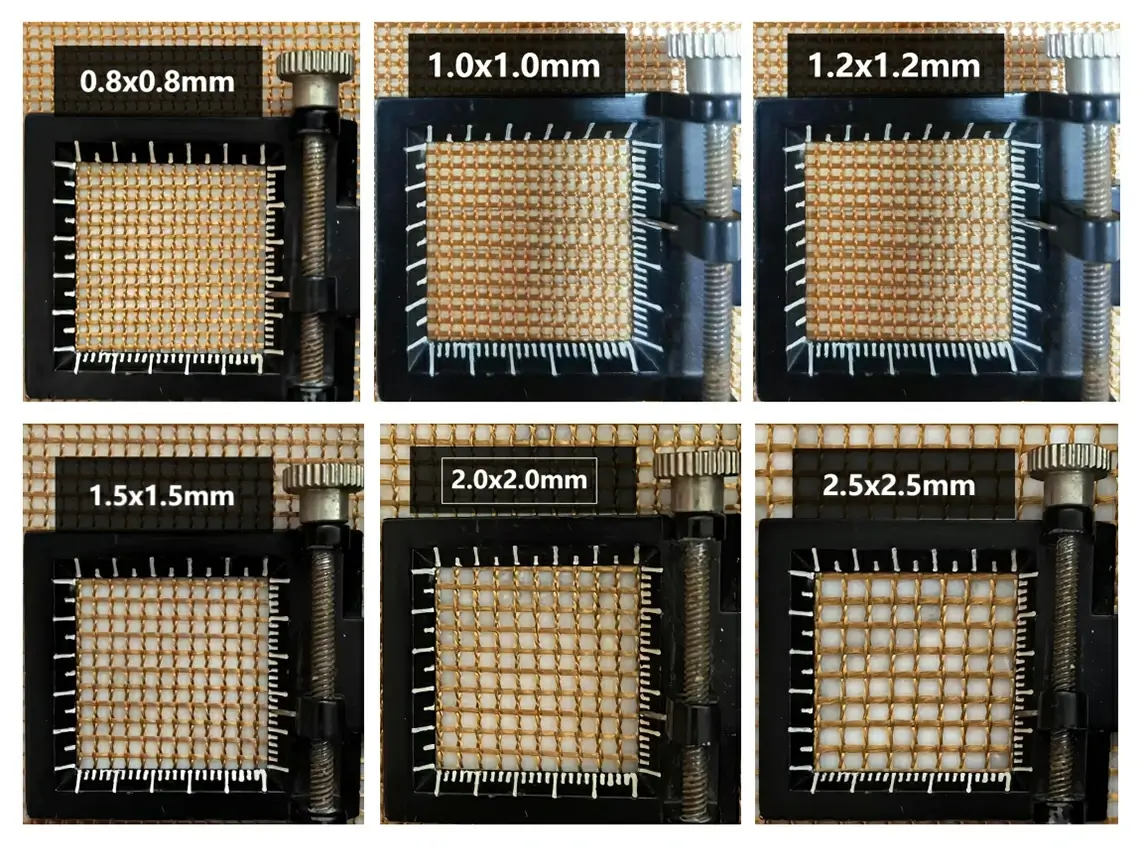
Mesh Size Should Match the Casting Process
When selecting mesh size, consider:
Inclusion Size
What type of contaminants are present?
Examples include:
- Large slag particles
- Oxide clusters
- Refractory fragments
- Sand particles
If the main concern is large slag particles, an extremely fine mesh may not be necessary.
Required Metal Flow
The molten metal must pass through the filter fast enough to fill the mold correctly.
An overly restrictive filter can contribute to:
- Slow mold filling
- Temperature loss
- Misruns
- Cold shuts
Casting Size
Larger castings generally require greater metal flow capacity.
The filter area and mesh specification should therefore be considered together.
Consider the Pouring Temperature
Pouring temperature affects both the filter material requirements and the behavior of molten metal.
Higher temperatures can create more demanding conditions for the filter.
When evaluating a fiberglass filter mesh, provide the supplier with:
- Normal pouring temperature
- Maximum pouring temperature
- Metal type
- Typical pouring duration
These factors help determine whether the selected filter material is appropriate.
A filter that performs well in one application may not be suitable for another alloy with significantly higher pouring temperatures.
Select the Correct Filter Area
Mesh size is not the only factor controlling metal flow.
The total filter area is equally important.
A fine mesh with a sufficiently large filtration area may allow acceptable metal flow.
Conversely, even a relatively open mesh can become restrictive if the filter area is too small.
The available filter area should be considered according to:
- Casting weight
- Required pouring time
- Metal flow rate
- Mesh opening
- Number of filters used
- Gating system design
A useful selection principle is:
Do not evaluate mesh specification without considering total filter area.
Filter area and mesh opening must work together.
Choose the Right Filter Shape and Format
Fiberglass filter mesh can be supplied in different shapes and formats depending on the casting process.
Common configurations may include:
- Flat mesh
- Circular mesh
- Square mesh
- Rectangular mesh
- Pre-cut filter pieces
- Custom-shaped filters
The best shape depends largely on where the filter will be installed.
For example, a filter designed for installation in a runner may require a different shape from one used near the pouring area.
When selecting a shape, consider:
- Available installation space
- Runner dimensions
- Mold design
- Metal flow direction
- Ease of positioning
- Stability during pouring
Custom-cut fiberglass filter mesh can help reduce trimming work and improve consistency during mold preparation.
Consider Where the Filter Will Be Installed
Filter placement is closely connected to filter selection.
Possible installation positions include:
- Pouring basin
- Sprue
- Sprue entrance
- Runner
- Runner extension area
- Before the ingate
Each position creates different flow conditions.
For example, metal velocity, pressure head, and contamination behavior may change throughout the gating system.
A filter should be selected according to its intended location.
Early Filtration
Installing the filter earlier in the gating system may help prevent contaminants from traveling further downstream.
Runner Filtration
A runner location may allow the filter to work as both a filtration and flow-conditioning element.
Near-Ingate Filtration
A filter closer to the mold cavity can provide a final barrier before molten metal enters the casting.
There is no universal location suitable for every casting.
Filter placement should be evaluated together with the complete gating system.
Consider the Required Pouring Rate
The filter must allow molten metal to pass through at a rate suitable for the casting.
The required pouring rate depends on:
- Casting weight
- Wall thickness
- Alloy fluidity
- Pouring temperature
- Mold filling time
If the filter restricts the flow too much, the mold may not fill correctly.
Potential problems include:
- Misruns
- Cold shuts
- Incomplete filling
- Excessive temperature loss
For this reason, filter selection should not be based only on filtration efficiency.
A suitable filter must balance:
Cleanliness + Flow Rate + Filling Performance
Identify the Actual Casting Defect
Before changing filter specifications, identify the problem you are trying to solve.
Different casting defects may require different solutions.
For example:
Slag Inclusions
Potential considerations:
- Slag removal practice
- Filter placement
- Mesh opening
- Gating design
Oxide Inclusions
Potential considerations:
- Metal turbulence
- Pouring practice
- Filter selection
- Runner design
Sand Inclusions
Potential considerations:
- Mold strength
- Mold erosion
- Gating velocity
- Filter location
A filter should not be used as a universal solution for every casting defect.
The root cause should first be understood.
Consider the Gating System Design
Fiberglass filter mesh should be integrated into the complete gating system.
Important components include:
- Pouring cup
- Sprue
- Sprue well
- Runner
- Runner extension
- Ingate
The filter changes the flow resistance within this system.
Therefore, adding or changing a filter may affect the overall filling behavior.
Questions to consider include:
- Is the available pressure head sufficient?
- Is the runner area adequate?
- Is the filter creating a restriction?
- Is the filter positioned in the main metal flow path?
- Does the ingate area match the expected flow rate?
The best filtration result is usually achieved when filter selection and gating design are evaluated together.
Consider Production Consistency
For high-volume production, consistency is often as important as initial filtration performance.
Foundries should consider:
- Stable mesh specification
- Consistent dimensions
- Repeatable installation
- Reliable supply
- Bulk packaging
- Batch consistency
A filter that performs differently from batch to batch can make process control more difficult.
For production foundries, working with a supplier capable of maintaining consistent product specifications can be an important purchasing factor.
Fiberglass Filter Mesh Selection by Application
The following table provides a simplified starting point.
| Application | Main Selection Focus |
|---|---|
| Aluminum Casting | Flow stability and oxide control |
| Cast Iron | Temperature resistance and slag control |
| Ductile Iron | Clean metal flow and process consistency |
| Steel Casting | High-temperature material suitability |
| Copper Alloy Casting | Temperature and alloy compatibility |
These are general guidelines.
The final specification should be determined according to the actual casting process.
Common Mistakes When Choosing Fiberglass Filter Mesh
Choosing Only the Finest Mesh
A finer mesh may increase filtration resistance.
Always consider the required metal flow rate.
Ignoring Filter Area
A correct mesh opening with insufficient filter area can still restrict molten metal flow.
Selecting the Filter Without Knowing the Pouring Temperature
Temperature compatibility is essential.
Always confirm the actual pouring conditions.
Treating the Filter as a Replacement for Good Melt Practice
Fiberglass filter mesh can support molten metal cleanliness, but it should not replace:
- Slag removal
- Clean ladle practice
- Proper melt treatment
- Controlled pouring
Ignoring Filter Placement
The same filter can perform differently depending on where it is installed.
Filter placement should be part of the gating system design.
Selecting Based Only on Price
The lowest-cost option may not provide the required consistency or application suitability.
The total cost should also consider:
- Casting quality
- Scrap reduction
- Process stability
- Labor efficiency
- Supply consistency
A Practical Selection Checklist
Before requesting a fiberglass filter mesh quotation, prepare the following information.
Molten Metal
- Alloy type
- Material grade
Pouring Conditions
- Normal pouring temperature
- Maximum temperature
- Typical pouring time
Casting
- Casting weight
- Minimum wall thickness
- Number of cavities
Gating System
- Filter installation location
- Runner dimensions
- Ingate dimensions
- Available filter area
Current Problem
- Slag inclusion
- Oxide inclusion
- Sand inclusion
- Surface defects
- Other quality concerns
Existing Filter
If a filter is currently being used, provide:
- Material
- Mesh specification
- Dimensions
- Shape
- Photos or drawings
This information allows a supplier to provide a more relevant recommendation.
How SF-Foundry Can Help With Filter Selection
Selecting a fiberglass filter mesh should be based on the complete casting application.
SF-Foundry can evaluate basic application information such as:
- Molten metal type
- Pouring temperature
- Casting weight
- Filter location
- Required filter dimensions
- Current gating system
- Existing filtration problems
Based on this information, a suitable filter material, mesh specification, and product format can be discussed.
For custom applications, providing a drawing, sample, or existing filter specification can help confirm the required product configuration.
Frequently Asked Questions
What mesh size should I choose for fiberglass filter mesh?
The correct mesh size depends on the type of molten metal, inclusion characteristics, required filtration level, and metal flow rate. A finer mesh is not always better because it can increase flow resistance.
How do I know if the filter area is large enough?
Filter area should be evaluated together with the required pouring rate, casting weight, mesh opening, and gating system design. The filter must provide sufficient flow capacity for proper mold filling.
Can fiberglass filter mesh be used for aluminum casting?
Suitable fiberglass filter mesh can be used in aluminum casting applications. The specification should be selected according to the alloy, pouring temperature, and filtration requirements.
Can fiberglass filter mesh be used for cast iron?
Yes, high-temperature-resistant fiberglass filter materials can be used for suitable cast iron applications. Material compatibility with the actual pouring temperature should be confirmed.
Should I use fiberglass filter mesh or ceramic foam filter?
The choice depends on the casting process, required cleanliness, molten metal type, temperature, flow conditions, and production requirements. Neither filter type is universally better for every application.
Conclusion
Choosing the right fiberglass filter mesh requires more than selecting a mesh count.
The filter should be matched to the complete casting process.
The most important factors include:
- Molten metal type
- Pouring temperature
- Mesh opening
- Filter area
- Filter material
- Filter shape
- Metal flow rate
- Casting weight
- Installation location
- Gating system design
The goal is to achieve a practical balance between:
Filtration Performance + Metal Flow + Casting Quality
A correctly selected fiberglass filter mesh can become an effective part of the molten metal filtration and gating system.
However, the best results are achieved when filtration is considered together with melt cleanliness, pouring practice, and gating design.

SF-Foundry supplies fiberglass filter mesh for metal casting applications and can provide different mesh specifications and customized formats according to application requirements.
To discuss a suitable filter specification, provide your metal type, pouring temperature, casting weight, filter dimensions, and current gating system requirements.
Contact SF-Foundry to discuss your molten metal filtration application.
Email: info@sf-foundry.com
WhatsApp: +8618636913699