


Feeding is one of the most important principles in metal casting because molten metal contracts as it solidifies. If this solidification shrinkage is not properly compensated, internal shrinkage porosity, shrinkage cavities, and other casting defects can develop.
In a properly designed casting process, additional molten metal is supplied to the casting during solidification. This process is known as feeding, and the reservoir of molten metal used for this purpose is commonly called a riser, feeder, or feeder head.
For foundry engineers, feeding is not simply a matter of making the riser larger. Effective feeding requires coordination between casting geometry, solidification behavior, riser design, feeding distance, directional solidification, chills, pouring conditions, and sometimes casting simulation.
This guide explains the fundamentals of feeding in metal casting and the main principles used to design an effective feeding system.
Quick Answer: What Is Feeding in Metal Casting?
Feeding in metal casting is the process of supplying additional molten metal to a casting as it solidifies and contracts, in order to compensate for solidification shrinkage and prevent shrinkage defects.
A riser or feeder acts as a reservoir of molten metal. It is designed to remain liquid long enough to supply metal to the casting’s last-to-solidify regions.
The basic principle is:
Casting solidifies → metal contracts → liquid metal flows from the feeder → shrinkage is compensated → casting becomes sound.
The objective is not to eliminate shrinkage itself. Rather, the feeding system is designed to control where the shrinkage occurs, ideally moving it into the riser instead of the finished casting.
Why Does a Casting Need Feeding?
When molten metal is poured into a mold, it begins to cool and solidify.
During this process, the metal generally undergoes several types of volume change:
- Thermal contraction of the liquid
- Contraction associated with solidification
- Thermal contraction of the solid metal
The most important issue for feeding design is the volume change that occurs while the metal changes from liquid to solid.
If the surrounding solid metal has already formed and the remaining liquid metal cannot supply the contracting region, a void can develop.
This can result in:
- Shrinkage cavities
- Shrinkage porosity
- Centerline shrinkage
- Internal voids
- Surface sink
- Reduced density
- Reduced mechanical properties
- Leakage in pressure-containing castings
Shrinkage defects are particularly likely in isolated heavy sections, bosses, pads, and transitions between thick and thin sections.
Therefore, the fundamental purpose of feeding is:
To provide a continuous supply of liquid metal to the casting while the critical regions are solidifying and contracting.
How Does Feeding Work?
A typical feeding system contains one or more reservoirs of molten metal connected to the casting.
The basic concept can be represented as:
Molten metal reservoir → Riser/Feeder → Riser neck → Casting
During solidification, the casting progressively loses liquid metal as solidification proceeds.
If the riser remains liquid and its connection to the casting remains open, the pressure and contraction conditions allow liquid metal to move from the riser toward the region that requires feeding.
The ideal sequence is:
1. The casting begins to solidify
↓
2. Thin sections solidify first
↓
3. Solidification progresses toward the heavier section
↓
4. The heavy section remains liquid longer
↓
5. The riser remains liquid longer than the region being fed
↓
6. Liquid metal flows from the riser into the shrinking casting
↓
7. The final shrinkage is concentrated in the riser rather than the casting
This is the basic concept of directional solidification.
A well-designed feeding system therefore does two things simultaneously:
- Keeps sufficient liquid metal available
- Controls the solidification sequence
What Is a Riser or Feeder?
A riser is a reservoir of molten metal connected to a casting cavity. Its primary function is to provide additional metal during solidification to compensate for shrinkage.

In foundry terminology, the terms riser, feeder, feeder head, and metal head may be used depending on the region and casting process.
A riser normally has three important requirements:
It must contain enough liquid metal
The riser needs sufficient volume to compensate for the expected shrinkage of the region it feeds.
It must remain liquid long enough
A riser that freezes before the casting section it is supposed to feed cannot perform its function.
Its connection to the casting must remain open
Even a large riser is ineffective if the riser neck or feeding path freezes too early.
This is why riser size alone does not determine feeding performance.
Riser vs. Feeder: Are They the Same Thing?
In many foundry applications, riser and feeder are used interchangeably.
Both refer to a reservoir of molten metal intended to compensate for solidification shrinkage.
However, the word feeding describes the process, while riser/feeder describes the physical source of additional metal.
A simple distinction is:
| Term | Meaning |
|---|---|
| Feeding | The process of supplying liquid metal during solidification |
| Riser | A reservoir of liquid metal used for feeding |
| Feeder | Another common term for a riser |
| Feeding system | The complete arrangement used to provide feeding |
| Riser neck | The connection between the riser and casting |
Understanding this distinction is useful when discussing casting process design.
What Is the Relationship Between Feeding and Solidification?
Feeding and solidification cannot be separated.
The ability of a riser to feed a casting depends heavily on the solidification behavior of the casting.
Imagine a simple casting with one thin section and one thick section.
The thin section has a relatively large surface area compared with its volume, so it loses heat quickly and solidifies relatively early.
The thick section contains more thermal mass and generally remains liquid longer.
This creates a hot spot or last-to-solidify region.
If the feeding system is designed correctly, solidification should progress approximately:
Thin section → thicker section → hot spot → riser
This is called directional solidification.
The objective is to make the casting solidify progressively toward the riser so that the riser can continue supplying liquid metal to the shrinking region.
What Is a Hot Spot in Casting?
A hot spot is a region of a casting that remains hotter and solidifies later than the surrounding sections.
Hot spots commonly occur at:
- Thick sections
- Large bosses
- Junctions between walls
- Heavy flanges
- Section transitions
- Internal intersections
- Areas surrounded by large amounts of molten metal
These locations are particularly susceptible to shrinkage because they may be the last areas to solidify.
For this reason, risers are often positioned near or above hot spots.
A useful design principle is:
Identify the last-to-solidify region first, then design the feeding system around it.
Simply placing a riser on a convenient surface without considering the solidification pattern can result in insufficient feeding.
What Is Directional Solidification?
Directional solidification means controlling the solidification sequence so that the metal progressively freezes from regions that are easier to feed toward regions that remain liquid longer.
Ideally:
Casting extremities → intermediate sections → heavy section → riser
The riser should be the last significant liquid reservoir in the feeding path.
Directional solidification can be promoted through several methods:
- Proper riser placement
- Correct riser size
- Riser sleeves
- Chills
- Casting geometry optimization
- Appropriate pouring conditions
- Control of mold cooling
- Simulation-assisted process design
The goal is to make shrinkage occur in the feeder rather than inside the finished casting.
Riser Modulus and Feeding
One of the most important concepts in riser design is modulus.
The basic casting modulus is:
[M = \frac{V}{A}]
where:
- M = modulus
- V = volume
- A = effective cooling surface area
The modulus provides an indication of how quickly a section will solidify.
A larger modulus generally means a longer solidification time.
This concept is related to Chvorinov’s Rule, which expresses solidification time approximately as:
[t = B\left(\frac{V}{A}\right)^2]
where:
- t = solidification time
- B = mold/material constant
- V = volume
- A = cooling surface area
For riser design, the practical principle is that the riser should generally have a higher modulus than the casting section it is feeding, so that the riser remains liquid longer.
As a general engineering starting point, some foundry practices use a riser modulus approximately 20–50% greater than the section being fed. However, the appropriate value depends on the alloy, mold material, riser design, sleeve, geometry, and process conditions. It should not be treated as a universal rule.
Why Is Riser Size Important?
A riser has to satisfy two different requirements:
Requirement 1: Thermal requirement
The riser must remain liquid long enough to feed the casting.
This is primarily related to:
- Riser modulus
- Riser geometry
- Riser sleeve
- Mold cooling conditions
- Pouring temperature
- Alloy solidification characteristics
Requirement 2: Volume requirement
The riser must contain enough usable liquid metal to compensate for the casting’s shrinkage.
A riser can therefore fail in two different ways:
Too small thermally: The riser freezes too early.
Too small volumetrically: The riser remains liquid but runs out of usable feeding metal.
This is why effective riser design requires consideration of both solidification time and feeding volume.
What Is Feeding Distance?
Feeding distance is the distance over which a riser can effectively supply liquid metal to a section of casting.
This is one of the most important considerations when determining how many risers are required.
If the feeding distance is insufficient, a casting may develop an unfed region between risers.
Feeding distance depends on factors such as:
- Alloy
- Casting thickness
- Casting geometry
- Solidification range
- Mold material
- Riser design
- Riser location
- Chills
- Pouring conditions
Therefore, there is no single feeding-distance value that applies to every alloy and casting geometry.
For complex castings, foundries often use empirical feeding-distance guidelines together with casting simulation and previous production experience.
How Should a Riser Be Positioned?
A riser should generally be positioned so that it can feed the region that is expected to solidify last.
Typical considerations include:
Place the riser near the hot spot
The shorter the feeding path, the easier it is to maintain liquid metal flow.
Place the riser above heavy sections when practical
Gravity and metallostatic pressure can assist feeding in suitable mold configurations.
Avoid isolated unfed regions
If a casting contains multiple heavy sections, one riser may not be sufficient.
Consider machining requirements
Risers should ideally be placed where their removal will not create unnecessary machining difficulty or affect critical surfaces.
Consider mold and core design
The theoretically ideal riser location must also be practical to manufacture.
Good riser design therefore involves balancing:
feeding performance + casting quality + yield + manufacturability + riser removal cost
Can Chills Improve Feeding?
Yes.
A chill is a material with relatively high heat-transfer capability placed in or against the mold near a selected region of the casting.
Its purpose is to accelerate local solidification.
Chills can be useful when a region would otherwise become a hot spot that is difficult to feed.
The principle is:
Chill → faster local cooling → earlier solidification → controlled solidification path → improved feeding
Chills are especially useful when the ideal riser location is difficult to access.
Casting industry guidance also identifies chills as a practical method for controlling localized shrinkage when a riser cannot easily reach the affected area.
However, chills must be designed carefully. Excessive local cooling can contribute to other casting problems, so they should be considered as part of the complete solidification strategy rather than as a universal solution.
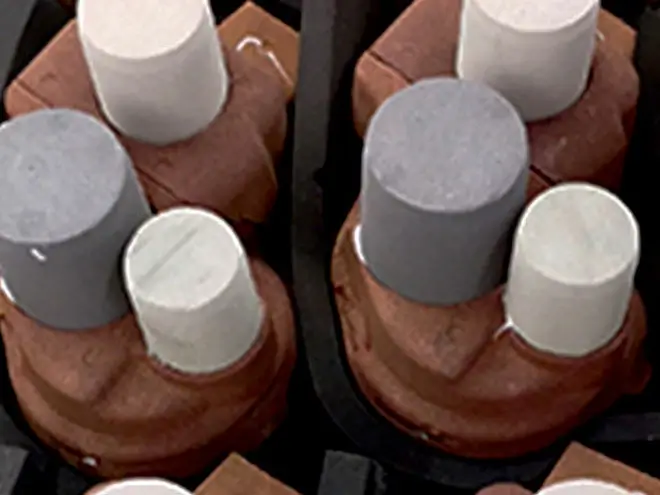
What Is a Riser Sleeve?
A riser sleeve is an insulating or exothermic material placed around the riser to reduce heat loss or generate additional heat.
Its purpose is simple:
Keep the riser liquid for a longer period of time.
There are two common approaches.
Insulating Riser Sleeve
An insulating sleeve reduces heat loss from the riser.
This increases the effective solidification time of the riser without necessarily generating additional heat.
Exothermic Riser Sleeve
An exothermic sleeve generates additional heat through a controlled exothermic reaction.
This can significantly extend the feeding time of the riser and may allow a smaller riser to perform the same feeding function as a larger uninsulated riser.
The choice between insulating and exothermic sleeves depends on:
- Alloy
- Casting size
- Riser geometry
- Required feeding time
- Production volume
- Casting yield
- Riser removal requirements
Modern feeding technologies are increasingly focused on improving feeding efficiency and extending feeding distances while reducing excess riser metal.
Feeding in Different Casting Alloys
Feeding behavior is not the same for every metal.
The solidification characteristics of the alloy strongly influence the feeding strategy.
Ductile Iron
Ductile iron is particularly interesting because graphite precipitation during solidification can produce expansion that partially compensates for solidification shrinkage.
However, this does not mean ductile iron is immune to shrinkage.
Feeding behavior depends on factors including:
- Carbon equivalent
- Chemical composition
- Nodule count
- Inoculation
- Section thickness
- Mold rigidity
- Pouring conditions
- Solidification pattern
- Riser design
The American Foundry Society specifically identifies graphitic cast iron as requiring special consideration in risering because of its unique volume-change behavior.
Gray Iron
Gray iron also exhibits graphitization-related expansion during solidification.
As a result, riser requirements can differ substantially from those for steel or other alloys.
Steel
Steel generally requires careful feeding because solidification shrinkage is significant and there is no equivalent graphitization expansion mechanism to compensate for it.
Riser design, feeding distance, thermal modulus, and directional solidification are therefore particularly important.
Aluminum Alloys
Aluminum alloys can also develop shrinkage porosity when feeding is inadequate.
Casting geometry, alloy composition, solidification range, mold conditions, and feeding-system design all influence the final result.
For this reason, riser design should always be alloy-specific rather than based on one universal formula.
What Happens When Feeding Is Insufficient?
When the casting cannot obtain sufficient liquid metal during solidification, several types of shrinkage-related defects may appear.
Shrinkage Cavity
A relatively large void develops in the casting, often in a last-to-solidify region.
Shrinkage Porosity
Small interconnected or isolated pores form inside the casting.
Centerline Shrinkage
Shrinkage develops along the centerline of a section, particularly where solidification progresses from the outside toward the center.
Surface Sink
The external surface may become depressed as internal metal contracts.
These defects can be particularly serious when they occur in pressure-containing or highly stressed components.
The location and appearance of a defect can provide valuable information about the feeding and solidification behavior.
Why Can a Large Riser Still Fail to Prevent Shrinkage?
This is a common misconception.
A bigger riser does not automatically mean better feeding.
A large riser can still fail if:
- It freezes too early
- The riser neck freezes too early
- The feeding path becomes blocked
- The riser is placed away from the actual hot spot
- The casting has an isolated heavy section
- The feeding distance is too long
- The solidification pattern is not directional
- The alloy has difficult feeding characteristics
- The mold cooling conditions are unfavorable
In other words:
Riser design is a thermal and fluid-flow problem, not simply a volume problem.
A very large but poorly positioned riser can be less effective than a smaller, properly engineered riser.
Feeding and Casting Yield
One of the biggest challenges in foundry engineering is balancing casting quality and casting yield.
A very large riser may provide excellent feeding, but it also increases:
- Riser weight
- Metal consumption
- Melting cost
- Cutting/grinding work
- Fettling time
- Scrap return
- Overall production cost
Therefore, the objective is not:
“Make the riser as large as possible.”
The objective is:
“Use the smallest practical feeding system that reliably produces a sound casting.”
Riser sleeves, chills, improved riser placement, optimized geometry, and simulation can all help improve this balance.
How Casting Simulation Helps Feeding Design
Casting simulation can help foundry engineers analyze the relationship between:
- Filling
- Temperature distribution
- Solidification
- Hot spots
- Feeding paths
- Riser performance
- Shrinkage risk
Instead of relying entirely on trial and error, engineers can use simulation to identify regions that are likely to solidify last and evaluate whether the proposed feeding system can supply them.
Simulation can therefore help answer questions such as:
- Where is the hot spot?
- Will the riser remain liquid long enough?
- Which areas are at risk of shrinkage?
- Is the feeding path continuous?
- Is another riser required?
- Can the riser be reduced?
- Would a chill improve the solidification pattern?
However, simulation should be combined with appropriate material data, process knowledge, and production validation rather than treated as an automatic guarantee of casting quality.
A Practical Feeding Design Workflow
A typical feeding-design process can follow these steps:
Step 1: Analyze the casting geometry
Identify:
- Section thickness
- Heavy sections
- Junctions
- Bosses
- Flanges
- Internal intersections
- Potential hot spots
Step 2: Determine the solidification pattern
Estimate or simulate which regions will solidify first and which will solidify last.
Step 3: Identify the regions requiring feeding
The last-to-solidify regions are the primary targets for feeding.
Step 4: Select riser locations
Place risers where they can effectively feed the critical regions.
Step 5: Determine riser modulus
Use modulus-based calculations and applicable foundry guidelines to establish an initial riser size.
Step 6: Check riser volume
Make sure the riser contains sufficient usable metal to compensate for expected shrinkage.
Step 7: Design the riser neck
The neck must remain open long enough to permit feeding while still allowing practical riser removal.
Step 8: Consider sleeves and chills
Use insulation, exothermic sleeves, or chills where they improve the solidification sequence or feeding efficiency.
Step 9: Simulate when appropriate
Use casting simulation for complex or high-value castings to evaluate hot spots and shrinkage risk.
Step 10: Validate through production
The final feeding system should be verified through inspection and production results.
Common Feeding Design Mistakes
Several mistakes repeatedly cause shrinkage problems.
Mistake 1: Designing the riser based only on casting weight
Casting weight alone does not determine feeding requirements.
The location of heavy sections and the solidification pattern are much more important.
Mistake 2: Making the riser larger without analyzing the hot spot
A larger riser placed in the wrong location may not solve the problem.
Mistake 3: Ignoring the riser neck
A large riser is useless if its connection to the casting freezes prematurely.
Mistake 4: Ignoring feeding distance
A single riser may not be capable of feeding the entire casting.
Mistake 5: Ignoring alloy characteristics
Ductile iron, gray iron, steel, and aluminum alloys can behave very differently during solidification.
Mistake 6: Ignoring casting geometry
Sudden changes in section thickness can create isolated hot spots.
Mistake 7: Relying exclusively on theoretical calculations
Modulus calculations provide an important starting point, but real production conditions can be more complicated.
How to Reduce Shrinkage Defects Through Better Feeding
If a casting has shrinkage porosity or shrinkage cavities, the foundry should investigate the entire solidification system rather than immediately increasing riser size.
Possible corrective actions include:
- Relocating the riser
- Increasing riser modulus
- Increasing usable riser volume
- Improving the riser neck
- Adding an insulating sleeve
- Using an exothermic sleeve
- Adding chills
- Improving directional solidification
- Modifying casting geometry
- Adjusting pouring conditions
- Optimizing the gating and feeding system
- Using casting simulation
The correct solution depends on the actual cause of the defect.
Frequently Asked Questions About Casting Feeding
What is feeding in casting?
Feeding is the process of supplying additional molten metal to a casting during solidification to compensate for solidification shrinkage.
What is the purpose of a riser?
The purpose of a riser is to provide a reservoir of molten metal that can feed the casting as it contracts during solidification.
What is the difference between feeding and risering?
Feeding describes the process of supplying liquid metal, while risering refers to the use and design of risers/ feeders to provide that metal.
Why does shrinkage occur in castings?
Shrinkage occurs because molten metal generally contracts as it cools and changes from liquid to solid. If sufficient liquid metal is not available to compensate for this contraction, shrinkage defects can form.
Where should a riser be placed?
A riser should generally be positioned near the region expected to solidify last, often a heavy section or hot spot, so that it can provide liquid metal during the critical stage of solidification.
How do I calculate riser size?
Riser size can be estimated using methods based on modulus, solidification time, required feeding volume, alloy behavior, and established foundry practice. Complex castings may require simulation and production validation.
What is riser modulus?
Riser modulus is the ratio of riser volume to its effective cooling surface area. A higher modulus generally means a longer solidification time.
Can a riser prevent all shrinkage?
A riser does not eliminate the physical contraction of the metal. Instead, it supplies additional liquid metal so that shrinkage is concentrated in the riser rather than the finished casting.
Do ductile iron castings need risers?
Some ductile iron castings require risers, while others can take advantage of graphite expansion and may require reduced or specialized feeding. The decision depends on alloy chemistry, section thickness, mold rigidity, solidification behavior, and casting geometry.
Can chills replace risers?
Chills and risers perform different functions. A chill accelerates local solidification, while a riser supplies additional liquid metal. They can sometimes be used together to create a favorable directional solidification pattern.
Key Takeaways
Effective feeding is fundamental to producing sound metal castings.
The most important principles are:
- Feeding compensates for solidification shrinkage.
- Risers and feeders provide the liquid metal required for feeding.
- The riser should remain liquid longer than the casting section it feeds.
- Riser placement should be based on the solidification pattern and hot spots.
- Riser modulus is an important tool for estimating solidification time.
- Feeding distance must be considered when determining the number and location of risers.
- Chills can help control local solidification and improve directional feeding.
- Insulating and exothermic riser sleeves can extend riser feeding time.
- Different alloys require different feeding strategies.
- The goal is not the largest possible riser, but the most efficient feeding system that reliably produces a sound casting.
- Casting simulation can help optimize riser location, size, and overall feeding performance.
Ultimately, successful feeding is about controlling the relationship between metal flow, heat transfer, solidification, and shrinkage.
A well-designed feeding system directs the solidification process so that the casting solidifies toward the riser, allowing the riser to supply liquid metal where it is needed most. This helps reduce shrinkage defects while also improving casting yield and production efficiency.
Conclusion
Feeding is one of the fundamental principles of foundry engineering. Although the basic concept is simple—supply additional molten metal as the casting solidifies—the actual design of an effective feeding system requires an understanding of alloy behavior, casting geometry, solidification, riser modulus, feeding distance, thermal conditions, and mold design.
For simple castings, established risering rules and modulus calculations may provide an effective starting point. For complex, heavy-section, or high-value castings, a combination of engineering calculations, casting simulation, riser sleeves, chills, and production experience can provide a more reliable solution.
At SF Foundry, feeding design should be considered as part of the complete casting process rather than as an isolated riser-sizing exercise. The right combination of casting geometry, gating and feeding design, solidification control, and process optimization is essential for achieving sound castings with consistent quality and competitive casting yield.
Related topics:
- Riser Design in Casting
- How to Calculate Riser Size for Metal Castings
- Shrinkage Porosity in Ductile Iron Castings
- Insulating vs. Exothermic Riser Sleeves
- Casting Simulation for Feeding and Solidification Analysis