


A single casting defect can scrap a component. Understanding them is the first step to prevention.
As someone with years of experience in the metal casting industry, I’ve seen how even minor oversights can lead to significant defects, costing time and money. This guide is designed to walk you through the most common types of casting defects, their root causes, and how to prevent them. Whether you are an engineer, a procurement specialist, or a student, understanding these imperfections is crucial for ensuring product quality and manufacturing efficiency.
What Are Casting Defects?
Casting defects are undesirable irregularities that appear in a metal casting during the casting process. Some of these flaws can be tolerated, while others deemed unacceptable require rework or lead to the part being scrapped. In my own work, I’ve found that a robust casting defect analysis is the backbone of continuous improvement in any foundry. The goal isn’t just to find faults, but to understand their origin in the process—be it the mold design, the metal composition, or the pouring technique.
The 5 Major Types of Casting Defects
From my experience, most casting problems can be categorized into five main groups. Here is a quick overview, which we will explore in detail later.
| Defect Category | Key Characteristics | Common Examples |
|---|---|---|
| Gas Porosity | Smooth-walled cavities within or on the casting surface. | Blowholes, Pinholes |
| Shrinkage Defects | Internal or external cavities and voids formed as the metal contracts. | Open Shrinkage, Closed Shrinkage Porosity |
| Mold Material Defects | Imperfections related to the mold sand or its design. | Cuts and Washes, Rat Tails, Swells |
| Pouring Metal Defects | Flaws arising from the flow and temperature of the molten metal. | Cold Shuts, Misruns, Slag Inclusions |
| Metallurgical Defects | Issues related to the metal’s chemical composition and solidification. | Hot Tears, Hard Spots |
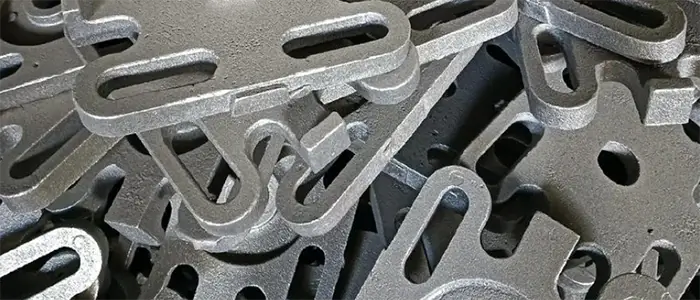
Common Casting Defects and Their Remedies
Let’s break down each category with practical details from the field.
Gas Porosity
What it looks like: Rounded, smooth-walled holes, either just below the surface (pinholes) or larger internal cavities (blowholes).
Root Causes: In my early days, I often traced this back to high moisture in the molding sand or inadequate venting that trapped gases. Gases dissolved in the molten metal can also be a culprit.
Prevention Tips:
- Ensure molds and cores are properly dried.
- Improve mold ventilation.
- Optimize the gating systems and riser sleeves design to allow gases to escape.
Shrinkage Defects
What it looks like: Rough, dendritic cavities or porosity. I recall a project where a shrinkage cavity in a pump housing caused a major failure.
Root Causes: This is a natural result of metal contracting as it cools from liquid to solid. Insufficient risers to feed molten metal into the thick sections of the casting are a common cause.
Prevention Tips:
- Use properly sized risers and chills to control the solidification rate.
- Optimize the pouring temperature and the casting geometry to promote directional solidification.
Mold Material Defects
What it looks like: These are surface imperfections. A cut or wash appears as an uneven, rough area where the mold surface was eroded.
Root Causes: A weak mold surface, high pouring temperature, or turbulent metal flow.
Prevention Tips:
- Increase the mold strength.
- Control the pouring temperature and reduce turbulence in the gating system.
Pouring Metal Defects
What it looks like:
Cold Shut: A distinct line or seam across the surface, as if two streams of metal didn’t fuse.
Misrun: The casting is incomplete because the metal solidified before filling the mold.
I’ve found that these two are often confused. A cold shut is a fusion failure, while a misrun is an incomplete fill.
Root Causes: Pouring temperature is too low, slow pouring, or a mold section that is too thin.
Prevention Tips:
- Increase the pouring temperature and pouring speed.
- Redesign the gating system to ensure faster, smoother filling.
Metallurgical Defects
What it looks like: Hot tears or hot cracks are irregular, jagged cracks that occur when the casting is still hot and its contraction is restricted by the mold.
Root Causes: A common issue in castings with abrupt changes in cross-section. The mold or core offers too much resistance during shrinkage.
Prevention Tips:
- Improve casting design to avoid sharp corners and drastic section changes.
- Use a more collapsible core sand to reduce resistance.
How to Prevent Casting Defects?
Prevention is always better than cure. Based on my experience, a systematic approach is key.
Process Simulation: Modern simulation software (like ProCAST mentioned in one study) allows for visualization of the filling and solidification process, helping to predict and eliminate potential defects like shrinkage long before production starts.
Process Control: Meticulously control every variable: sand quality, metal composition, pouring temperature, and time.
Design for Manufacturability (DFM): Collaborate with your foundry early in the design phase. Simple design tweaks can often eliminate potential cold shuts, hot tears, and shrinkage issues.
Conclusion
Dealing with casting defects is an integral part of a foundry engineer’s life. The key to improving casting quality lies in a deep understanding of the fundamental principles behind each defect. By categorizing the flaw correctly, you can trace it back to its root cause and implement an effective solution. Remember, consistent quality in metal casting is achieved through rigorous process control, continuous monitoring, and a commitment to casting defect analysis.
I hope this guide serves as a valuable resource for you. If you have specific defect challenges, feel free to share your experiences in the comments below.