


If you’re casting aluminum using low-pressure die casting (LPDC) or counter-pressure casting, you know that the riser tube (also called stalk or feed tube) is a critical component. It carries molten aluminum from the furnace up into the die or mold—and it does this hundreds or thousands of times per day.
But not all riser tubes are the same. The material you choose directly affects:
-
Uptime — how long the tube lasts before replacement
-
Quality — whether it contaminates the melt or causes inclusions
-
Cost — both the purchase price and the cost of downtime
Two advanced ceramic materials dominate this space: Silicon Nitride (Si₃N₄) and Aluminum Titanate (Al₂TiO₅) .
Both are excellent choices. But they serve different applications. This guide helps you understand the differences and choose the right one for your casting operation.
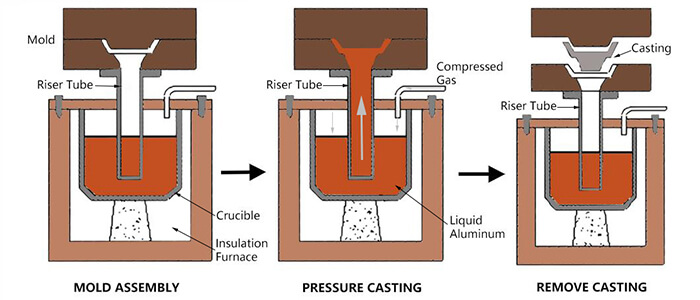
Why Riser Tube Material Matters
In low-pressure aluminum casting, the riser tube is immersed in molten aluminum (typically 680-750°C) for extended periods. It must withstand:
| Challenge | Why It Matters |
|---|---|
| Thermal shock | Sudden temperature changes when the tube enters and exits the melt |
| Chemical attack | Molten aluminum is reactive; some ceramics degrade over time |
| Mechanical stress | The tube must support its own weight and resist cracking during handling |
| Thermal cycling | Repeated heating and cooling cycles can cause fatigue failure |
Choose the wrong material, and you’ll face:
-
Frequent tube replacements (downtime, labor cost)
-
Contamination of the aluminum melt
-
Inconsistent casting quality
Silicon Nitride (Si₃N₄) Riser Tubes
What Is Silicon Nitride?
Silicon nitride is a high-performance advanced ceramic known for exceptional strength, toughness, and thermal shock resistance. It’s often called one of the toughest ceramics available.

Key Properties
| Property | Value |
|---|---|
| Maximum service temperature | Up to 1200°C+ |
| Thermal shock resistance | Excellent—can withstand rapid temperature changes |
| Bending strength | High (typically 700-1000 MPa) |
| Fracture toughness | High for a ceramic (6-8 MPa·m¹/²) |
| Density | ~3.2 g/cm³ |
| Wettability | Poor wetting by molten aluminum (good—prevents sticking) |
| Chemical resistance | Excellent in aluminum melts |
| Color | Dark gray to black |
Advantages
| Advantage | Why It Matters |
|---|---|
| Extremely long service life | Can last months or even years in normal operation |
| Excellent thermal shock resistance | No preheating needed; resists cracking |
| High strength | Resists mechanical damage during handling |
| Non-wetting | Aluminum doesn’t stick, reducing dross buildup |
| No contamination | Chemically stable, no reaction with aluminum |
Best Applications
-
High-volume production where uptime is critical
-
Automated foundries where tube replacement is costly
-
Applications requiring maximum reliability
-
When the riser tube is difficult to access or replace
Aluminum Titanate (Al₂TiO₅) Riser Tubes
What Is Aluminum Titanate?
Aluminum titanate is a ceramic specifically engineered for aluminum contact applications. Its unique property is extremely low thermal expansion, which gives it outstanding thermal shock resistance.

Key Properties
| Property | Value |
|---|---|
| Maximum service temperature | Up to 800-900°C (adequate for aluminum) |
| Thermal shock resistance | Excellent—very low thermal expansion |
| Bending strength | Moderate (lower than silicon nitride) |
| Fracture toughness | Moderate |
| Density | ~3.3 g/cm³ |
| Wettability | Very poor wetting by molten aluminum |
| Chemical resistance | Excellent in aluminum melts |
| Color | Typically light tan to brown |
Advantages
| Advantage | Why It Matters |
|---|---|
| Excellent thermal shock resistance | Handles rapid temperature changes well |
| Non-wetting | Aluminum does not stick; minimal dross adhesion |
| Cost-effective | Generally less expensive than silicon nitride |
| Lightweight | Easy to handle and install |
| No contamination | Chemically stable with aluminum |
Best Applications
-
General low-pressure aluminum casting
-
Moderate-volume production
-
When initial cost is a primary consideration
-
Applications where thermal shock is the main concern
How to Choose
Choose Silicon Nitride If:
| Scenario | Why |
|---|---|
| High-volume production | Longer service life means fewer replacements, less downtime |
| Automated foundry | Replacement labor is expensive; reliability is critical |
| Difficult-to-access tubes | If replacing the tube requires significant downtime, choose the longer-lasting option |
| You prioritize uptime over upfront cost | Higher initial investment pays off in reduced maintenance |
Silicon nitride is the premium choice when maximum reliability and service life are required.

Choose Aluminum Titanate If:
| Scenario | Why |
|---|---|
| General production volumes | Excellent performance at a lower cost point |
| Cost-sensitive operation | Lower initial investment |
| Moderate uptime requirements | Replacement is not overly disruptive |
| You want a balance of cost and performance | The most popular choice for many foundries |
Aluminum titanate is the standard choice for most low-pressure aluminum casting applications.
Common Questions
Q1: Can I use either material for all aluminum alloys?
A: Yes. Both materials are compatible with most aluminum alloys. For specialized alloys (e.g., high-silicon, high-magnesium), confirm with your supplier, but both are generally suitable.
Q2: Do I need to preheat riser tubes before use?
A: Both materials have excellent thermal shock resistance. However, gradual preheating is still good practice, especially for larger tubes. Silicon nitride handles cold starts better than most ceramics, but preheating extends life for both materials.
Q3: Which material lasts longer?
A: Silicon nitride typically lasts longer—often 2-3× longer than aluminum titanate in comparable applications. The exact life depends on operating conditions.
Q4: Is aluminum titanate “good enough” for most foundries?
A: Yes. For many general-purpose low-pressure casting operations, aluminum titanate provides excellent performance at a reasonable cost. Silicon nitride is reserved for the most demanding applications or when maximum uptime is required.
Q5: How do I know when to replace a riser tube?
A: Signs of wear include:
-
Visible cracking or chipping
-
Aluminum sticking to the tube surface (loss of non-wetting)
-
Reduced flow rate or filling problems
-
Inconsistent casting quality
Installation and Care Tips
For Both Materials
| Practice | Why |
|---|---|
| Handle carefully | Both are ceramics; avoid impacts |
| Inspect before use | Check for cracks or chips |
| Store in dry location | Prevent moisture absorption |
| Gradual preheating | Extends service life |
| Clean regularly | Remove aluminum buildup to maintain non-wetting properties |
For Silicon Nitride
-
Stronger, but still a ceramic—handle with care
-
If you need maximum life, consider a thicker wall section
For Aluminum Titanate
-
More affordable, but treat with similar care
-
Ideal for general-purpose use
Conclusion
Both silicon nitride and aluminum titanate riser tubes are excellent choices for low-pressure aluminum casting. The right choice depends on your priorities:
| If you want… | Choose… |
|---|---|
| Maximum service life, highest reliability | Silicon Nitride |
| Cost-effective, reliable performance | Aluminum Titanate |
At SF-Foundry, we supply both silicon nitride stalk riser tube and aluminum titanate stalk riser tubes for low-pressure and counter-pressure aluminum casting. Our technical team can help you select the right material based on your production volume, operating conditions, and quality requirements.
Contact us:
-
Email: info@sf-foundry.com
-
Technical Support: 8618636913699
-
Website: www.sf-foundry.com