


Unlock the potential of this advanced material that’s reshaping industries from electric vehicles to artificial intelligence.
Silicon carbide (SiC) stands as one of the most versatile and high-performance ceramic materials available today. As a leading manufacturer of advanced ceramic solutions, we at SF-Foundry have witnessed firsthand how SiC has transformed applications across multiple industries—from enabling the electric vehicle revolution to pushing the boundaries of artificial intelligence.
In this comprehensive guide, we’ll explore silicon carbide’s exceptional properties, diverse applications, and why it might be the ideal material solution for your most demanding operational challenges.
What is Silicon Carbide?
Silicon carbide is a synthetic compound of silicon and carbon that occurs naturally only in rare mineral form. What makes SiC truly remarkable is its unique crystal structure, which combines covalent bonding between silicon and carbon atoms, creating an extremely hard and durable material that maintains its properties under extreme conditions.
Through our years of specialized manufacturing experience, we’ve confirmed that synthetic silicon carbide consistently outperforms most traditional ceramics in demanding industrial environments. Its manufactured consistency ensures reliable performance where material failure is simply not an option.
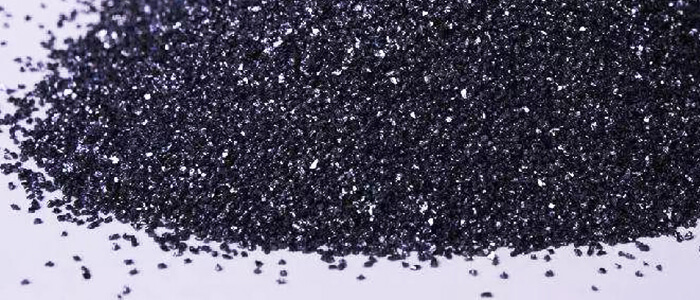
Key Properties That Make Silicon Carbide Exceptional
Extreme Hardness and Wear Resistance
- Exceptional Hardness: Silicon carbide ranks 9-9.5 on the Mohs scale, closely approaching diamond hardness (10)
- Superior Wear Resistance: Approximately 50% harder than tungsten carbide, making SiC components last significantly longer in high-friction applications
- Practical Impact: Reduced maintenance costs and extended component lifespans in abrasive environments
Outstanding Thermal Properties
- Excellent Thermal Conductivity: Ranges from 120-200 W/mK, surpassing most advanced ceramics
- Remarkable Thermal Shock Resistance: Withstands rapid temperature changes up to 1600°C without structural damage, which we’ve validated through rigorous testing at SF-Foundry’s facilities
- Maximum Service Temperature: Maintains structural integrity up to 1650°C in oxidizing atmospheres, with some specialized fibers maintaining strength at over 1800°C
Exceptional Mechanical Strength
- High Compressive Strength: Typically 3900 MPa, approximately 4-5 times stronger than alumina ceramics
- Retained Strength at Elevated Temperatures: Maintains approximately 85% of room temperature strength at 1400°C
- Enhanced Fracture Toughness: Advanced manufacturing techniques have achieved fracture toughness of 4.13 MPa·m¹/² in binder jetting SiC components
Superior Chemical Resistance
- Excellent Corrosion Resistance: Highly inert to most acids, alkalis, and molten salts
- Oxidation Resistance: Forms protective silicon oxide layer at high temperatures
- Molten Metal Compatibility: Resists corrosion from aluminum, copper, and iron alloys
Silicon Carbide vs. Alternative Materials: A Practical Comparison
To better understand silicon carbide’s advantages, here’s how it stacks up against other common industrial materials:
| Property | Silicon Carbide | Alumina | Zirconia | Tungsten Carbide |
|---|---|---|---|---|
| Hardness (Mohs) | 9-9.5 | 9 | 8.5 | 9-9.5 |
| Max Use Temperature (°C) | 1650 | 1750 | 2400 | 600 |
| Thermal Conductivity (W/mK) | 120-200 | 20-30 | 2-3 | 80-110 |
| Thermal Shock Resistance | Excellent | Good | Excellent | Poor |
| Chemical Resistance | Excellent | Good | Good | Fair |
Data compiled from SF-Foundry’s material testing and industry sources
Major Industrial Applications of Silicon Carbide
Electric Vehicles and Clean Energy
Silicon carbide has become a game-changing technology in the transition to clean energy. In electric vehicles, SiC MOSFETs used in main drive inverters and DC-DC converters can reduce overall vehicle energy consumption by 8%-10%.
The market impact is substantial: by 2030, global demand for SiC substrates in new energy vehicles alone is projected to reach 4.32 million units (6-inch equivalent). This growth is further accelerated by the widespread adoption of 800V high-voltage platforms, which reached 11.17% penetration in 2025.
Artificial Intelligence and Advanced Computing
SiC is playing an increasingly critical role in the AI revolution, particularly in addressing the substantial thermal management challenges of high-performance computing. As a superior thermal conductor, silicon carbide serves as an ideal heat spreader material for advanced GPU packaging.
By 2030, the global AI chip intermediary layer demand for SiC substrates is projected to reach approximately 6.2 million units, with potential demand tripling if adopted across baseplate, intermediary layer, and heatsink applications.

Aerospace and Defense
The exceptional thermal stability of advanced silicon carbide fibers has opened new frontiers in aerospace applications. Third-generation high-crystallization SiC fibers like Zeralon®3A and Zelramic®300 can withstand temperatures exceeding 1800°C while maintaining over 80% strength retention.
These materials enable critical advancements in:
- High-thrust aircraft engine and gas turbine hot-end components
- Hypersonic vehicle thermal protection systems
- Nuclear reactor components including nuclear cladding tubes
Additive Manufacturing
Recent innovations have successfully integrated silicon carbide into advanced manufacturing processes. The introduction of “in-situ carbon addition–cold isostatic pressing synergistic” technology has addressed previous limitations in 3D printing complex SiC components.
This breakthrough has achieved remarkable improvements:
- 50.1% increase in flexural strength (reaching 303.61 ± 3.17 MPa)
- 54.8% improvement in fracture toughness (4.13 ± 0.08 MPa·m¹/²)
- 30% reduction in process cycle time compared to conventional methods
Thermal Management Systems
Beyond AI applications, silicon carbide’s exceptional thermal properties (120-200 W/mK thermal conductivity) make it ideal for various heat management applications, including:
- Power electronics cooling systems
- Heat exchangers for high-temperature nuclear applications
- Semiconductor processing equipment
Silicon Carbide Filters: The Ultimate Solution for Demanding Industrial Applications
At SF-Foundry, with over a decade of experience in advanced ceramic manufacturing, we have consistently witnessed how silicon carbide (SiC) filters have revolutionized filtration processes across multiple industries. These remarkable components combine exceptional material properties with practical performance advantages that make them indispensable in the most challenging environments.
Innovation Frontiers: Emerging Silicon Carbide Applications
Advanced Electromagnetic Absorption
Recent research has demonstrated silicon carbide’s potential in specialized electromagnetic absorption applications. Si-W-N co-doped carbon spheres exhibit self-reinforcing heat-resistant electromagnetic absorption properties, with optimal reflection loss reaching -80.53 dB after calcination aging.
This breakthrough opens possibilities for:
- Signal protection systems
- Radar stealth technology
- Anti-electromagnetic pollution solutions
Augmented Reality Displays
Silicon carbide’s high refractive index makes it an ideal substrate for optical waveguides in AR glasses, addressing key technical challenges including:
- Expanding field of view
- Eliminating rainbow effects
- Enabling lightweight, full-color displays
Market projections indicate substantial growth, with AR glasses expected to drive demand for approximately 3.89 million SiC substrates globally by 2030.
Selection Guide: Choosing the Right Silicon Carbide Grade
Based on our experience serving diverse industrial clients, here are key considerations for selecting the appropriate silicon carbide formulation:
Temperature Requirements
-
Sintered SiC: Optimal for temperatures above 1380°C
-
Reaction-Bonded SiC: Cost-effective alternative for moderate temperature applications
Chemical Environment
-
Sintered SiC: Superior performance in highly corrosive environments
-
Nitride-Bonded SiC: Excellent resistance to molten metals
Mechanical Demands
-
Consider both static and dynamic loading conditions
-
Evaluate fracture toughness requirements for impact-prone applications
In our consulting practice, we’ve found that approximately 70% of industrial applications are better served by sintered silicon carbide despite its higher initial cost, due to longer service life and reduced downtime.
Market Outlook and Future Trends
The silicon carbide market is experiencing explosive growth, with the overall market valuation projected to expand from $2.94 billion in 2024 to $14.28 billion by 2029—a cumulative increase of over $11.33 billion.
This growth is driven by converging trends:
- Electric vehicle adoption accelerating SiC penetration in power electronics
- AI infrastructure expansion creating new thermal management applications
- Advanced manufacturing technologies enabling more complex SiC components
- 5G-A and 6G deployments increasing demand for high-frequency RF components
Why Choose SF-Foundry for Your Silicon Carbide Needs?
At SF-Foundry, we’ve developed proprietary manufacturing processes that enhance silicon carbide’s natural advantages:
Customized Solutions
-
Pore Size Optimization: Tailored to specific application requirements
-
Size Range: Standard and custom dimensions from 20mm to 300mm
-
Shape Varieties: Foam, honeycomb, tubular, and custom geometries
Enhanced Material Formulations
-
Improved Thermal Shock Resistance: Our specialized additives increase cycle life by 15-20%
-
Optimized Pore Structure: Gradient porosity designs for maximum efficiency
-
Surface Treatments: Special coatings to enhance performance in specific applications
Global Support Capabilities
-
Technical Consultation: Our engineering team provides application-specific guidance
-
Rapid Prototyping: Custom designs developed within 2-3 weeks
-
Global Logistics: Reliable delivery to international clients
Conclusion: Embracing the Silicon Carbide Revolution
Silicon carbide has evolved from a specialized ceramic material to a critical enabling technology across multiple high-growth industries. Its unique combination of extreme hardness, exceptional thermal properties, and excellent chemical resistance makes it the material of choice for applications where reliability and performance are non-negotiable.
From our perspective at SF-Foundry, we’re observing a fundamental shift in how industries approach material selection for demanding applications. The demonstrated benefits of silicon carbide in improving efficiency, extending component life, and enabling new technologies are driving adoption at an unprecedented pace.
As you consider materials for your next project, we encourage you to evaluate how silicon carbide’s unique properties might address your specific challenges—whether you’re pushing the boundaries of electric vehicle performance, developing next-generation AI hardware, or creating advanced aerospace components.
Explore SF-Foundry’s silicon carbide solutions to optimize your production processes and product performance. Contact our technical team today to discuss how our expertise in advanced ceramic materials can help you leverage the full potential of silicon carbide for your specific application requirements.