


The shape of a riser sleeve is far more than a geometric detail—it is a critical design parameter that directly affects feeding efficiency, casting quality, and overall foundry economics. While cylindrical sleeves dominate the market, the optimal shape for any given application depends on casting geometry, hot spot configuration, production method, and economic considerations.
This comprehensive guide explores the relationship between sleeve shape and performance, helping foundry engineers make informed decisions when selecting between round, rectangular, custom, and specialty shapes.
The Fundamental Principle: Surface Area Matters
The Shape-Efficiency Relationship
The shape of riser sleeves directly affects the feeding effect. The fundamental principle is simple: the sleeve should be designed to have the smallest surface area as possible for a given volume.
This principle derives from basic heat transfer physics. A riser loses heat through its surface area. The smaller the surface area relative to volume (the modulus), the slower it cools, and the longer it can feed the solidifying casting.
The Spherical Ideal
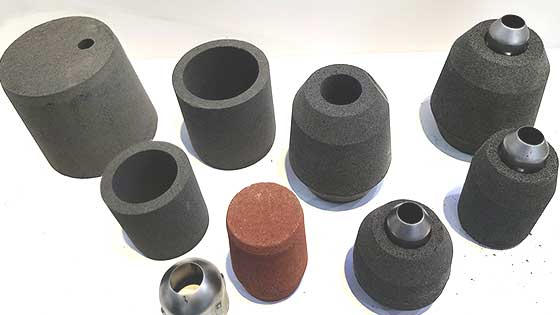
The spherical exothermic riser sleeve has the smallest surface area of any shape for a given volume. This geometric fact makes the sphere the theoretical ideal—it maximizes volume while minimizing heat loss.
Research confirms that spherical sleeves result in the lowest porosity in both risers and castings, and their feeding efficiency is higher than 10% of other shapes of the same volume.
However, the spherical riser sleeve is difficult to mold and has not been widely used in production due to practical manufacturing constraints. This gap between theoretical ideal and practical reality shapes the selection landscape for foundry engineers.
Round (Cylindrical) Sleeves: The Industry Workhorse
Why Cylindrical Dominates
Cylindrical riser sleeves are the most widely used in production for excellent reasons:
-
Manufacturing simplicity: Easy to produce via core shooting, cold-box, or vacuum forming processes
-
Molding convenience: Simple to incorporate into patterns and molds
-
Good feeding performance: Heat dissipation is faster than spherical but slower than square or rectangular shapes
-
Versatility: Suitable for most casting geometries and alloys
Shape Variations Within Round
Round sleeves come in several variants to optimize performance for specific applications:
| Shape Variant | Characteristics | Typical Applications |
|---|---|---|
| Straight cylindrical | Uniform diameter throughout | General-purpose casting |
| Spherical-top cylindrical | Rounded top, cylindrical body | Improved feeding, easier molding |
| Neck-down (tapered) | Smaller at casting contact, larger at top | Enhanced directional solidification |
| Dome-top | Domed upper surface | Blind riser applications |
Available Configurations
Suppliers offer round sleeves in multiple configurations for different molding needs:
-
Straight: Basic cylindrical shape for general applications
-
Necks: Reduced diameter at casting interface for easier removal
-
Downs: Tapered designs for specific flow requirements
-
Domes: Enclosed tops for blind risers
-
With breaker cores: Integrated knock-off features
Standard Size Ranges
Round sleeves are available in extensive size ranges to suit various casting sizes. Typical specifications include:
-
Modulus range: 1.9 cm to 7.08 cm
-
Heights: 90 mm to 360 mm
-
Volumes: 260 cc to over 21,000 cc
-
Inner diameters: Customizable to casting requirements
When to Choose Cylindrical
Cylindrical sleeves are the best choice when:
-
Casting geometry is relatively simple
-
Hot spots are roughly circular in shape
-
Standardization and inventory simplicity are priorities
-
Pattern layout accommodates round riser placement
-
Cost-effectiveness is a primary concern
Rectangular and Shaped Sleeves: Matching Hot Spot Geometry
The Shape-Matching Principle
The shape of riser sleeves used in actual production depends fundamentally on the shape of the hot spot on the casting. When the region requiring feeding is elongated rather than circular, a cylindrical riser may be inefficient or impossible to place.
Rectangular and shaped sleeves allow the riser to match the geometry of the hot spot, providing effective feeding while minimizing unnecessary volume.
Waist-Round (Oval) Sleeves
Waist-round risers (also called oval or racetrack shapes) are often used in wheel castings, where they can save metal.
Applications:
-
Elongated hot spots in gear rims
-
Wheel castings
-
Elongated sections of structural castings
-
Areas where space constraints prevent round risers
Advantages:
-
Better fit to casting geometry
-
Metal savings compared to using multiple round risers
-
Improved pattern layout efficiency
Annular (Ring) Sleeves
Full-circle riser sleeves (annular risers) are used for specific casting geometries where the hot spot forms a ring.
Applications:
-
Sleeve castings: Cylindrical components requiring feeding around circumference
-
Wheel hubs: Where the hot spot forms a circular pattern
-
Ring-shaped components: Any casting with annular geometry
Advantages:
-
Feeds entire circumference simultaneously
-
Eliminates need for multiple discrete risers
-
Ideal for symmetrical circular hot spots
Rectangular and Square Sleeves
While less common than cylindrical, rectangular and square sleeves serve specific needs:
Applications:
-
Large flat castings with elongated hot spots
-
Castings where pattern layout requires rectangular riser placement
-
Sections where round risers would interfere with core placement
Considerations:
-
Higher surface area-to-volume ratio than cylinders (faster cooling)
-
May require insulating or exothermic enhancement to compensate
-
Often custom-made for specific applications
Tapered Design: The 6° Rule
Why Taper Matters
Regardless of basic shape (round or rectangular), riser sleeves are typically manufactured with a specific taper. This design feature serves a critical metallurgical purpose:
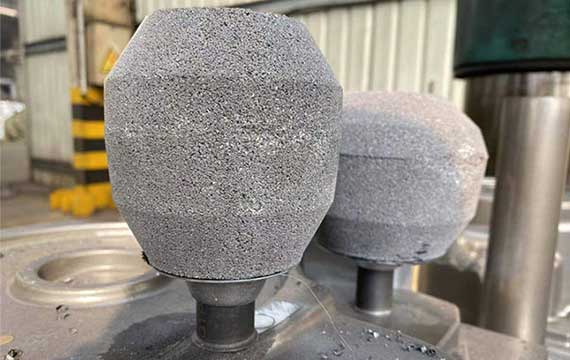
To facilitate the upward movement of the shrinkage hole position in the riser and avoid the shrinkage hole extending into the casting, the riser is usually made into a shape with a large upper and smaller lower section.
The Standard Taper
The standard taper used in riser sleeve design is generally 6°. This angle represents an optimal balance between:
-
Effective directional solidification (wider at top encourages shrinkage cavity to rise)
-
Practical molding considerations
-
Consistent wall thickness for reliable performance
Taper Variations
Different manufacturers and applications may use varying taper angles, but the principle remains universal: the riser should be wider at the top than at the casting interface to promote proper shrinkage cavity formation within the riser rather than the casting.
Specialty and Custom Sleeves
When Standard Shapes Don’t Suffice
There are numerous situations where standard cylindrical or even shaped sleeves cannot meet casting requirements:
-
Complex geometries with irregular hot spots
-
High-pressure molding lines with specific pattern requirements
-
Automated core setting requiring precise dimensional tolerances
-
Unique casting configurations where standard risers won’t fit
-
Maximum yield requirements demanding optimized shape
Custom Sleeve Capabilities
Modern foundry suppliers offer extensive customization options:
| Customization Parameter | Options Available |
|---|---|
| Dimensions | Any diameter, height, or volume |
| Shape | Cylindrical, oval, rectangular, annular, complex contours |
| Material | Insulating, exothermic, or hybrid formulations |
| Color | Customer-specified for identification |
| Finish | Smooth, textured, or with specific surface characteristics |
| Features | Integrated breaker cores, atmospheric cores, identification markings |
Markings and Grooves for Custom Sizing
An innovative approach to custom sizing involves sleeves designed with built-in customization features. Patented designs include riser sleeves with markings and concentric grooves at intervals.
How they work:
-
Measurement markings serve as guides for custom sizing
-
Users can cut standard sleeves to exact required lengths using the markings
-
Concentric grooves help hold the sleeve in place when inserted in the mold
-
Saves time, materials, and money compared to fully custom manufacturing
This approach bridges the gap between standard production economics and custom sizing requirements, particularly valuable for applications where non-standard dimensions are needed but volumes don’t justify dedicated tooling.
High-Pressure Molding Line Innovations
Modern high-pressure molding lines place unique demands on riser sleeves. Innovative designs like the PXT-PKXT-Riser® series address these challenges:
Key features:
-
Highly exothermic riser body connected to casting via metal cylinder
-
Depressurized riser system prevents overpressing or soft molding material
-
Clamping points guarantee positional accuracy after molding
-
No rebound of sleeve during mold compaction
-
Suitable for even the smallest contact areas
-
Ideal break-off behavior after casting
-
Available in fluorine-free formulations
These advanced designs demonstrate how sleeve shape and configuration continue to evolve to meet the demands of modern automated foundries.
Advanced Shape-Related Innovations
NETSleeve® Technology
GTP Schäfer’s NETSleeve® represents a breakthrough in riser removal technology that complements shape selection.
How it works:
-
A refractory net is inserted into the side of the feeder facing the casting
-
The net creates a precisely defined predetermined breaking point directly on the casting surface
-
Risers can simply be knocked off without prior cutting or sawing
-
Virtually no rework required
Advantages:
-
Up to almost 90% time savings in fettling work
-
Maximum feeder capacity thanks to no necking down
-
No risk of early solidification at the riser neck
-
More feeding reliability as inner geometry shifts thermal center into the riser
This innovation demonstrates that shape considerations extend beyond basic geometry to include interface design between sleeve and casting.
Shape Optimization Through Simulation
Modern foundries increasingly use computer modeling and simulation techniques to determine optimal sleeve and riser designs.
Simulation benefits:
-
Identify ideal setups that promote void-free casting
-
Minimize riser size while maintaining feeding effectiveness
-
Optimize shape for specific casting geometries
-
Reduce physical trials and development time
-
Improve overall casting yield
The Future: 3D-Printed Custom Shapes
Additive manufacturing is opening new possibilities for custom sleeve geometries. While still emerging in production, 3D printing enables:
-
Production of custom shapes that would be impossible with traditional tooling
-
Rapid prototyping of optimized designs
-
Complex internal geometries for enhanced performance
-
Small-batch custom sleeves without dedicated tooling costs
Shape Selection Decision Framework
Step 1: Analyze the Hot Spot
Before selecting a sleeve shape, thoroughly analyze the casting’s hot spot:
-
What is the shape of the hot spot? Round, elongated, annular?
-
What are its dimensions? Diameter, length, width, thickness?
-
Where is it located? Top, side, internal?
-
What is the required modulus? Calculate from casting geometry
Step 2: Match Shape to Hot Spot
| Hot Spot Geometry | Recommended Sleeve Shape | Rationale |
|---|---|---|
| Circular, concentrated | Cylindrical (straight or neck-down) | Best modulus, readily available |
| Elongated, narrow | Waist-round (oval) | Matches geometry, saves metal |
| Ring-shaped, circumferential | Annular (full-circle) | Feeds entire circumference |
| Irregular, complex | Custom shape | Matches exactly, maximizes efficiency |
| Multiple adjacent hot spots | Multiple sleeves or shaped sleeve | Depends on spacing and geometry |
Step 3: Consider Practical Constraints
-
Molding process: High-pressure lines may require specialized shapes
-
Pattern layout: Available space for riser placement
-
Automation requirements: Dimensional consistency for core setting
-
Inventory strategy: Standardization vs. customization trade-offs
Step 4: Verify with Modulus Calculation
Regardless of shape, the fundamental requirement remains: the riser modulus must exceed the casting modulus at the fed section. Use manufacturer-provided modulus data for your selected sleeve shape and size.
Step 5: Evaluate Economics
Consider total cost, not just sleeve price:
-
Metal savings from optimized shape
-
Finishing costs (easier removal with proper shape and features)
-
Pattern and tooling costs for custom shapes
-
Yield improvement value
Shape Comparison Summary
| Shape | Modulus (Relative) | Manufacturing Complexity | Application Versatility | Typical Applications |
|---|---|---|---|---|
| Spherical | Highest (Ideal) | Very high (rarely used) | Low | Theoretical ideal |
| Cylindrical | Good | Low | High | General-purpose, most castings |
| Waist-round (oval) | Moderate | Moderate | Specialized | Wheel castings, elongated sections |
| Annular (ring) | Good | High | Specialized | Sleeve castings, wheel hubs |
| Rectangular | Lower than cylindrical | Moderate | Limited | Specific geometry matches |
| Custom | Optimized | High | Application-specific | Complex castings, maximum yield |
Key Principle: Select the shape that provides the highest possible modulus while fitting the casting geometry and accommodating practical production constraints.
Practical Selection Examples
Example 1: Automotive Wheel Casting
Challenge: Elongated hot spot around rim section
Solution: Waist-round (oval) riser sleeves
Benefits: Matches geometry, saves metal compared to multiple round risers
Example 2: Cylindrical Sleeve Casting
Challenge: Circumferential hot spot requiring even feeding
Solution: Annular (full-circle) riser sleeve
Benefits: Feeds entire circumference, eliminates multiple risers
Example 3: High-Pressure Molding Line
Challenge: Risers must withstand molding forces without deformation
Solution: Specialized shape like PXT-PKXT-Riser® with metal sleeve connection
Benefits: Reliable molding, no crumbling, consistent volume
Example 4: Complex Geometry with Limited Space
Challenge: Hot spot in confined area, standard shapes won’t fit
Solution: Custom-shaped sleeve or cut-to-size from marked sleeve
Benefits: Achieves feeding where standard shapes cannot
Conclusion
The choice of riser sleeve shape is far more than an afterthought—it is a strategic decision that affects feeding efficiency, casting quality, metal yield, and production economics.
Cylindrical sleeves remain the industry workhorse for excellent reasons: they offer good feeding performance, manufacturing simplicity, and application versatility. For most general-purpose casting applications, cylindrical is the right choice.
Shaped sleeves (waist-round, annular) serve specific geometries where matching the hot spot shape saves metal and improves efficiency. When your casting has elongated or circumferential hot spots, these shapes outperform cylinders.
Custom sleeves provide the ultimate optimization for complex geometries, maximum yield requirements, or specialized molding processes. Modern manufacturing capabilities make custom shapes increasingly accessible.
Innovative designs incorporating features like integrated breaker cores, metal sleeve connections, or cut-to-size markings continue to expand the possibilities.
The fundamental principle remains unchanged since the earliest riser designs: choose the shape that minimizes surface area for the required volume while matching your casting geometry. By following this principle and considering your specific application requirements, you can select the optimal sleeve shape for sound, efficient, and economical castings.
For assistance with sleeve shape selection or custom feeding solutions for your specific casting applications, contact our technical team.