


Green sand casting stands as one of the most versatile and cost-effective moulding processes in the global foundry industry. It is suitable for both ferrous and non-ferrous metals, scaling efficiently from small batches to high-volume, fully automated production runs. The core of the process lies in its moulding material—a mixture of silica sand, clay (typically bentonite), water, and additives. This “green” sand, named for its moist, plastic condition during moulding, can be reclaimed and reused many times, making it a sustainable and economical choice.
At SF-Foundry, we have seen this process form the backbone of countless foundries worldwide, producing components for automotive, construction, heavy machinery, and general engineering applications. Its flexibility to handle complex shapes and a wide range of part sizes makes it indispensable. However, achieving consistent quality requires precise control over sand properties and the support of advanced foundry consumables—this is where decades of our expertise come into play.
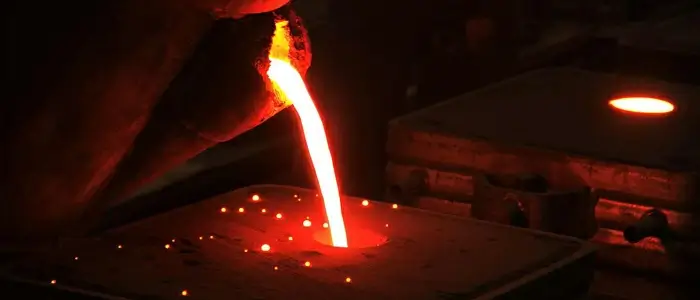
Why Choose Green Sand? Composition and Core Benefits
The widespread use of green sand is no accident. Its balanced composition delivers an exceptional combination of performance, cost, and environmental benefits.
The standard mixture consists of:
-
Base Sand: High-purity silica sand provides the foundational structure.
-
Clay Binder: Bentonite clay, activated by water, bonds the sand grains to give the mould its strength and plasticity.
-
Moisture: Water is the crucial agent that activates the clay’s bonding properties.
-
Additives: Materials like carbonaceous additives (e.g., coal dust) or modern alternatives are used to improve surface finish and mould release.
The primary advantages driving its adoption include:
-
Cost-Effectiveness: The raw materials are readily available and inexpensive. The high reusability of sand further drives down long-term costs.
-
High Productivity: Modern green sand plants can achieve rapid cycle times, producing hundreds of moulds per hour, which is ideal for large production runs.
-
Design Flexibility: The process can accommodate intricate geometries and varying part weights, offering foundries great design freedom.
-
Environmental Sustainability: The closed-loop system of sand reclamation and reuse significantly reduces waste, aligning with modern circular economy goals.
Green Sand Casting Techniques: Horizontal vs. Vertical Moulding
The process begins with compacting the prepared sand around a pattern. The method of compaction and mould production primarily falls into two categories, each suited to different production needs.
Horizontal Moulding is the most traditional approach. It involves creating the mould in two halves—the cope (top) and the drag (bottom)—within a flask. This can be done manually for jobbing work or with high-speed automated matchplate moulding machines for mass production. The two halves are assembled, cores are placed if needed, and the closed mould is ready for pouring.
Vertical Moulding is a highly efficient, flaskless process used for high-volume production. Sand is squeezed between two vertical pattern plates to form a dense mould block. As new moulds are made, they are pushed together into a continuous string, creating the mould cavities. This method saves floor space, allows for excellent dimensional consistency, and is often fully automated.
Our experience at SF-Foundry has shown that regardless of the technique, consistent sand compaction is critical. Insufficient compaction can lead to mould wall movement or erosion during metal pouring, directly causing casting defects.
Addressing the Challenges: How to Improve Quality and Yield
While robust, the green sand process has inherent challenges that can affect yield and total cost. Recognising these is the first step toward superior casting production.
Common limitations include:
-
Dimensional Tolerances: Green sand moulds may not achieve the tightest tolerances possible with some other processes, sometimes requiring additional machining.
-
Surface Finish: Achieving a very smooth as-cast surface can be challenging and often depends on sand grain fineness and coatings.
-
Defect Susceptibility: Issues like gas porosity, sand inclusion, and veining can occur if the process is not meticulously controlled.
The SF-Foundry Integrated Solution Approach
Overcoming these challenges is not about a single product, but a synergistic system. Our philosophy is to provide integrated solutions that work at every stage of the process.
-
Enhanced Mould & Core Surfaces: A primary defence against metal penetration and poor surface finish is a high-quality refractory coating. Our range of water- or alcohol-based coatings are engineered to create a resilient barrier between the molten metal and the sand, significantly improving surface finish and reducing cleaning costs. For complex internal geometries, coating 3D printed sand cores is equally vital for a clean strip and excellent cored surface quality.
-
Optimised Metal Feeding & Filtration: Shrinkage defects are a major cause of scrap. Our insulating and exothermic feeder sleeves are precisely designed to prolong the solidification time of the molten metal in the riser, ensuring sound, dense castings. Furthermore, strategic placement of our ceramic foam filters in the gating system reduces turbulence and re-oxidation, leading to cleaner metal with fewer inclusions.
-
Efficient Sand Recovery & Preparation: The longevity and performance of your green sand system depend on effective sand reclamation. Efficient shakeout, cooling, and clay activation are crucial. We support foundries with expertise and additives that help maintain the perfect balance between sand, clay, and moisture—the key to consistent mould quality hour after hour.
The Future is Hybrid: Green Sand Meets Additive Manufacturing
The industry is evolving, and the most exciting development is the convergence of traditional green sand moulding with 3D sand printing. This hybrid approach unlocks unprecedented possibilities.
Foundries can now use economical green sand for the main mould while employing 3D printed sand cores for incredibly complex internal passages. This “core consolidation” allows designers to combine what would have been multiple traditional cores into a single, intricate printed core. The benefits are transformative:
-
Elimination of expensive core boxes and tooling.
-
Drastic reduction in core assembly time and labour.
-
Ability to produce lightweight, optimized designs with features impossible to achieve with conventional tooling
At SF-Foundry, we are at the forefront of this transition, supplying the specialised coatings and binder technologies that ensure these advanced printed cores perform flawlessly alongside trusted green sand processes.
Partner with SF-Foundry for Your Foundry’s Success
Green sand casting remains a vital, dynamic process. Its future lies in leveraging its core strengths—cost, speed, and flexibility—while integrating new technologies and superior consumables to push the boundaries of quality and design.
As a global supplier, SF-Foundry does more than just provide products. We partner with foundries to optimise their entire process, from sand preparation to pouring and finishing. Our technical specialists, drawing on global experience, work with your team to diagnose issues, implement solutions, and help you cast better, more profitable components.
Ready to enhance your green sand casting operation? Contact our technical team today to discuss your specific challenges and discover how our integrated solutions can drive efficiency, improve quality, and boost your bottom line.