


Let me start with a confession: for years, I thought of ceramics as just plates, mugs, and that fragile vase I inherited from my grandmother. My perspective shifted completely during a visit to a high-tech manufacturing facility. I held a jet-black, lightweight component that felt like polished stone. “This,” the engineer told me, “is silicon nitride. It’s in your car’s engine, helping it run cleaner and more efficiently.” That moment sparked a realization: functional ceramics are the invisible, indispensable foundation of nearly every advanced technology in our lives.
These are not the ceramics of ancient kilns. They are precision-engineered materials, designed at the molecular level for extreme performance. From the moment you wake up to the moment you sleep, they are working silently around and within you.
My Daily Ceramic Journey: A Personal Inventory
My own daily routine is a testament to their pervasiveness. I brush my teeth with a zirconia-based dental crown that feels and functions like a natural tooth. My smartphone—a pocket-sized ceramic marvel—vibrates using a piezoelectric ceramic actuator, its circuitry stabilized by hundreds of multilayer ceramic capacitors (MLCCs). I cook breakfast on a smooth glass-ceramic cooktop, which transfers heat with perfect efficiency while remaining cool to the touch.
Driving to work, my car’s ceramic honeycomb catalytic converter scrubs exhaust clean, and if I had a newer model, its brake discs might be reinforced with ceramic composites for relentless performance. At the office, the fiber optic cables connecting me to the global internet rely on ultra-pure glass ceramics to transmit data at light speed.
Beyond the Mundane: Enabling Health and Longevity
The impact becomes profoundly personal in healthcare. A close friend recently received a new ceramic-on-ceramic hip joint. His surgeon explained that the alumina and zirconia components are so wear-resistant and biocompatible that they could last for decades, granting him an active life without pain or the worry of early revision surgery.
This is the quiet revolution of bioceramics. They are not just passive implants; they are bioactive partners. Materials like hydroxyapatite actively encourage bone integration, while piezoelectric ceramics are used in advanced ultrasonic scalpels for precise, minimally invasive surgery. In diagnostics, they form the heart of imaging devices, making the invisible visible.
Powering and Protecting Our Civilization
The true scale of functional ceramics reveals itself in industry and infrastructure. I’ve seen firsthand how tungsten carbide cutting tools slice through aerospace alloys, enabling the fabrication of components that push the boundaries of flight. In energy production, they are the unsung heroes: as thermal barrier coatings in turbine engines, they allow operation at temperatures that would melt most metals, dramatically boosting efficiency.
As we pivot to a sustainable future, ceramics are central to the transition. They are key components in solid oxide fuel cells (SOFCs) for clean hydrogen power, crucial elements in long-life solid-state batteries, and durable membranes for next-generation water purification and carbon capture systems.
The “Why”: A Unique Suite of Superpowers
Why do engineers consistently turn to ceramics for these critical roles? The answer lies in a combination of properties almost unattainable in other materials:
-
Ultimate Durability: They are among the hardest substances known, offering exceptional resistance to wear, corrosion, and extreme temperatures.
-
Biological Harmony: Their innate inertness and compatibility make them ideal for interacting with the human body.
-
Electrical Mastery: They can be superb insulators, semiconductors, or even superconductors, and can directly convert mechanical energy to electrical signals (and vice versa).
-
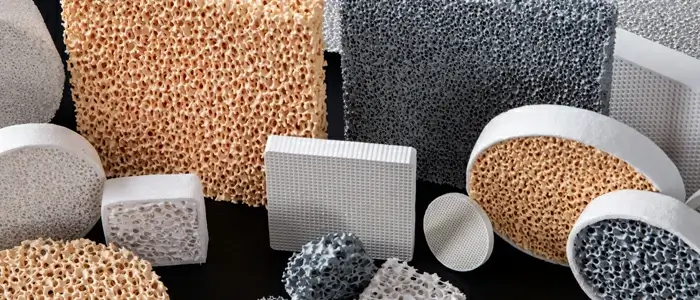
Tailored Functionality: Through advanced engineering, we can design them to be porous ceramic filter, transparent for optics, or magnetically responsive.
Looking Ahead: The Frontier of Material Science
The future is being built on a ceramic substrate. My conversations with researchers point to thrilling frontiers: multifunctional ceramics that combine structural strength with energy harvesting capabilities, additively manufactured (3D-printed) ceramic components with complex geometries for medical devices, and ultra-wide bandgap semiconductor ceramics like gallium oxide that promise a leap forward in power electronics.
A Message for Innovators and Decision-Makers
For anyone involved in product design, engineering, or technology sourcing, overlooking advanced ceramic solutions means potentially missing a key competitive advantage. Whether the challenge is thermal management in 5G hardware, extending the lifespan of industrial equipment, or developing the next breakthrough medical device, functional ceramics offer a pathway to solutions that are more efficient, durable, and innovative.
They are, in essence, the enabling material of the 21st century—invisible, yet absolutely essential. Their story is no longer just about art or antiquity; it’s about shaping a smarter, healthier, and more connected world.