


In modern metal casting, riser sleeves have revolutionized feeding system design by dramatically improving yield and reducing defects. Two primary technologies dominate the market: exothermic riser sleeves and insulating riser sleeves. While both serve the fundamental purpose of extending the solidification time of risers, they operate through completely different mechanisms and offer distinct advantages for different applications.
This comprehensive comparison examines how these two sleeve types work, their performance characteristics, and the specific scenarios where each excels—helping foundry engineers make informed decisions for their casting operations.
Understanding the Basic Concepts
What Are Riser Sleeves?
Riser sleeves are pre-molded inserts placed in the mold cavity to form the riser (feeder). Their purpose is to reduce heat loss from the molten metal in the riser, allowing the riser to remain liquid longer and feed the solidifying casting more effectively. This enables the use of smaller risers compared to traditional sand risers, improving casting yield and reducing metal waste.
Insulating Riser Sleeves: The Passive Approach
Insulating riser sleeves are made from low-density, refractory materials that provide thermal insulation to the riser metal. They work by passively slowing heat transfer—acting as a thermal barrier between the molten metal and the surrounding sand mold, which acts as a heat sink.
When the mold is filled, insulating sleeves first absorb heat from the liquid metal until reaching equilibrium temperature. From this moment on, they protect the liquid metal against further heat losses for a certain time. This delayed cooling permits risers of smaller dimensions, resulting in increased yields.
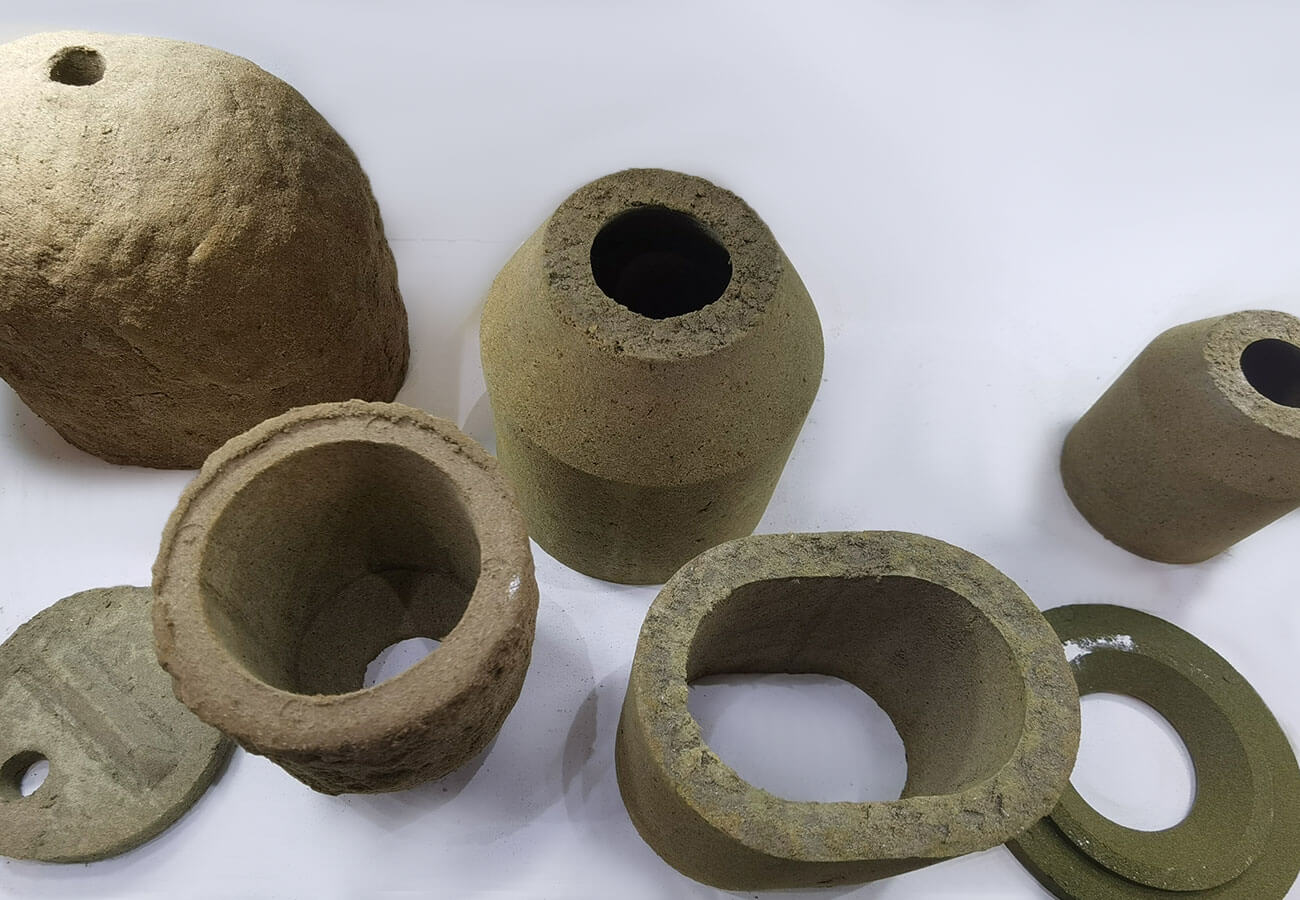
Typical insulating sleeve materials include:
-
Vermiculite
-
Ceramic hollow spheres
-
Calcium silicate
-
Aluminum silicate ceramic fiber
Exothermic Riser Sleeves: The Active Approach
Exothermic riser sleeves contain materials that generate heat through a chemical reaction when contacted by molten metal. Unlike insulating sleeves that merely slow heat loss, exothermic sleeves actively add heat to the riser system.
When molten metal enters an exothermic sleeve, it triggers an aluminothermic reaction (also called the Goldschmidt reaction) in the sleeve material. This reaction generates additional heat, significantly extending the solidification period of the riser metal.
Typical exothermic compositions include:
-
Aluminum powder: The fuel for the exothermic reaction
-
Iron oxide (Fe₂O₃): The oxidizer that reacts with aluminum
-
Activators: Such as potassium nitrate to initiate the reaction
-
Refractory materials: To provide structural integrity
-
Binders: Such as modified water glass or furan resin
Mechanism of Action: Passive vs. Active
How Insulating Sleeves Work
The insulating sleeve functions purely as a thermal barrier. The sand mold surrounding the riser has a K-factor (thermal conductivity) of approximately 0.6 to 1.2, meaning it acts as a chill or heat sink. An insulating sleeve with much lower thermal conductivity (as low as 0.072 for ceramic insulating sleeves) interposes a barrier between the riser metal and this heat sink.
This insulation:
-
Reduces the rate of heat extraction from the riser
-
Delays the onset of solidification in the riser
-
Maintains a liquid reservoir for feeding over a longer period
However, insulating sleeves do not add energy to the system—they merely conserve the existing thermal energy of the molten metal.
How Exothermic Sleeves Work
Exothermic sleeves operate through an entirely different principle: chemical energy generation. The thermite reaction between aluminum and iron oxide is highly exothermic:
2Al + Fe₂O₃ → Al₂O₃ + 2Fe + Heat
This reaction releases significant thermal energy, with a heat of formation (ΔHf) of approximately -816.58 kJ/mol for the reaction components. The heat generated:
-
Raises the temperature of the riser metal
-
Compensates for heat lost to the surroundings
-
Significantly extends the liquid life of the riser
-
Can even reheat metal that has begun to cool
The exothermic reaction is typically initiated when the sleeve reaches a threshold temperature upon contact with molten metal.
Visual Comparison
| Aspect | Insulating Sleeve | Exothermic Sleeve |
|---|---|---|
| Operating Principle | Passive thermal barrier | Active heat generation |
| Energy Source | Conserves existing heat | Creates new heat chemically |
| Temperature Effect | Slows cooling rate | Can increase temperature |
| Reaction | No chemical reaction | Aluminothermic reaction |
| Timing | Continuous insulation | Heat pulse upon contact |
Performance Characteristics Compared
Efficiency and Yield Improvement
Traditional sand risers have a feeding volume efficiency of only about 10% to 15% —meaning 85-90% of the metal in the riser is waste that must be cut off and remelted.
Insulating sleeves improve efficiency significantly by allowing smaller risers, but they still rely on passive heat conservation.
Exothermic sleeves deliver dramatically better performance. Studies show that using exothermic riser sleeves can increase solidification time by 44% compared to moldings without risers. This extended feeding capability allows for:
-
20% improvement in casting process yield
-
30-40% reduction in production costs
-
40-50% weight reduction in the riser sleeve itself
Heat Generation and Temperature Impact
Insulating sleeves do not generate heat—they simply reduce heat loss. The metal in an insulated riser cools more slowly but follows the same basic cooling curve as unsleeved metal, just with a shallower slope.
Exothermic sleeves actively add heat to the system. The aluminothermic reaction can reach temperatures exceeding 2000°F (1093°C), which in some cases exceeds the liquidus temperature of the metal being cast. This means the riser metal may actually experience a temperature increase after pouring before beginning its final cooldown.
Solidification Time Extension
The quantitative difference in solidification time is substantial:
-
Exothermic sleeves: Can extend solidification time by 44% compared to unsleeved risers
-
Insulating sleeves: Extend solidification time through reduced heat loss, but without the active heating component, the extension is more modest
Riser Size Reduction
Both sleeve types allow smaller risers than sand risers, but exothermic sleeves enable the most dramatic size reduction:
-
Insulating sleeves: Reduce riser volume by approximately 25-40% compared to sand risers
-
Exothermic sleeves: Enable riser volume reductions of 50% or more
-
Mini-risers (highly exothermic): Can achieve riser volumes at 60% of conventional size while still satisfying feeding requirements
Material Composition Comparison
Insulating Sleeve Materials
Insulating sleeves are formulated from low-thermal-conductivity materials:
| Material | Function |
|---|---|
| Vermiculite | Primary insulating aggregate |
| Quartz sand | Structural filler |
| Ceramic hollow spheres | High-performance insulation |
| Calcium silicate | Refractory insulation |
| Aluminum silicate fiber | Thermal barrier |
| Binders (water glass, resin) | Structural integrity |
Exothermic Sleeve Materials
Exothermic sleeves contain both insulating components and reactive materials:
| Material | Function | Typical Proportion |
|---|---|---|
| Aluminum powder | Fuel for exothermic reaction | 30-35% |
| Iron oxide (Fe₂O₃) | Oxidizer | 45-50% |
| Silica (SiO₂) | Refractory/structural | 5-10% |
| Activators (e.g., KNO₃) | Reaction initiator | 5% |
| Vermiculite | Insulation | Variable |
| Binder (resin, water glass) | Structural | 10% |
Hybrid: Exothermic-Insulating Sleeves
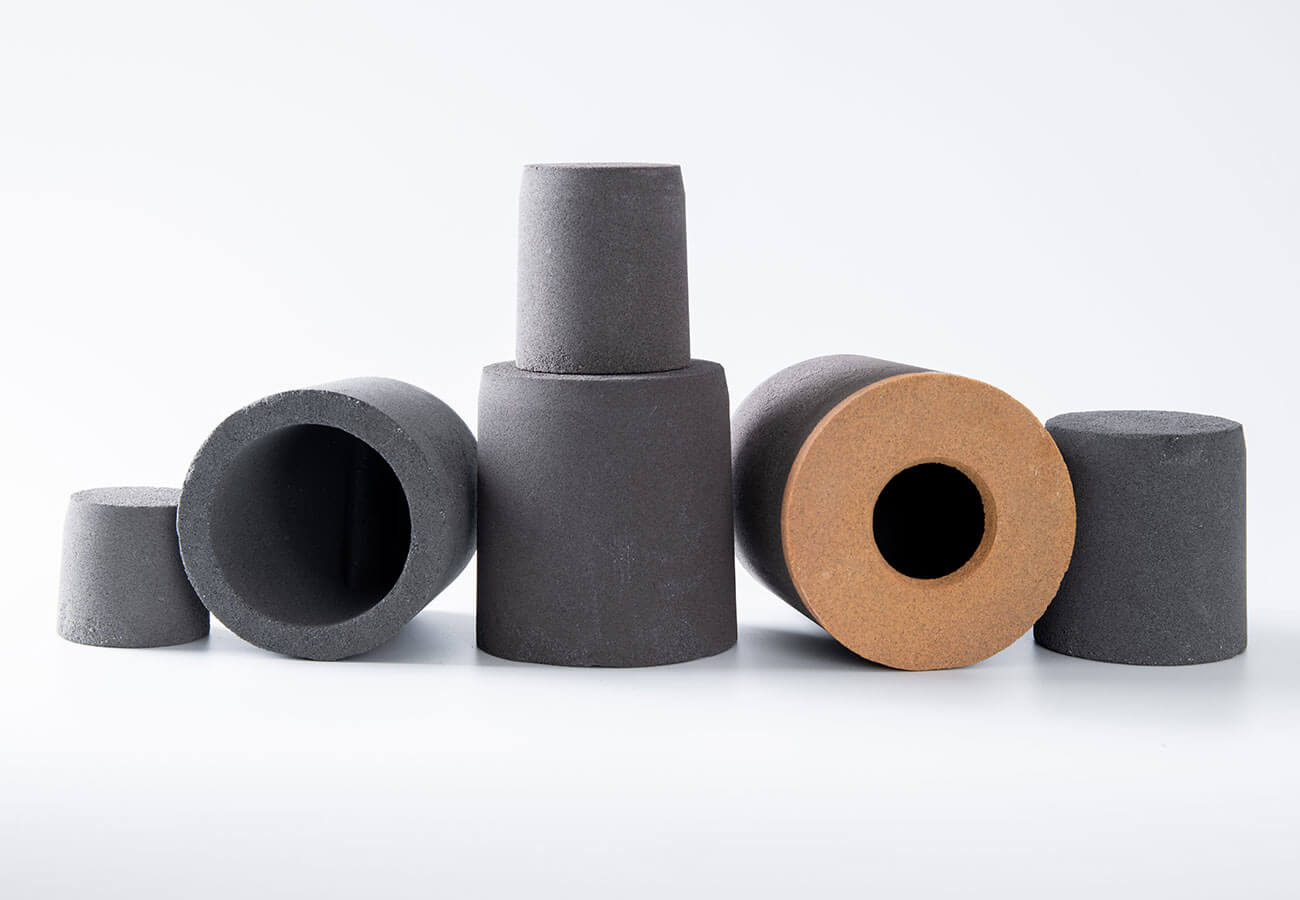
Many modern sleeves combine both functions, incorporating exothermic materials for heat generation and insulating materials for sustained thermal protection. These exothermic-insulating sleeves offer the benefits of both approaches.
Recent innovations include two-layer sleeves with an inner exothermic layer and outer insulating layer, which have shown 8-10% higher metal utilization compared to standard mixed exothermic-insulating sleeves, and 18-20% higher than single-layer inserts.
Application-Specific Considerations
Alloy Compatibility
Insulating sleeves are suitable for a wide range of alloys including:
-
Gray iron
-
Ductile iron
-
Steel (small to medium castings)
-
Aluminum alloys
-
Copper-based alloys
Exothermic sleeves are particularly valuable for:
-
Steel castings: Steel’s high shrinkage and high pouring temperature benefit significantly from exothermic assistance
-
Ductile iron: Special highly exothermic formulations combat “fish-eye” defects
-
Difficult-to-feed sections: Where extended feeding time is critical
-
Thin-walled castings: Where rapid cooling would otherwise limit feeding
For aluminum-magnesium alloys with wide crystallization intervals, exothermic-insulating sleeves help overcome the larger riser size requirements typically needed.
Casting Size and Complexity
Insulating sleeves are often sufficient for:
-
Smaller to medium castings
-
Simple geometries
-
Alloys with lower shrinkage rates
Exothermic sleeves excel with:
-
Large steel castings requiring substantial feeding
-
Complex geometries with multiple hot spots
-
Castings where maximum yield is critical
-
High-pressure molding applications
Molding Process Compatibility
Both sleeve types are available in configurations compatible with various molding processes:
-
Insertable sleeves: For placement after mold making
-
Rammable sleeves: Designed to be molded in place
-
Machine molding sleeves: With tight dimensional tolerances for automated core setting
Economic Comparison
Initial Cost
Insulating sleeves generally have lower material costs than exothermic sleeves because they contain no reactive materials.
Exothermic sleeves have higher per-unit costs due to their reactive components and more complex formulations.
Total Cost of Ownership
Despite higher initial costs, exothermic sleeves often deliver superior economic performance when total system costs are considered:
| Cost Factor | Insulating Sleeve | Exothermic Sleeve |
|---|---|---|
| Sleeve cost | Lower | Higher |
| Metal savings | Good (25-40% reduction) | Excellent (50%+ reduction) |
| Melting energy savings | Moderate | Significant |
| Finishing costs | Reduced | Dramatically reduced |
| Yield improvement | 10-20% | 20-30% |
| ROI | Good | Excellent for demanding applications |
Quantitative Benefits
A study on steel castings demonstrated that innovative two-layer exothermic-insulating sleeves achieved 8-10% higher metal utilization compared to standard mixed sleeves, and 18-20% higher utilization than single-layer inserts.
The production cost benefits cited by manufacturers include :
-
Production cost reduction: 30-40%
-
Riser sleeve weight reduction: 40-50%
-
Improved casting yield: ~20%
Special Design Features
Blind Riser Configurations
Both sleeve types can be manufactured as closed insulating riser sleeves for blind riser applications. These incorporate a wedge molded into the top that acts as an atmospheric core, ensuring proper feeding. Vent holes are typically provided in the top cover to allow mold air to escape during casting.
Breaker Core Integration
Modern sleeves, both insulating and exothermic, can be fitted with breaker cores (also called knock-off cores) at the riser neck. These create a clean break point between riser and casting, minimizing grinding and finishing work.
Shape Optimization
Research has shown that sleeve shape significantly affects performance. Studies comparing cylindrical, spherical, and oval exothermic sleeves found that spherical sleeves result in the lowest porosity in both risers and castings. This has led to increasing interest in optimized sleeve geometries, sometimes enabled by 3D printing of core boxes.
Environmental and Operational Considerations
Sand Reclamation
Insulating sleeves made from ceramic materials can typically be reclaimed and recycled with foundry sand.
Exothermic sleeves may produce reaction byproducts (aluminum oxide, iron) that can affect sand reclamation. Some formulations can produce agglomerates or fines that adversely affect the sand reclamation cycle.
Temperature Limitations
Insulating sleeves have no inherent temperature limitations beyond their refractory properties.
Exothermic sleeves have a practical limitation: the exothermic reaction temperature (approximately 2000°F/1093°C for typical aluminum-iron oxide mixtures) is below the liquidus of some metals. For very high-temperature alloys, this means the sleeve may not provide the expected benefit. However, modern formulations have improved reaction temperatures.
Fluorine-Free Formulations
Environmental regulations have driven development of fluorine-free exothermic sleeves that maintain performance while eliminating environmental concerns associated with fluoride-based compounds.
Selection Guide: Which Sleeve Should You Choose?
Choose Insulating Sleeves When:
-
Cost sensitivity is high
-
Casting size is small to medium
-
Alloy shrinkage is moderate
-
Yield improvement of 25-40% is sufficient
-
Simpler application is preferred
-
Sand reclamation compatibility is critical
Choose Exothermic Sleeves When:
-
Maximum yield improvement is required
-
Working with steel or difficult-to-feed alloys
-
Casting geometry includes challenging hot spots
-
Riser size must be minimized (space constraints)
-
Finishing costs are a major concern
-
Energy savings from reduced melting are prioritized
-
Production volume justifies higher sleeve cost
Consider Hybrid/Two-Layer Sleeves When:
-
The application demands both heat generation and sustained insulation
-
Premium performance justifies higher cost
-
Working with large steel castings
The Future: Advanced Sleeve Technologies
Two-Layer Sleeves
Recent research has demonstrated the effectiveness of two-layer sleeves combining an inner exothermic layer with an outer insulating layer. This design captures the rapid heating benefits of exothermic materials with the sustained protection of insulation, achieving metal utilization 18-20% higher than single-layer alternatives.
3D-Printed Sleeve Geometries
Additive manufacturing enables production of core boxes for sleeves with optimized shapes (spherical, ellipsoid, fusion designs) that were previously impractical to manufacture. These optimized geometries further improve feeding efficiency.
Simulation-Optimized Sleeve Design
Solidification simulation software allows engineers to optimize sleeve selection and placement virtually, ensuring the right sleeve type and size for each specific casting application.
Conclusion
Exothermic and insulating riser sleeves represent two complementary approaches to improving casting feeding efficiency. Insulating sleeves provide passive thermal protection, slowing heat loss and enabling smaller risers through conservation of existing thermal energy. Exothermic sleeves actively generate heat through aluminothermic reactions, adding energy to the system and enabling dramatic riser size reduction.
The choice between them depends on casting requirements, alloy characteristics, economic factors, and quality objectives. For many applications, modern hybrid sleeves that combine both functions offer the best of both worlds—the immediate heat pulse of exothermic materials coupled with the sustained protection of insulation.
As casting demands continue to increase and sustainability concerns drive yield improvement, both sleeve technologies will continue to evolve. Recent innovations in two-layer designs, optimized geometries, and environmentally friendly formulations ensure that foundries have increasingly effective tools to produce sound castings with minimal waste.
Understanding the fundamental differences between these technologies—passive insulation versus active heat generation—enables informed selection and optimal feeding system design for any casting application.
For assistance with sleeve selection or custom feeding solutions for your specific casting applications, contact our technical team.