


In metal casting, one of the most persistent challenges is preventing shrinkage porosity—those internal voids that form when molten metal solidifies and contracts without sufficient feed metal available. For decades, foundries relied on simply making risers larger, sacrificing yield for quality. Then came exothermic riser sleeves, a technology that fundamentally changed the economics of feeding systems.
Today, exothermic riser sleeves represent the pinnacle of feeding efficiency, enabling foundries to produce more castings per kilogram of metal melted while reducing energy costs, cleaning labor, and overall defect rates. But how exactly do these sleeves work, and when should you choose them over insulating alternatives? This comprehensive guide answers both questions, providing foundry engineers and procurement professionals with the technical knowledge needed to optimize their feeding systems.
How Exothermic Riser Sleeves Work
The Basic Principle
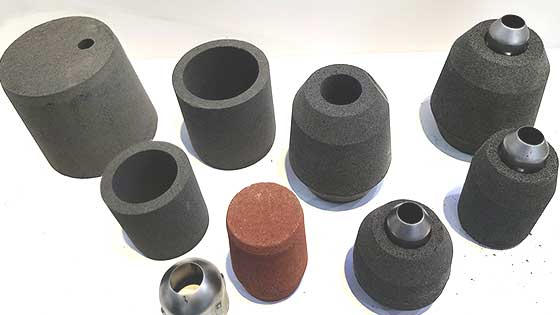
An exothermic riser sleeve is a hollow cylinder made of moldable refractory material that is inserted into the sand mold, forming a sheath around the riser cavity. When molten metal fills the riser, it ignites the sleeve material, triggering a chemical reaction that generates additional heat.
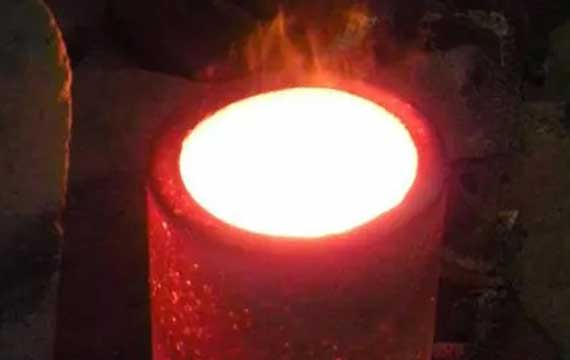
The key insight—often misunderstood—is that the exothermic reaction does not primarily transfer heat to the metal. Rather, it compensates for heat loss from the riser and provides an additional insulating effect from the ignited, hot, glowing sleeve material. In essence, the sleeve acts as both a heat generator and a thermal barrier, keeping the riser molten long after it would normally freeze.
The Chemistry Behind the Reaction
Exothermic sleeve materials typically contain a thermite-type mixture designed to oxidize rapidly when exposed to molten metal. Common components include:
| Component | Function |
|---|---|
| Aluminum powder | Combustible fuel source |
| Magnesium | Combustible fuel source, ignition aid |
| Iron oxide (Fe₂O₃) | Oxygen donor for the reaction |
| Sodium nitrate (NaNO₃) | Accelerates ignition and burnout |
| Potassium nitrate (KNO₃) | Accelerates ignition and burnout |
| Silica (SiO₂) | Oxygen-containing material |
| Chamotte/Perlite | Filling materials that delay the reaction |
| Water glass | Binder |
The fundamental reaction follows an aluminothermic mechanism, represented by this equation:
Eq. 1: 2 Al + Fe₂O₃ → Al₂O₃ + 2 Fe + Heat
When the sleeve contacts molten metal (typically at 1300-1600°C depending on the alloy), the aluminum oxidizes rapidly, releasing substantial heat. Nitrates in the formulation lower the ignition temperature and accelerate the burnout, ensuring the reaction initiates quickly and proceeds efficiently.
The Ignition Process
The ignition sequence follows a predictable pattern:
- Contact: Molten metal fills the riser cavity, contacting the sleeve’s inner surface
- Initiation: The high temperature triggers the aluminothermic reaction
- Propagation: The reaction spreads through the sleeve material
- Sustained heating: The ignited sleeve glows and continues generating heat
- Extended solidification: The riser remains molten longer than an equivalent sand riser
Importantly, the heat generated doesn’t raise the metal temperature above its pouring temperature—it simply maintains it by offsetting thermal losses to the surrounding mold.
Physical Characteristics
Exothermic sleeves exhibit specific physical properties that enable their performance:
- Low density: Typically 0.55 to 1.10 specific gravity, making them lightweight and easy to handle
- High exothermic property: Generates significant heat upon ignition
- Good insulation effect: The ignited material provides thermal resistance
- Dimensional accuracy: Precision manufacturing ensures consistent fit in mold cavities
- Excellent strength: Sufficient structural integrity to withstand molding pressures
Available sizes range from small diameters of 25mm up to 300mm, with heights from 3mm to 400mm, accommodating everything from tiny investment castings to massive steel risers.
The Benefits of Exothermic Riser Sleeves
Dramatically Improved Casting Yield
The most immediate benefit of exothermic sleeves is yield improvement. Because the sleeve keeps the riser molten longer, the riser can be significantly smaller than a sand riser while still providing adequate feed metal.
Traditional sand risers might operate at 10-15% efficiency. With exothermic sleeves, efficiency can reach 30% or higher. The modulus extension factor—a measure of how much larger a riser’s effective feeding capacity becomes—typically ranges from 1.3 to 1.8 for exothermic sleeves. This means a riser with a modulus of 2 cm can feed as effectively as a sand riser with a modulus of 2.6 to 3.6 cm.
Reduced Shrinkage Defects
By maintaining molten metal availability throughout solidification, exothermic sleeves virtually eliminate shrinkage porosity in fed sections. Casting rejections due to shrinkage defects are minimized, directly improving profitability.
Lower Cleaning and Finishing Costs
Exothermic sleeves often incorporate breaker cores (also called knock-off cores)—constricted sections at the riser neck that make riser removal easier. The result:
- Reduced contact surfaces between riser and casting
- Easier riser knock-off during cleaning
- Minimal grinding and surface finishing
- Lower shot blasting costs
Energy and Environmental Benefits
From a sustainability perspective, exothermic sleeves offer compelling advantages:
- Less metal melted per finished casting
- Lower energy consumption in melting furnaces
- Reduced sand consumption (smaller risers mean less sand in molds)
- Lower binder usage in sand systems
- Minimized alloying element losses
- Significantly reduced CO₂ emissions per tonne of castings
Increased Maximum Casting Weight
For a given foundry’s melting capacity, exothermic sleeves enable production of larger castings. By reducing the metal required for risers, more of the melt can be directed to the casting itself.
Exothermic vs. Insulating Sleeves
Understanding when to use exothermic sleeves requires comparing them with insulating alternatives.
| Parameter | Exothermic Sleeves | Insulating Sleeves |
|---|---|---|
| Mechanism | Generate heat via chemical reaction | Slow heat loss through low thermal conductivity |
| Heat source | Active—creates additional heat | Passive—only retains existing heat |
| Efficiency range | Modulus extension 1.3-1.8x | Modest extension (typically 1.2-1.4x) |
| Cost per unit | Higher | Lower |
| Best applications | Difficult-to-feed alloys, heavy sections, high-yield requirements | General castings, moderate feeding needs |
| Alloy suitability | Steel, ductile iron, non-ferrous | Gray iron, aluminum, bronze |
Many modern sleeves are actually hybrid exothermic-insulating designs that combine both mechanisms. These sleeves ignite and generate heat while also providing excellent insulation from the surrounding mold. The Foseco KALMIN series, for example, offers superior insulating characteristics with low smoke and fume, suitable for demanding applications.
When to Use Exothermic Riser Sleeves
Primary Application Scenarios
Steel Castings
Steel’s high pouring temperatures (1550-1650°C) and significant solidification shrinkage make it an ideal candidate for exothermic sleeves. The sleeves provide the thermal boost needed to keep steel risers molten while feeding heavy sections.
Typical applications: Carbon steel, alloy steel, stainless steel castings for valves, pumps, heavy machinery, and aerospace components.
Ductile Iron Castings
Ductile iron presents unique feeding challenges due to its graphitic expansion during solidification. While this expansion can reduce feeding requirements, heavy sections still demand effective risering. Exothermic sleeves are particularly valuable for:
- Large ductile iron castings (e.g., wind turbine components, heavy machinery bases)
- Sections requiring directional solidification control
- High-yield production scenarios
Difficult-to-Feed Geometries
When castings have isolated heavy sections or hot spots distant from the pouring point, exothermic sleeves provide the extended feeding range needed to ensure soundness.
High-Pressure Molding Lines
Automatic, high-pressure molding lines demand riser sleeves with exceptional strength to withstand molding pressures. Many exothermic sleeves are formulated specifically for these environments, offering:
- High strength to resist deformation
- Dimensional accuracy for robotic placement
- Consistent performance across thousands of molds
Maximum Yield Requirements
When metal cost is a primary concern—such as with high-alloy steels or expensive non-ferrous alloys—the yield improvement from exothermic sleeves justifies their higher unit cost.
Real-World Example: Rotor Rim Castings
The Steel Founders’ Society of America provides a classic example of exothermic sleeve application:
*”The rotor rim has significant thermal mass and will solidify slowly. To prevent shrinkage porosity in the rim, there must be a continuous source of molten metal feed into the rim during solidification. The perimeter risers feed molten metal into the rim. The smaller risers would normally solidify more quickly than the rim, which would shut off metal feed into the rim before it is fully solidified. To overcome this problem, the risers are surrounded with a 1/2″ thick exothermic sleeve.”*
In this application, the exothermic sleeves keep the risers molten long enough to feed the massive rim section, ensuring a sound casting.
When NOT to Use Exothermic Sleeves
Exothermic sleeves aren’t always the optimal choice. Consider insulating sleeves when:
- Gray iron castings with moderate section sizes (gray iron’s lower shrinkage and higher thermal conductivity often make insulation sufficient)
- Thin-section castings where rapid solidification isn’t a concern
- Cost-sensitive commodity castings where the yield improvement doesn’t justify the sleeve cost
- Simple geometries with easy feeding paths
Types and Configurations
Open vs. Blind Sleeves
Exothermic sleeves come in two primary configurations:
| Type | Description | Applications |
|---|---|---|
| Open sleeves | Cylindrical with open top, exposed to atmosphere | Top risers, situations requiring observation or topping |
| Blind sleeves | Enclosed top, completely within the mold | Side risers, automated molding, atmospheric riser designs |
Blind sleeves typically include a vent hole in the top cover that must be punctured to allow mold air to escape during casting.
With or Without Breaker Cores
Breaker cores (also called washburn cores) create a constricted neck between riser and casting that facilitates easy knock-off. Options include:
- Sleeves with integral breaker cores: Pre-assembled for consistent performance
- Sleeves without breaker cores: Require a metal pad (typically 10-15mm) between sleeve bottom and casting surface
- Sleeves with “V” notch: Specialized designs for specific feeding requirements
Specialized Designs
- William core sleeves: Atmospheric riser designs for enhanced feeding
- Hot spot feeding risers: For high-pressure molding lines, with low fluorine content and high heat generation
- KALPUR direct pouring system: Combines feeder sleeve with ceramic foam filter, eliminating conventional running systems
How to Select the Right Exothermic Sleeve
Step 1: Determine Alloy and Pouring Temperature
| Alloy Group | Temperature Range | Sleeve Requirements |
|---|---|---|
| Steel | 1550-1650°C | High-temperature formulation, minimal ash |
| Ductile Iron | 1350-1450°C | Exothermic-insulating hybrid, good strength |
| Gray Iron | 1300-1400°C | Standard exothermic or insulating |
| Copper Alloys | 1100-1200°C | Thermal shock resistance |
| Aluminum | 700-800°C | Lower-temperature formulation |
Step 2: Calculate Required Modulus
The modulus (volume/surface area) of your casting’s hot spot determines the minimum riser modulus needed. Apply the modulus extension factor (typically 1.3-1.8) to select an appropriately sized sleeve.
Step 3: Select Sleeve Dimensions
Available sizes range from 25mm to 300mm diameter. Consider:
- Internal diameter: Must match your riser peg design
- Height: Sufficient to provide required feed metal volume
- Wall thickness: Affects strength and exothermic performance
Step 4: Choose Configuration
Decide on open vs. blind, with or without breaker core, based on your molding process and riser location.
Step 5: Consider Molding Method
| Molding Method | Sleeve Requirements |
|---|---|
| Green sand, manual | Standard sleeves, insertable after molding |
| Green sand, automatic | High-strength sleeves for robotic placement |
| Shell molding | Dimensional accuracy for core setting equipment |
| Permanent mold | Smooth surface finish, precision dimensions |
Proper Installation and Use
Mounting Procedure
Proper installation is critical for sleeve performance:
- Mount on riser peg before molding to ensure correct placement
- Verify internal dimensions match your riser peg design
- Provide metal pad (10-15mm) between sleeve bottom and casting surface when not using breaker cores
- For sleeves with washburn cores: Use hard rubber pad on pattern to prevent core breakage
- Puncture vent holes on blind sleeves to allow air escape
Pouring Practice
- Fill open risers to full height
- Add anti-piping compound on top of the riser for best feeding efficiency
- Recommended anti-piping compound quantity should be followed per manufacturer guidelines
Storage and Handling
- Store in dry conditions to prevent moisture absorption
- Handle carefully to avoid chipping or cracking
- Keep sleeves in original packaging until use
Frequently Asked Questions
Do exothermic sleeves heat the metal?
No—they primarily compensate for heat loss and provide insulation from the ignited material. The heat generated doesn’t raise the metal temperature above its initial pouring temperature.
Can I use exothermic sleeves for aluminum?
Yes, exothermic sleeves are available for non-ferrous alloys including aluminum. However, aluminum’s lower pouring temperature may also allow effective use of insulating sleeves.
What’s the difference between modulus extension factors?
Modulus extension factors (typically 1.3-1.8) indicate how much more effective the sleeved riser is compared to sand. A factor of 1.5 means a sleeved riser with modulus 2 cm performs like a sand riser with modulus 3 cm.
Do I need to preheat sleeves?
No—exothermic sleeves are designed to ignite on contact with molten metal. Preheating is neither required nor recommended.
How do I dispose of used sleeves?
Used sleeves contain refractory materials and residual metal. Follow local regulations for industrial waste disposal. Some foundries recover metal from used sleeves through small crucible furnace processing.
Conclusion
Exothermic riser sleeves represent a proven technology for maximizing casting quality and foundry profitability. By understanding how they work—the aluminothermic reaction that generates heat and the insulating effect of the ignited material—foundry engineers can make informed decisions about when to deploy them.
The optimal applications are clear:
- Steel castings requiring extended feeding
- Ductile iron heavy sections needing directional solidification
- High-pressure molding lines demanding strength and consistency
- Maximum yield scenarios where metal cost justifies premium sleeves
For less demanding applications, insulating sleeves may provide adequate performance at lower cost. Hybrid exothermic-insulating sleeves offer a middle ground, combining both mechanisms for versatile application across alloy types.
As foundries continue pursue higher yields, lower costs, and reduced environmental impact, exothermic sleeves will remain an essential tool in the feeding systems arsenal. When properly selected and installed, they deliver on their promise: more castings, less scrap, and better profitability.