


In the high-stakes environment of metal casting, precise temperature measurement isn‘t just beneficial—it’s critical. An inaccurate reading can mean scrapped batches, off-spec chemistry, and thousands of dollars in wasted material.
For molten metal temperature measurement, foundry engineers typically choose among three main types of thermocouples—disposable (single-use), reusable (multi-use), and permanent (fixed) sensors. Each serves a distinct purpose, and choosing the wrong type can lead to inaccurate data, process inefficiencies, and increased costs.
1. Disposable (Single-Use) Thermocouples
What They Are
A disposable thermocouple—also called a fast, expendable, or single-use thermocouple—is a consumable temperature sensor designed for quick and precise point measurements of molten metals. Its entire design philosophy centers on speed and accuracy for a single, critical moment.
Construction & How They Work
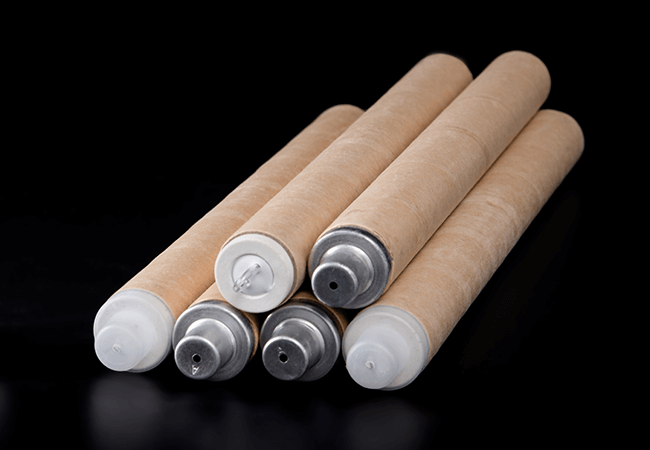
It consists of a thin, precious-metal thermocouple wire housed inside a disposable paper or ceramic tube with a protective cap. The operator connects the probe to a portable electronic thermometer via a quick-connect plug, immerses it into the molten metal for 3–5 seconds, the meter captures the peak temperature, and the used probe is discarded. The recommended immersion depth is approximately 300–400mm, and the probe should not touch the furnace wall or scum.
Key Characteristics
| Feature | Details |
|---|---|
| Response Time | Ultra-fast: 2–5 seconds |
| Accuracy | High; each measurement uses a brand-new sensor, eliminating errors from metal residue, oxidation, or calibration drift |
| Maintenance | Zero — no calibration or cleaning required |
| Lifespan | Single use only |
| Available Types | S, B, R, W (tungsten-rhenium) |
Type S (Platinum/Rhodium – 10/Platinum) and Type B (Platinum/Rhodium – 30/6) are the most common for high-temperature applications. Type S is suitable up to approximately 1750°C (3182°F), while Type B can reach 1820°C (3308°F). Tungsten-rhenium (Type W) options are available for ultra-high-temperature applications.
Advantages
-
Ultra-fast response — critical for spot checks at decision points
-
High accuracy — fresh sensor every time, no calibration drift
-
No maintenance — eliminates cleaning and calibration downtime
-
Portable and flexible — ideal for measurements at furnace tap, ladle, or tundish
-
No cross-contamination risk — fresh probe every time
Disadvantages
-
Consumable cost — each measurement requires a new probe
-
Ongoing expense — cost accumulates with frequent use
-
Waste generation — disposable components create waste
Best Applications
-
Critical decision-point measurements: BOF/EAF tap temperature, ladle furnace exit temperature, tundish temperature before continuous casting
-
Spot-checking molten steel, iron, copper alloys, and other high-temperature metals (e.g., zinc)
-
Quality control where a single, highly accurate reading is needed
2. Reusable (Multi-Use) Thermocouples
What They Are
Reusable thermocouples—also called multi-use thermocouples—are a compromise between single-use disposables and permanent sensors. They are designed to provide multiple readings before replacement is required.
Key Characteristics
| Feature | Details |
|---|---|
| Response Time | Fast (comparable to disposables) |
| Accuracy | Good, but can degrade with repeated use |
| Maintenance | Requires cleaning and inspection between uses |
| Lifespan | Multiple uses — some models can last for up to 200 cycles with no loss of accuracy |
| Available Types | S, B, R |
Advantages
-
Lower per-measurement cost than disposables over time
-
Reduced waste compared to single-use probes
-
Good accuracy for most applications
-
Can be used multiple times within a single heat
Disadvantages
-
Requires cleaning and maintenance after each use
-
Risk of calibration drift over multiple uses
-
Potential for cross-contamination between different melts
-
Sensor wear in high-temperature environments can lead to inaccurate readings
-
Limited lifespan — not truly permanent
Best Applications
-
Foundries that need multiple readings within a single heat
-
Operations where the cost of disposables is prohibitive but permanent sensors are not suitable
-
Thermal analysis and process surveys
-
Non-ferrous metal processing (copper, zinc, aluminum — with appropriate protective sheaths)
3. Permanent (Fixed) Thermocouples
What They Are
Permanent thermocouples are durable sensors fixed to equipment to monitor temperature continuously over long periods. They are installed through the wall of a vessel—such as a ladle, holding furnace, or tundish—and provide a constant, real-time temperature signal to the plant‘s control system (PLC/DCS).
Key Characteristics
| Feature | Details |
|---|---|
| Response Time | Slow — tens of seconds to minutes |
| Accuracy | Good, but can drift over time |
| Maintenance | Periodic calibration and replacement of protective sheaths |
| Lifespan | Months or years with proper maintenance |
| Available Types | S, R, B |
Advantages
-
Continuous, real-time temperature data
-
No per-measurement cost — fixed investment
-
Integrates with automation and control systems (PLC/DCS)
-
Enables temperature trend monitoring for process optimization
-
Reduces operator intervention
Disadvantages
-
High initial investment — installation is expensive and complex
-
Slower response time — not suitable for rapid spot checks
-
Difficult to replace — requires furnace downtime
-
Subject to drift and degradation over extended use
-
Limited to fixed locations — not portable
Best Applications
-
Holding furnaces requiring constant temperature feedback
-
Large ladles during lengthy treatments
-
Continuous casting tundishes
-
Reheating furnaces, heat treatment lines, and preheaters
-
Any process where continuous monitoring is essential for automation
Comparison Table: At a Glance
| Feature | Disposable | Reusable | Permanent |
|---|---|---|---|
| Lifespan | Single use | Multiple uses (up to 200 cycles) | Months or years |
| Response Time | 2–5 seconds | Fast | Slow (30 sec – minutes) |
| Accuracy | Highest (fresh sensor) | Good (degrades with use) | Good (drifts over time) |
| Maintenance | None | Cleaning & inspection required | Periodic calibration |
| Cost per Measurement | High (consumable) | Medium | Zero (fixed cost) |
| Initial Investment | Low | Medium | High |
| Portability | High | High | Fixed |
| Contamination Risk | None | Present | Present |
| Best For | Spot checks, critical decision points | Multiple readings per heat | Continuous monitoring & automation |
Decision Guide: Which One Is Right for Your Foundry?
Choose Disposable Thermocouples If:
-
You need fast, highly accurate spot measurements (e.g., tapping temperature, ladle exit temperature)
-
Your process involves critical decision points where accuracy is paramount
-
You want zero maintenance and no cross-contamination risk
-
You operate at high temperatures (up to 1820°C)
-
You need portable measurements at multiple locations
-
You are measuring steel, iron, or copper alloys — note that for non-ferrous metals like aluminum, specialized reusable sensors with protective sheaths are required
Choose Reusable Thermocouples If:
-
You need multiple readings within a single heat
-
You want to reduce consumable costs compared to disposables
-
Your operation can accommodate cleaning and maintenance between uses
-
You need a balance between cost and convenience
Choose Permanent Thermocouples If:
-
You require continuous, real-time temperature monitoring
-
Your process is automated and integrates with a PLC/DCS
-
You need temperature trend data for process optimization
-
You can justify the high initial investment
-
Your application involves a fixed vessel (holding furnace, tundish, ladle)
-
Response time is not critical (you can accept delays of 30 seconds to minutes)
Hybrid Approach: Combining Types
Many foundries use a combination of thermocouple types to optimize both cost and performance:
-
Permanent thermocouples for continuous monitoring of furnace and ladle temperatures
-
Disposable thermocouples for critical spot checks at decision points (tap temperature, tundish temperature)
-
Reusable thermocouples for intermediate applications where multiple readings are needed but permanent installation isn‘t feasible
This layered approach ensures you have the right tool for every measurement need.
Summary
| Type | Best For | Key Advantage | Key Drawback |
|---|---|---|---|
| Disposable | Critical spot checks, steel/iron/copper alloys | Fast, accurate, zero maintenance | Ongoing consumable cost |
| Reusable | Multiple readings per heat | Lower per-measurement cost | Requires cleaning & maintenance |
| Permanent | Continuous monitoring, automation | No per-measurement cost, real-time data | High initial investment, slow response |
The bottom line: Choose based on your measurement frequency, accuracy requirements, budget, and process automation level. For most foundries, a strategic combination of all three types delivers the best balance of cost, accuracy, and operational efficiency.
Need help selecting the right thermocouple for your specific foundry operation? Contact our technical team for personalized recommendations.