


Introduction: My Journey in Choosing Casting Methods
In my years of experience in the manufacturing industry, one of the most common questions I’ve encountered from clients and colleagues alike is: “Should we use die casting or sand casting for this project?” The answer isn’t straightforward, as each method has its unique strengths and ideal applications.
Having overseen hundreds of casting projects, I’ve developed a framework for making this critical decision, which I’m sharing in this comprehensive guide. We’ll explore both processes in detail, compare their key characteristics, and examine real-world applications to help you make an informed choice for your specific needs.
Understanding the Fundamentals: Two Different Approaches
What is Sand Casting?
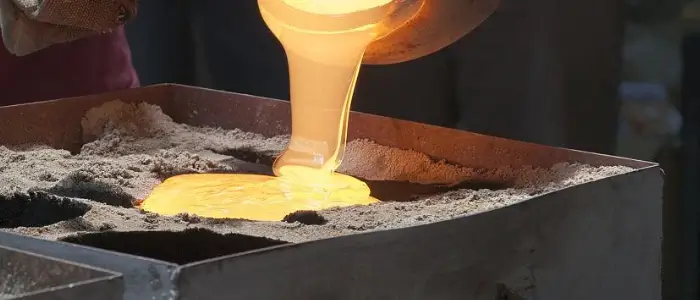
Sand casting is one of the oldest and most versatile metal casting methods. The process involves creating a mold from compacted sand—typically silica sand mixed with a binder like clay (green sand) or resin (shell mold)—into which molten metal is poured under gravitational force.
The key advantage of sand casting lies in its flexibility. Since the mold is destroyed to remove the casting (a one-time use process), it can accommodate extremely complex geometries and very large parts. However, this also means each new casting requires creating a new mold, which impacts production speed and efficiency.
From a cost perspective, sand casting requires relatively low initial investment, especially when using wooden patterns. This makes it particularly suitable for low-volume production, prototypes, and large components where creating expensive permanent molds wouldn’t be economical.
What is Die Casting?
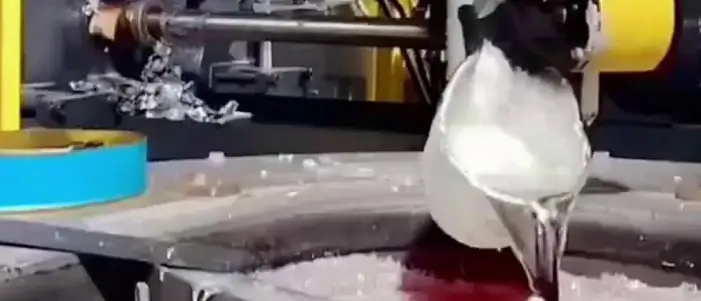
Die casting is a precision-oriented process that utilizes reusable steel molds (called “dies”). Molten metal is forced into these dies under high pressure, ranging from 10 to 175 MPa, depending on the material and part requirements.
The high-pressure injection ensures rapid filling of the mold cavity before any part of the metal solidifies, resulting in excellent surface detail, thin walls, and consistent dimensional accuracy across production runs. This process is significantly faster than sand casting once the dies are created, with cycle times ranging from seconds to minutes depending on part size and complexity.
However, these advantages come with substantial initial costs. The hardened steel dies required for die casting are complex, require high expertise to manufacture, and represent a significant investment. Consequently, die casting is predominantly used for high-volume production where the upfront tooling cost can be amortized over thousands or millions of parts.
Key Comparison: How Sand Casting and Die Casting Differ
Having implemented both processes across various projects, I’ve found these comparison factors most critical in the decision-making process:
Table: Comprehensive Comparison Between Sand Casting and Die Casting
| Factor | Sand Casting | Die Casting |
|---|---|---|
| Mold Material | Sand (silica sand with binders) | Steel (hardened tool steel) |
| Production Volume | Low to medium (prototypes to ~10,000 units) | High (thousands to millions of units) |
| Part Size Range | Very small to extremely large (0.1kg to 200+ tons) | Small to medium (typically under 50 lbs for aluminum) |
| Dimensional Accuracy | Lower (wider tolerances) | High (tight tolerances) |
| Surface Finish | Rough, sandy texture | Smooth, often ready for use without machining |
| Wall Thickness | Thicker walls, more material | Thin walls possible, material-efficient |
| Tooling Cost | Low to moderate | High |
| Cost Structure | Low initial cost, higher per-part cost | High initial cost, very low per-part cost |
| Material Options | Nearly all metals (ferrous and non-ferrous) | Primarily non-ferrous (zinc, aluminum, magnesium) |
| Lead Time | Shorter tooling lead time | Longer tooling lead time |
| Part Complexity | High complexity, especially internal features | Moderate to high complexity, limited by fixed cores |
Critical Selection Factors: What I Consider for Every Project
When advising clients on casting methods, I focus on these crucial decision factors:
1. Production Volume Requirements
This is often the deciding factor. For quantities under 1,000 pieces or for prototype development, sand casting typically offers better economics due to lower tooling investment. I’ve saved clients thousands of dollars on short-run projects by recommending sand casting instead of committing to expensive die casting tooling.
For production runs exceeding 10,000 pieces, die casting becomes increasingly advantageous. The high initial tooling cost spreads across more units, making the per-part cost significantly lower than sand casting at high volumes.
2. Part Size and Design Complexity
For very large components like engine blocks, pump housings, or industrial equipment bases weighing hundreds of pounds or more, sand casting is typically the only practical option. The flexibility of sand molds allows for creating massive castings that would be impossible with die casting due to machine size and die cost constraints.
For smaller to medium-sized parts with complex geometries but thin walls, die casting excels. The high-pressure injection process ensures complete filling of intricate mold details, producing parts with fine features that would be challenging with sand casting.
3. Material Selection
If your project requires ferrous metals (iron or steel), sand casting is your clear choice. The extremely high melting temperatures of these materials would damage permanent steel dies.
For non-ferrous applications (aluminum, zinc, magnesium alloys), both processes are viable, but die casting typically produces stronger, more reliable parts for high-stress applications due to the rapid cooling under pressure, which results in finer grain structure.
4. Dimensional Accuracy and Surface Finish
When your application demands tight tolerances and excellent surface finish right out of the mold, die casting is superior. The rigid steel molds maintain dimensional stability across production runs, and the smooth mold surfaces create castings with clean, precise details.
Sand casting produces rougher surfaces with visible grain texture and requires larger machining allowances to accommodate dimensional variations. If your parts will undergo extensive machining regardless, this may be less of a concern.
5. Budget and Timeline Constraints
Consider both upfront investment and total project timeline. Sand casting requires less capital upfront and typically has shorter initial tooling time, getting you to first articles faster.
Die casting demands significant upfront investment and longer lead times for die design and manufacturing. However, once production begins, the per-part cost and cycle time are substantially lower, providing better long-term value for high-volume production.
Real-World Applications: Where Each Process Excels
Sand Casting Applications
In my experience, sand casting proves ideal for:
-
Automotive engine components like cylinder blocks, cylinder heads, and crankshafts
-
Large industrial equipment such as pump casings, valve bodies, and machine tool bases
-
Heavy machinery components for construction and mining equipment
-
Pipeline components including valves and fittings
-
Art pieces and sculptures where one-off creations are required
Die Casting Applications
I’ve specified die casting for these applications:
-
Automotive transmissions: housings, converter parts, and valve bodies
-
Consumer electronics: laptop and phone chassis, internal brackets
-
Power tool housings and components
-
Household fixtures: faucet parts, door hardware, and locks
-
Medical device components requiring high precision and clean surfaces
Essential Process Considerations and Quality Control
Addressing Casting Defects
Both processes have characteristic defects to monitor:
In sand casting, common issues include sand inclusion (where mold sand erodes into the casting), gas porosity, and shrinkage cavities. Using quality ceramic filters in the gating system can significantly reduce inclusions and improve yield.
Die casting struggles with gas porosity due to trapped air during high-speed injection. Modern solutions include vacuum-assisted die casting, which evacuates air from the die cavity before injection, substantially reducing porosity and improving mechanical properties.
Tooling and Pattern Considerations
For sand casting, patterns can be made from wood (for prototypes and low volumes) or metal (for production runs). The patternmaking process requires accounting for shrinkage allowances and draft angles for proper mold release.
Die casting dies are engineering marvels themselves, often containing multiple slides, cores, and complex cooling channels to manage solidification. The die design phase is critical for successful production, requiring expertise in metal flow and thermal management.
Making the Final Decision: A Practical Framework
Based on my experience, here’s a straightforward decision framework:
Choose Sand Casting when:
-
Production quantity is low (under 1,000 pieces)
-
The part is very large or heavy
-
You’re casting iron or steel
-
Budget constraints prioritize low initial investment
-
Design changes are likely during production
Choose Die Casting when:
-
Production volume is high (over 10,000 pieces)
-
The part is small to medium-sized
-
You require excellent surface finish and dimensional accuracy
-
Material is aluminum, zinc, or magnesium alloy
-
Thin walls and lightweight design are priorities
Conclusion: Leveraging Both Methods Effectively
The sand casting versus die casting decision isn’t about finding a universally superior process, but rather identifying the right tool for your specific project requirements. Each method occupies an important place in manufacturing, and understanding their respective strengths enables better decision-making.
In my practice, I’ve found that the most successful projects come from honestly assessing the requirements against both processes’ capabilities. Sometimes, the answer even involves using both methods at different stages—sand casting for prototyping and initial production, then transitioning to die casting when volumes justify the tooling investment.
By understanding these fundamental processes and their ideal applications, you can make informed decisions that optimize for quality, cost, and timeline—the trifecta of successful manufacturing outcomes.