


In the pursuit of casting perfection, few decisions impact quality as directly as the choice of molten metal filtration. Two technologies dominate the landscape: Ceramic Foam Filters (CFFs) and Glass Fiber Mesh Filters. Both aim to remove inclusions and improve casting soundness, but they operate on fundamentally different principles and serve distinct applications.
This comprehensive guide compares these filtration technologies to help you determine the optimal solution for your specific casting requirements.
Understanding the Basics
What Are Ceramic Foam Filters?
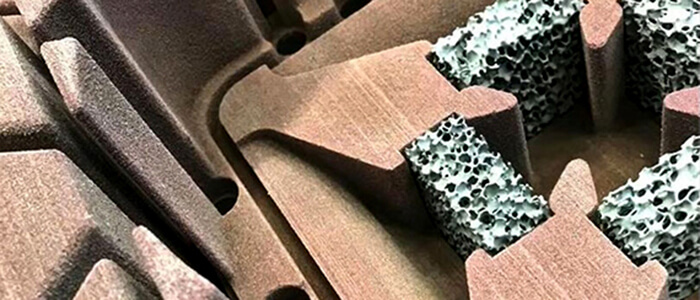
Ceramic foam filters are three-dimensional, open-cell structures manufactured by impregnating polyurethane foam with ceramic slurry, followed by drying and high-temperature firing. The result is a rigid skeleton with interconnected through-holes, typically exhibiting porosity of approximately 80-90%.
Key characteristics:
-
Complex 3D maze structure for depth filtration
-
Available in materials matched to specific alloys (alumina, silicon carbide, zirconia)
-
Operate through multiple filtration mechanisms simultaneously
What Are Glass Fiber Mesh Filters?
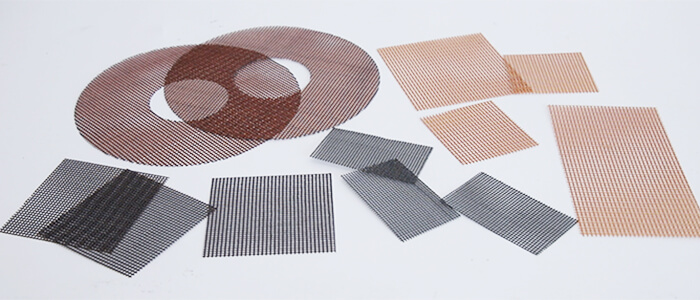
Glass fiber mesh filters are woven from high-silica glass fiber yarn and coated with heat-resistant resins. They create a two-dimensional grid structure that acts as a sieve.
Key characteristics:
-
2D woven mesh for surface screening
-
Lightweight and flexible (approximately 0.5 mm thickness)
-
Available in various mesh sizes (typically 0.8-2.5 mm² openings)
Quick Comparison at a Glance
| Feature | Ceramic Foam Filter (CFF) | Glass Fiber Mesh Filter |
|---|---|---|
| Structure | 3D reticulated foam (depth filtration) | 2D woven mesh (surface screening) |
| Filtration Mechanism | Depth filtration: sieving, adsorption, cake filtration | Mechanical interception of particles larger than mesh |
| Filtration Efficiency | High—captures fine inclusions down to microns | Basic—removes macro-inclusions (slag chunks, oxide skins) |
| Suitable Metals | Steel, ductile iron, gray iron, copper, aluminum | Primarily aluminum and low-temperature alloys |
| Maximum Temperature | Up to 1750°C (zirconia for steel) | 700-800°C (E-glass); ≤1450°C (high-silica, short duration) |
| Flow Impact | Significant flow reduction; promotes laminar filling | Minimal flow restriction |
| Cost Consideration | Higher unit cost; ROI from scrap reduction | Very low unit cost |
| Preheating Required | Yes—200-400°C to prevent thermal shock | No—can be used without preheating |
| Installation Time | 15-25 minutes (with preheating) | <5 minutes |
| Typical Applications | High-integrity steel/iron, aerospace, automotive safety | High-volume aluminum die-casting, non-critical components |
Filtration Mechanisms: Depth vs. Surface
How Ceramic Foam Filters Work
Ceramic foam filters operate through three simultaneous mechanisms:
1. Mechanical Filtration: Inclusions larger than the filter pores are physically blocked at the surface.
2. Adsorption: The tortuous 3D channel provides enormous surface area. Inclusions with chemical affinity to the ceramic material adhere to the pore walls as molten metal flows past.
3. Filter Cake Formation: As larger inclusions accumulate, they form a “filter cake” that further refines the pore channels, enabling capture of progressively smaller particles.
This depth filtration capability means CFFs capture particles throughout their thickness, not just on the surface. The result is superior metal cleanliness, enhanced mechanical properties (fatigue strength, ductility), and drastic reduction in microporosity.

How Glass Fiber Mesh Filters Work
Glass fiber mesh filters function primarily as surface straining devices. They act like a sieve—particles larger than the mesh openings (typically 1.0-2.5 mm²) are physically intercepted and held on the filter surface.
The filtration effect is two-dimensional:
-
Effective for removing large slag chunks and oxide skins
-
Limited effectiveness for particles smaller than mesh opening
-
No significant adsorption or depth filtration
Temperature and Alloy Compatibility
Ceramic Foam Filters by Material
| Material | Maximum Temperature | Suitable Alloys |
|---|---|---|
| Alumina (Al₂O₃) | 1200-1250°C | Aluminum, magnesium, non-ferrous |
| Silicon Carbide (SiC) | 1500°C | Gray iron, ductile iron, copper alloys |
| Zirconia (ZrO₂) | 1700-1760°C | All steel grades, stainless steel, superalloys |
CFFs withstand severe thermal shock—silicon carbide filters handle ΔT >1200°C, while zirconia versions offer exceptional stability for demanding steel applications.
Glass Fiber Mesh Filters
E-glass fiber filters:
-
Application temperature: 700-800°C
-
Softening temperature: 900°C
-
Maximum application time: <20 minutes
-
Primary use: Aluminum casting
High-silica glass fiber filters:
-
Application temperature: ≤ 1450°C
-
Softening temperature: 1700°C
-
Maximum application time: <10 minutes at 1400-1450°C
-
Limited use: Short-duration iron/steel applications
Critical limitation: Glass fiber mesh is not suitable for prolonged exposure to ferrous melts. At iron/steel temperatures, the filter degrades rapidly and must complete filtration within minutes.
Impact on Metal Flow and Casting Quality
The Turbulence Problem
Turbulent flow during mold filling is a primary source of reoxidation inclusions. At impact velocities of approximately 5 m/s, entrained air can reach a 1:1 ratio of liquid volume to air. This turbulence generates fresh oxides that become trapped in the casting.
Ceramic Foam Filters: Flow Control Advantage
Beyond filtration, CFFs provide a critical secondary benefit: flow control. The complex 3D structure:
-
Reduces metal velocity fluctuations by 25-40%
-
Transforms turbulent flow into stable laminar flow
-
Minimizes air entrainment and secondary oxidation
-
Allows inclusions time to float and be retained in the filter
This rectification effect is particularly valuable for thin-wall castings and complex geometries where smooth filling is essential.
Glass Fiber Mesh: Minimal Flow Impact
Glass fiber mesh offers negligible effect on flow dynamics. The open mesh structure:
-
Creates minimal flow restriction
-
Does not significantly reduce velocity
-
Provides no turbulence dampening
For applications where flow rate is the priority, this is advantageous. For quality-critical castings, this is a limitation.
Economic Analysis: Total Cost of Ownership
Direct Cost Comparison
| Cost Factor | Ceramic Foam Filter | Glass Fiber Mesh Filter |
|---|---|---|
| Unit Cost | Higher ($2.00-3.50/kg) | Lower ($0.80-1.20/kg) |
| Preheating Cost | Requires 200-400°C preheat | No preheating needed |
| Installation Time | 15-25 minutes | <5 minutes |
| Scrap Reduction | 30-60% documented | Moderate improvement |
| ROI Drivers | Scrap reduction, quality premium | Low consumable cost |
Documented Performance Improvements
Foundries using ceramic foam filters report:
-
30-60% reduction in scrap rates for iron and steel castings
-
15-40% improvement in surface finish
-
20-40% reduction in shrinkage tendencies through improved flow control
A medium-sized steel foundry switching to advanced ceramic filters achieved 33-38% reduction in post-processing effort.
The Value Proposition
Ceramic foam filters deliver return on investment through:
-
Dramatic scrap reduction
-
Ability to produce higher-value, critical castings
-
Improved machinability and reduced finishing costs
-
Enhanced mechanical properties enabling design optimization
Glass fiber mesh filters provide value through:
-
Lowest possible consumable cost per casting
-
Simplicity and ease of use
-
Adequate quality for non-critical applications
Selection Strategy: Which Filter for Your Application?
Choose Ceramic Foam Filters When:
✅ Producing high-integrity steel or iron castings where internal quality is critical
✅ Casting aerospace, automotive safety, or pressure-containing components
✅ Maximum mechanical properties (fatigue strength, ductility) are required
✅ Solving micro-porosity or reoxidation inclusion problems
✅ Alloy temperature exceeds 800°C for extended periods
✅ The casting value justifies premium filtration
Ideal applications:
-
Steel castings requiring high strength and elongation
-
Ductile iron critical components
-
Aluminum aerospace parts
-
Pump bodies, valve housings, brake discs
Choose Glass Fiber Mesh Filters When:
✅ Producing high-volume aluminum castings at lowest cost per unit
✅ Casting non-critical components with less demanding quality requirements
✅ Need for basic dross and macro-inclusion removal only
✅ Flow rate is the priority, and minimal flow restriction is desired
✅ The foundry operates in cost-sensitive markets with thin margins
Ideal applications:
-
Aluminum die-casting (automotive wheels, engine components)
-
Architectural aluminum (window frames, structural sections)
-
Aluminum recycling and ingot casting
-
General non-ferrous foundry work
Consider Both When:
Many modern foundries strategically utilize both technologies—ceramic foam for critical castings, glass fiber mesh for high-volume commodity work. This approach optimizes quality where it matters while controlling costs elsewhere.
Emerging Technologies: 3D-Printed Ceramic Filters
Additive manufacturing is transforming ceramic filter technology. 3D-printed filters (like ASK Chemicals’ EXACTPORE) offer significant advantages:
-
Exact reproducibility: Every filter identical, eliminating batch variation
-
Consistent pore sizes within ±5% (vs. ±15% for conventional foam)
-
No “filter bits” —particles that can detach from conventional foam
-
Custom geometries impossible with traditional manufacturing
-
33-38% reduction in post-processing effort documented
While currently a premium solution, this technology points toward the future of high-performance filtration.
Practical Installation Tips
For Ceramic Foam Filters
-
Always preheat to 200-400°C to prevent thermal shock
-
Ensure secure positioning to prevent floating or bypass
-
Verify dimensional accuracy—too large cracks the mold, too small allows bypass
-
Design gating system to accommodate flow resistance
For Glass Fiber Mesh Filters
-
No preheating required—simply place in gating system
-
Available in multiple forms: cap filters, bag filters, flat sheets
-
Can be cut to custom sizes on-site
-
Minimal gating system modification needed

Conclusion
The question “Which filter is better?” has no universal answer—the optimal choice depends entirely on your specific casting requirements.
Ceramic foam filters are the high-performance option: higher initial cost, but delivering dramatic quality improvements, scrap reduction, and the ability to produce critical, high-value castings. Their depth filtration, flow control, and thermal capabilities make them indispensable for steel, iron, and demanding aluminum applications.
Glass fiber mesh filters are the high-volume workhorse: extremely low cost, simple to use, and perfectly adequate for non-critical aluminum castings where basic inclusion removal suffices. They dominate in emerging markets and cost-sensitive production environments.
By understanding these fundamental differences, foundry engineers can select the filtration technology that delivers the optimal balance of quality, cost, and performance for their specific operations.