


In metal casting, solidification shrinkage is an unavoidable physical reality. For decades, the primary purpose of feeding systems has been singular: to compensate for this volumetric loss by supplying liquid metal from a reservoir—the riser or feeder. While this fundamental principle remains, advanced casting processes demand a paradigm shift. Today, feeding technology is no longer just about preventing shrinkage porosity; it is a critical lever for metallurgical optimization, yield enhancement, and energy efficiency.
At SF-Foundry, we partner with foundries moving beyond traditional methods. From our experience, the future lies in intelligent systems that actively control solidification and enhance metal purity. This article explores the cutting-edge technologies transforming feeding from a passive volume compensator into an active process optimizer, directly impacting the quality, cost, and sustainability of your cast components.
The Limitations of Conventional Feeding and the Need for Advancement
Traditional feeding relies on oversized risers to remain molten longer than the casting. This approach, while often effective, comes with significant drawbacks:
Low Yield: In some cases, the feeder metal can constitute as much mass as the casting itself, leading to yield figures sometimes below 50%. This represents tremendous waste in material and the energy used to melt it.
Passive and Uncontrolled: Once poured, the thermal behavior of a standard riser is fixed. It cannot adapt to variations in the process or complex solidification patterns.
Limited Metallurgical Benefit: Its function ends at volume replacement. It does not actively improve the microstructure or cleanliness of the casting.
Advanced processes for high-integrity components in aerospace, automotive, and energy sectors cannot tolerate these inefficiencies or uncertainties. The industry’s response has been the development of active and integrated feeding solutions.
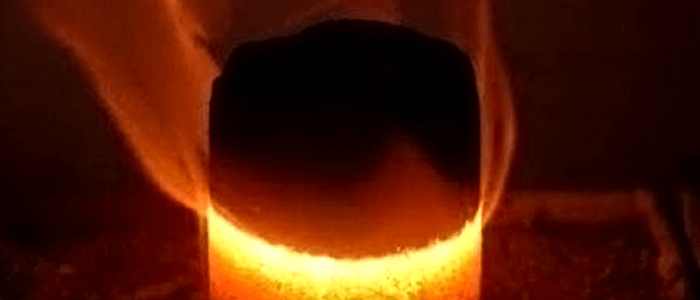
Key Technologies in Advanced Feeding Systems
Active Thermal Management: Induction-Heated Feeders
This technology represents one of the most significant leaps forward. Instead of relying on mass alone, induction-heated feeders use an electromagnetic coil to actively and precisely maintain the feeder metal in a liquid state.
How It Works: An induction coil surrounds a specially designed feeder sleeve. The system delivers targeted heat directly to the feeder metal, counteracting heat loss and allowing for a dramatic reduction in feeder size.
Direct Benefits:
Yield Improvement: By enabling smaller, more efficient feeders, this technology has been shown to help achieve yields exceeding 75%.
Energy Savings: A demonstrated benefit is reducing the overall energy consumption of a casting process by up to 35%, as less total metal needs to be melted.
Improved Quality: The extended feeding pressure and time can improve soundness in difficult-to-feed sections and complex geometries.
Functionalized Feeders and Integrated Filtration
The most advanced feeding concepts merge feeding with melt purification. Research focuses on “functionalized” refractory components where the feeder or its coating plays an active chemical role in cleansing the steel melt.
Reactive Filtration: Special carbon-bonded alumina coatings on feeders can promote carbothermic reactions. These reactions help remove dissolved oxygen and aluminum from the steel, encouraging inclusion floatation and coagulation before the metal even enters the mold cavity.
System Integration: This approach can be combined with strategically placed filters (e.g., in the runner system) to create a combined filtration system. The feeder acts as a primary “reactive” cleaning stage, while downstream filters perform “active” mechanical filtration, resulting in exceptionally clean metal.
Innovative Riser Design: Mini-Risers and Core-Risers
Design innovation is also optimizing feeding efficiency. Advanced systems utilize novel riser designs like core-risers and patented mini-risers (e.g., EXACTCAST™).
Mini-Risers: These are precisely sized, small risers placed directly on thermal “hot spots.” They provide just enough feeding where it’s needed, eliminating the waste of large, blind risers and improving yield.
Core-Risers: These integrate the feeding function into the core assembly, allowing for feeding from internal surfaces, which is impossible with traditional top risers.
Comparison of Advanced Feeding Technologies
The table below summarizes the core mechanisms and benefits of these key technologies.
| Technology | Core Mechanism | Primary Benefits | Ideal For |
|---|---|---|---|
| Induction-Heated Feeders | Electromagnetic heating maintains feeder liquid. | High yield (>75%), up to 35% energy saving, superior soundness. | High-value alloys, complex geometries, high-integrity castings. |
| Functionalized Feeders | Chemical reactions from specialized coatings purify melt. | Enhanced metal cleanliness, reduced inclusions, integrated process. | Specialty steels, alloy steels where purity is critical. |
| Mini-Risers / Core-Risers | Precise, localized feeding with minimal mass. | Maximized yield, reduced cleaning, efficient hot-spot feeding. | Castings with isolated heavy sections, automated production lines. |
The Enabler: Simulation-Driven Design and Process Integration
Implementing these advanced technologies successfully is not achieved through trial and error. It requires predictive simulation. Advanced software tools (such as MAGMASOFT, ProCAST, and specialized tools like the developing Induction Feeder SIMulator – IFSIM) are now essential.
Simulation allows engineers to model the complex interactions between electromagnetic heating, fluid flow, and solidification before the first metal is poured. It validates that an induction feeder will effectively heat the right zone, or that a mini-riser network will adequately feed all parts of the casting. This digital prototyping de-risks adoption and unlocks the full potential of advanced feeding.
The SF-Foundry Perspective: Partnering for Advanced Feeding Solutions
The transition to advanced feeding is a systems challenge. It involves new materials, new thermal management strategies, and new design philosophies. At SF-Foundry, we see ourselves as a catalyst in this transition.
Our expertise in high-performance refractory and ceramic materials is foundational to several of these technologies. Whether it’s the specialized materials needed for functionalized feeder coatings, the robust sleeves for induction heating environments, or the advanced filters that complete an integrated purification system, our components are designed to perform under the demanding conditions of these advanced processes.
From our experience, success comes from collaboration. We work with foundries and technology providers to supply the material solutions that bring advanced feeding concepts to life, helping you achieve the dual goals of uncompromising quality and unprecedented efficiency.
Conclusion
Advanced feeding technology has redefined its role in the foundry. It is now a source of strategic advantage—driving down cost through yield improvement and energy savings, while simultaneously driving up quality through enhanced soundness and metal purity.
The path forward is one of active control, functional integration, and simulation-backed precision. For foundries aiming to lead in the production of next-generation components, mastering these technologies is not an option; it is an imperative.
Are you ready to explore how advanced feeding technology can transform your casting process? Contact SF-Foundry today. Let’s discuss how our material expertise and collaborative approach can help you implement solutions that feed not just your casting, but your future growth.