


For aluminum foundries using automatic pouring equipment, selecting the right pouring ladle involves more than choosing a suitable capacity. The ladle must also match the equipment interface, pouring requirements, installation space, and operating conditions.
A customized aluminum pouring ladle can be designed around the requirements of a specific production line. However, missing dimensions or incomplete equipment information may lead to unnecessary communication and delays during quotation and production.
Before requesting a quote, foundries should prepare several key details to help the supplier understand their requirements.
Confirm the Required Ladle Capacity
Capacity is one of the first details to confirm when ordering a customized aluminum pouring ladle.
The required capacity depends on the amount of molten aluminum handled during each pouring cycle and the requirements of the casting process.
When discussing capacity with a supplier, clarify:
- The required pouring weight per cycle
- The existing ladle’s nominal capacity, if available
- The casting process and production requirements
- Whether the new ladle will replace an existing unit or be used on a new production line
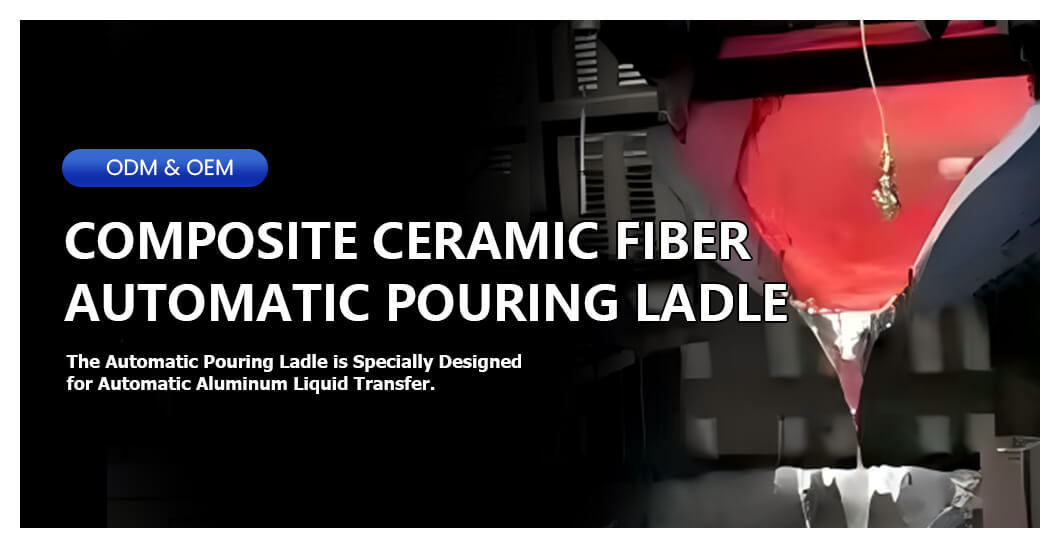
If you are replacing an existing ladle, provide its model, dimensions, and photos whenever possible. The supplier can use this information as a reference when evaluating the proposed design.
Important: Nominal ladle capacity and actual pouring weight are not necessarily the same. Confirm the required values with your equipment specifications and production process.
Check the Mounting Bracket and Equipment Interface
For an automatic pouring ladle, the mounting structure is just as important as the ladle body.
The bracket and connection points must be compatible with the relevant automatic pouring machine or robot system. Differences in mounting dimensions or positioning can affect installation and operation.
Before requesting a quote, prepare the following information where available:
- Automatic pouring machine or robot manufacturer and model
- Mounting bracket dimensions
- Connection and fixing details
- Installation space and clearance requirements
- An existing bracket drawing or photographs
If you do not have a technical drawing, clear photographs showing the ladle, bracket, and connection points can help start the discussion.
Do not assume that two ladles with the same capacity have interchangeable mounting structures. Confirm the interface requirements before production.
Provide the Main Dimensions and Ladle Geometry
Capacity alone does not define the complete ladle design. The shape and dimensions must also suit the installation space and pouring operation.
Depending on the design, the supplier may need to confirm:
- Overall length, width, and height
- Ladle opening dimensions
- Pouring lip geometry
- Body shape and depth
- Wall thickness requirements
- Bracket position and orientation
If you are replacing an existing ladle, provide a dimensioned drawing if one is available. If the design needs to be modified, explain which dimensions must remain unchanged and which can be adjusted.
This helps the supplier distinguish between a direct replacement and a new customized design.
Explain Your Casting Process and Operating Conditions
Different foundries operate under different production conditions. The supplier needs to understand how the ladle will be used before assessing whether a proposed design is suitable.
Include details such as:
- Casting process, such as gravity casting or another applicable process
- Type of aluminum alloy, if known
- Actual molten aluminum operating temperature
- Pouring frequency and production cycle
- Automation level and pouring method
- Any known operational problems with the current ladle
These details help establish the design requirements. They should not be used to assume suitability without checking the product specifications.
For example, if the ladle is intended for a robot-based pouring line, explain the equipment and movement requirements. If it is replacing a ladle that has developed a specific problem, describe the issue and provide photographs.
Confirm the Material and Surface Requirements
Automatic aluminum pouring ladles may use different materials and surface treatments depending on their design and intended operating conditions.
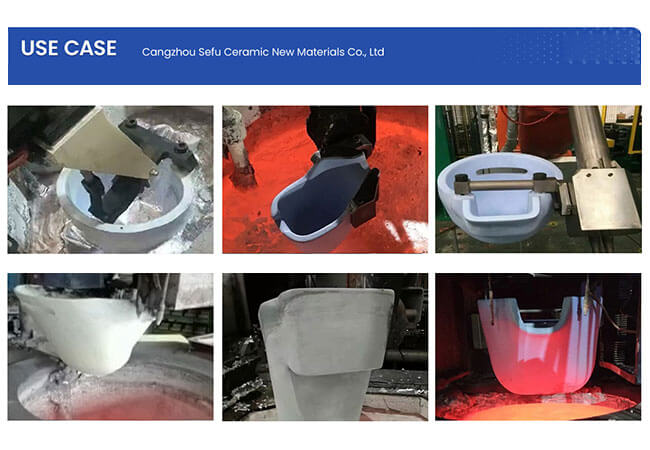
SF-Foundry’s automatic pouring ladle product uses a ceramic-fiber composite material and a boron nitride (BN) surface coating, according to the current product information.
When requesting a customized ladle, discuss the following with the supplier:
- Required ladle material or existing product specification
- Surface coating requirements
- Operating temperature and process conditions
- Areas where aluminum build-up or surface deterioration has occurred
- Any special requirements from your equipment or production team
If you are replacing a ladle supplied by another manufacturer, provide its material information if available. Do not assume that an existing ladle and a new design use the same material or coating.
The final material and coating selection should be confirmed against the intended operating conditions and the supplier’s technical specifications.
Share Photos, Drawings, and Details of Any Existing Problems
A drawing is useful, but it is not the only way to start a quotation.
If your team does not have a complete drawing, you can initially provide:
- Photos of the existing ladle from several angles
- Photos of the mounting bracket and connection points
- The main dimensions
- The existing ladle model or supplier information, if available
- Photos showing damage, coating deterioration, or aluminum build-up
- A brief explanation of what you want to improve or replace
If the ladle is part of an automated production line, photographs of its installation position can also help clarify the space and connection requirements.
A supplier may request additional measurements or a formal drawing before confirming the final design. Providing accurate initial information helps reduce unnecessary back-and-forth communication.
Confirm Quantity, Delivery Requirements, and Customization Scope
Before placing an order, clarify the commercial and production requirements.
Include:
- Initial order quantity
- Estimated future demand, if known
- Required delivery schedule
- Whether a sample or prototype evaluation is needed
- Required drawings or technical documents
- Packaging or shipping requirements, if applicable
If you need several ladles for the same production line, confirm whether all units will use the same design and mounting dimensions.
For a customized product, it is also helpful to clarify which specifications will be confirmed before production and whether a drawing approval step is required.
Customized Aluminum Pouring Ladles from SF-Foundry
SF-Foundry supplies automatic pouring ladles for aluminum and aluminum alloy casting applications. According to the current product information, customization options include ladle capacity and bracket type.
To evaluate a customized requirement, our team needs to understand the equipment interface, pouring requirements, installation dimensions, and operating conditions.
If you are replacing an existing ladle, you do not need to prepare every technical detail before making an initial inquiry. Start with the information you have, and we can identify which additional details are needed for further evaluation.
Request a Quote
To help us understand your project, please send:
- Required capacity or pouring weight per cycle
- Main dimensions or an existing drawing
- Mounting bracket details
- Automatic pouring machine or robot information
- Operating conditions
- Required quantity
- Photos of the existing ladle, if available
Contact SF-Foundry to discuss your customized aluminum pouring ladle requirements.
Website: https://sf-foundry.com/auto-pour-ladle/
Email: info@sf-foundry.com

Frequently Asked Questions
Can an automatic aluminum pouring ladle be customized to fit existing equipment?
Customization may be possible, depending on the equipment interface and design requirements. Provide the machine information, mounting dimensions, and existing ladle details so the supplier can evaluate compatibility.
What if I do not have a drawing of my existing ladle?
You can start with clear photographs, the main dimensions, and information about the equipment. Additional measurements or a formal drawing may be needed before the final design is confirmed.
Is ladle capacity the only factor to consider?
No. Capacity is important, but mounting dimensions, pouring geometry, installation space, material, coating, and operating conditions also need to be considered.
What information should I provide for a replacement ladle?
Provide the existing ladle’s dimensions, capacity, mounting details, equipment model, operating conditions, and photos. If the current ladle has a problem, describe it and include relevant images.
Does SF-Foundry offer customized automatic pouring ladles?
SF-Foundry’s current product information lists customization options including ladle capacity and bracket type. Specific requirements should be reviewed and confirmed before production.