


When aluminum casting porosity suddenly increases, the problem is rarely caused by a single factor.
A casting process may run normally for weeks and then suddenly show more internal pores, gas defects, leakage during pressure testing, or higher X-ray rejection rates. When this happens, changing the alloy or casting parameters immediately is not always the best first step.
A better approach is to check the process systematically.
The main areas to investigate include hydrogen in the molten aluminum, degassing performance, oxide inclusions, charge materials, melt holding time, filtration, pouring conditions, and recent process changes.
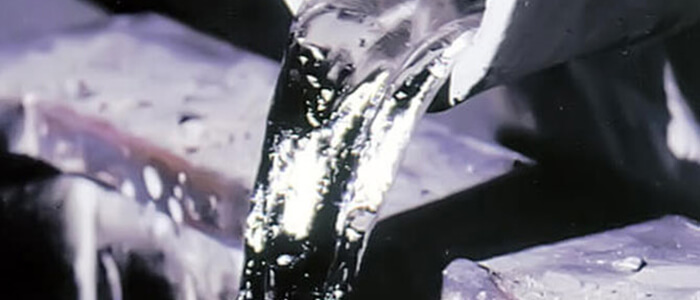
This guide provides a practical troubleshooting sequence for aluminum foundries.
First Confirm What Type of Porosity Has Increased
Before changing the process, determine whether the defect is actually gas porosity.
Aluminum castings can contain different types of internal defects, including:
- Gas porosity
- Hydrogen-related porosity
- Shrinkage porosity
- Oxide-related defects
- Inclusions
- Shrinkage-gas combinations
The location and appearance of the defects can provide useful clues.
For example, gas-related defects may appear as relatively rounded pores, while shrinkage-related defects are often associated with areas of insufficient feeding and localized solidification.
If the defect is found mainly in areas that previously produced acceptable castings, compare the new defect distribution with previous production data.
The first question should be: What changed?
Check the Hydrogen Level in the Molten Aluminum
Hydrogen is one of the most important factors to investigate when gas porosity suddenly increases in aluminum castings.
Molten aluminum can absorb hydrogen during melting and holding. As the metal solidifies, hydrogen solubility decreases significantly, which can result in pore formation inside the casting.
If the hydrogen level has increased, check:
- Charge material
- Moisture exposure
- Furnace condition
- Flux or refining practice
- Melt temperature
- Holding time
- Degassing parameters
- Recent changes in the melting process
If the foundry normally monitors hydrogen concentration or melt density, compare the current measurements with historical values.
A sudden change in hydrogen level can provide a much stronger clue than simply inspecting the final casting.
Check Whether the Degassing Process Has Changed
If the hydrogen level is higher than normal, the next step is to check the degassing process.
A degassing system can be affected by several variables:
- Rotor condition
- Rotor immersion depth
- Rotation speed
- Gas flow
- Treatment time
- Gas quality
- Melt temperature
- Furnace conditions
A worn or damaged rotor may also affect the effectiveness of the treatment.
For aluminum foundries using mechanical rotary degassing, inspect the rotor before assuming that the problem is caused by the alloy itself.
The important point is that degassing performance should be checked against the actual production process, rather than evaluated only by whether the equipment is running.
Check the Charge Material and Moisture
A change in raw material can sometimes explain a sudden increase in porosity.
Check whether there has been a recent change in:
- Primary aluminum
- Returns
- Scrap ratio
- Alloy additions
- Storage conditions
- Charge preparation
- Supplier
- Material handling
Moisture is particularly important because water can introduce hydrogen into the molten metal.
If the casting problem appeared after changing the charge ratio or material supplier, compare the current charge practice with the previous stable production condition.
Check Melt Temperature and Holding Time
Melt temperature and holding time can also influence melt quality.
Check whether the current process has changed in:
- Melting temperature
- Holding temperature
- Furnace temperature control
- Holding time
- Transfer time
- Number of furnace cycles
- Production interruptions
A process that is technically within the normal temperature range can still behave differently if the actual holding time or thermal history has changed.
Therefore, compare the current production records with the last period when casting quality was stable.
Check Oxide Formation and Melt Cleanliness
Not all porosity-related problems are caused by hydrogen alone.
Oxide films and inclusions can also contribute to internal casting defects.
Check for:
- Excessive turbulence during transfer
- Dross accumulation
- Poor skimming
- Excessive melt agitation
- Long exposure of molten aluminum to air
- Turbulent pouring
- Changes in furnace or transfer equipment
Oxide films can become folded into the molten metal and later act as defect sites inside the casting.
This is why melt cleanliness and hydrogen control should be considered together when investigating a sudden increase in aluminum casting defects.
Check the Aluminum Filtration Process
If the melt treatment process is normal but casting defects have increased, inspect the filtration stage.
Check:
- Filter material
- Filter size
- Filter PPI
- Filter condition
- Installation position
- Filter seating
- Filter cracking
- Metal flow rate
- Filter replacement timing
A damaged, incorrectly installed, or unsuitable filter can affect metal flow and filtration performance.
For aluminum casting, alumina ceramic foam filters are commonly used for molten metal filtration. The filter should be matched to the casting process, metal flow requirements, and installation conditions.
If a filter specification was recently changed, compare the current filter with the previous specification.
Do not assume that a filter problem is limited to visible filter breakage. Changes in flow behavior, installation, or specification can also affect the process.
Check the Pouring and Metal Transfer Conditions
The way molten aluminum is transferred can affect melt cleanliness.
Check whether there have been changes in:
- Pouring height
- Pouring speed
- Transfer equipment
- Pouring ladle
- Metal flow path
- Turbulence
- Holding furnace level
- Automatic pouring parameters
If the foundry recently changed from manual pouring to automated pouring, or changed the pouring equipment, compare the new process with the previous stable process.
For automated aluminum casting lines, the pouring ladle is not simply a container. Its geometry, material, capacity, mounting method, and pouring behavior need to match the equipment and production process.
SF-Foundry supplies automatic pouring ladles designed for aluminum and aluminum alloy casting, including customized designs for different capacities and mounting requirements.
Check for Recent Process Changes
One of the most useful questions in troubleshooting is:
What changed shortly before the defect appeared?
Make a list of recent changes, including:
| Area | Possible Change |
|---|---|
| Alloy | New supplier or composition |
| Charge | Different scrap or return ratio |
| Furnace | Maintenance or modification |
| Degassing | Rotor, gas flow or treatment time |
| Filtration | Filter type, size or PPI |
| Pouring | Ladle or pouring parameters |
| Mold | New coating or process parameters |
| Temperature | Melting or holding temperature |
| Equipment | New furnace, ladle or automation |
| Production | Different casting cycle or production speed |
This approach is often more useful than changing several parameters simultaneously.
If five process parameters are changed at the same time, it becomes difficult to determine which change actually caused the problem.
Check Whether the Problem Is Limited to One Casting
Another useful step is to determine whether the porosity increase affects:
- One casting
- One mold
- One production cell
- One furnace
- One alloy
- One shift
- One batch
- The entire production line
If only one mold shows the problem, the investigation should focus more heavily on the mold and local filling/solidification conditions.
If several casting machines using the same molten metal show the same defect, the investigation should move upstream toward:
Melting → Degassing → Filtration → Transfer → Pouring
This distinction can significantly reduce troubleshooting time.
A Practical Troubleshooting Sequence
When aluminum casting porosity suddenly increases, a practical investigation can follow this sequence:
Step 1: Confirm the defect
Determine whether the problem is gas porosity, shrinkage porosity, inclusions, or a combination.
Step 2: Compare with previous production
Check when the defect started and what changed before that point.
Step 3: Check the molten metal
Review:
- Hydrogen level
- Temperature
- Holding time
- Alloy composition
- Charge materials
- Dross condition
Step 4: Check degassing
Inspect:
- Rotor condition
- Gas flow
- Rotation speed
- Treatment time
- Immersion depth
Step 5: Check filtration
Inspect:
- Filter material
- PPI
- Size
- Installation
- Filter condition
- Flow behavior
Step 6: Check transfer and pouring
Review the pouring ladle, transfer path, pouring parameters, and turbulence.
Step 7: Check the casting process
Only after the upstream melt-treatment factors have been checked should you make major changes to mold or casting parameters.
This sequence helps prevent unnecessary process changes.
When Should Degassing and Filtration Be Checked Together?
If an aluminum foundry experiences both increased porosity and inclusion-related defects, it is particularly important to examine degassing and filtration as two connected stages of melt treatment.
Degassing primarily addresses dissolved gas, especially hydrogen.
Filtration focuses on removing solid inclusions and improving melt cleanliness.
They solve different problems, but poor performance in either stage can contribute to casting quality problems.
For this reason, a foundry experiencing a sudden increase in porosity should not automatically assume that replacing the filter alone will solve the problem.
The better approach is to evaluate the complete melt-treatment process.
What Aluminum Foundries Should Check When Replacing Melt-Treatment Components
If a component has recently been replaced, compare the old and new specifications.
For example, when replacing an aluminum filter, provide:
- Current filter material
- Filter size
- PPI
- Casting alloy
- Casting weight
- Metal flow rate
- Installation method
- Quantity required
For an automatic pouring ladle, useful information includes:
- Required capacity
- Casting process
- Pouring weight
- Equipment type
- Robot or mounting configuration
- Ladle dimensions
- Pouring position
- Production cycle
For an aluminum low-pressure casting riser tube, provide:
- Riser tube material
- Inner diameter
- Outer diameter
- Length
- Connection dimensions
- Bending angle, if applicable
- Holding furnace type
- Aluminum alloy
- Casting application
- Current tube drawing or photo
This information allows a supplier to evaluate the component based on the actual production system rather than simply matching a product name.
How SF-Foundry Supports Aluminum Casting Melt Treatment
SF-Foundry provides several products for different stages of aluminum casting production, including:
- Alumina Ceramic Foam Filters — aluminum melt filtration
- Automatic Pouring Ladles — molten aluminum transfer
- Degassing Rotors — aluminum melt treatment
- Ceramic Fiber Tap Out Cones — furnace plugging and insulation
- Silicon Nitride Riser Tubes — low-pressure aluminum casting
- Aluminum Titanate Riser Tubes — low-pressure aluminum casting
- Ceramic Protection Tubes — temperature measurement and protection applications
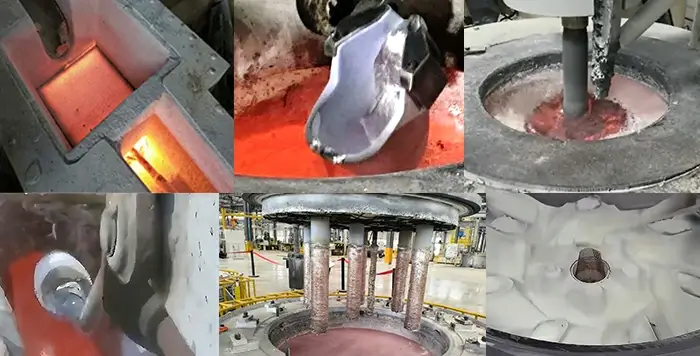
The riser tube line is particularly relevant to low-pressure aluminum casting. SF-Foundry currently offers silicon nitride and aluminum titanate riser tubes for this application.
Rather than treating these products as unrelated consumables, aluminum foundries can evaluate them according to their position in the production process:
Melting → Degassing → Filtration → Transfer → Low-Pressure Metal Delivery → Casting
Request an Aluminum Casting Solution
If your aluminum casting porosity has suddenly increased, send us your current process information before changing multiple components at once.
Useful information includes:
- Aluminum alloy
- Casting process
- Casting weight
- Current defect type
- When the problem started
- Hydrogen measurement, if available
- Degassing method
- Filter specification
- Pouring method
- Current riser tube specification, if using low-pressure casting
- Photos of the defective casting
- Photos or drawings of the current consumables
With this information, SF-Foundry can evaluate the relevant aluminum casting materials and help identify which part of the process should be investigated first.