


A casting runner is one of the most important components of a metal casting gating system. It provides a controlled pathway for molten metal to flow from the sprue toward one or more gates before entering the mold cavity.
Although the runner may appear to be a simple channel, its size, shape, layout, material, and connection with the sprue and gates can significantly affect mold filling, turbulence, inclusions, solidification, casting defects, and overall casting yield.
For foundries producing iron, steel, aluminum, copper, and other metal castings, choosing and designing the right runner system is therefore an important part of casting process optimization.
This guide explains what a casting runner is, how it works, the main types of runners, runner design principles, common runner materials, typical applications, common problems, and how to choose the right runner for your casting process.
What Is a Casting Runner?
A casting runner is a channel within the gating system that distributes molten metal from the sprue or another upstream passage to the gates or ingates leading into the mold cavity.
In a typical gravity casting gating system, molten metal follows a path such as:
Pouring Cup → Sprue → Sprue Well → Runner → Gate → Mold Cavity

The runner is therefore the main distribution passage between the vertical sprue and the gates.
In multi-gate or multi-cavity molds, a single runner can branch into several channels so that molten metal reaches different areas of the mold.
The runner must be designed to provide sufficient metal flow while minimizing excessive turbulence, mold erosion, air entrainment, oxidation, and premature solidification.
A simplified gating system can be understood as follows:
| Gating Component | Main Function |
|---|---|
| Pouring Cup | Receives molten metal and guides it into the sprue |
| Sprue | Carries molten metal vertically downward |
| Sprue Well | Reduces the impact and redirects the metal |
| Runner | Distributes molten metal toward the gates |
| Gate / Ingate | Controls the final entry of metal into the mold cavity |
| Mold Cavity | Forms the final casting |
The runner is therefore not the casting itself. It is a temporary flow channel that forms part of the gating system and is normally removed from the finished casting during fettling.
What Does a Runner Do in Casting?
The main purpose of a runner is to transport and distribute molten metal in a controlled manner before it enters the casting cavity.
A properly designed runner can help a foundry achieve several objectives.
1. Distribute Molten Metal
The runner distributes metal from the sprue to one or more gates.
For castings with complicated geometries or multiple gates, the runner layout must provide reasonably balanced filling so that different sections of the mold receive metal at the required time.
2. Control Metal Flow
Runner dimensions influence metal velocity and flow behavior.
If the runner is excessively small, the metal may flow too quickly or lose heat rapidly. If it is excessively large, the gating system may contain unnecessary metal and reduce casting yield.
The design therefore needs to balance filling speed, thermal behavior, mold stability, and material efficiency.
3. Reduce Turbulence
Excessive turbulence can contribute to mold erosion, air entrainment, oxide formation, and non-metallic inclusions.
A well-designed gating system therefore aims to guide molten metal smoothly from the sprue through the runner and into the gates.
4. Help Maintain Metal Temperature
The runner should allow the metal to remain sufficiently fluid until it reaches the gates and mold cavity.
This becomes particularly important for alloys and castings that are sensitive to premature solidification.
5. Support Inclusion Control
In some gating designs, runner extensions, filter locations, and changes in flow direction can help manage slag and non-metallic inclusions.
For critical castings, a ceramic foam filter can also be incorporated into an appropriate position within the gating system.
SF-Foundry’s gating-system approach combines paper runners with ceramic foam filters to help control molten-metal flow and filtration.

What Is the Difference Between a Sprue, Runner and Gate?
The terms sprue, runner, and gate are often confused because all three are channels through which molten metal flows.
However, they perform different jobs.
| Component | Position | Main Function |
|---|---|---|
| Sprue | Usually vertical | Carries molten metal downward |
| Runner | Usually horizontal or lateral | Distributes molten metal |
| Gate | Between runner and cavity | Controls entry into the casting |
A simple way to remember the difference is:
Sprue = delivers metal downward
Runner = distributes metal sideways
Gate = delivers metal into the casting
The runner and gate should therefore not be treated as interchangeable terms.
The relationship between these components is particularly important when designing a complete gating system.
What Are the Main Types of Casting Runners?
There is no single runner design suitable for every casting.
Runner configurations vary according to casting geometry, alloy, mold type, production volume, number of cavities, and required casting quality.
Common runner configurations include the following.
1. Straight Runner
A straight runner is a simple linear channel used to transport molten metal from the sprue toward one or more gates.
It is relatively simple to manufacture and is suitable for straightforward mold layouts.
Straight runner sections can also be combined with other components such as elbows, tees, filters, and gates.
2. Branched Runner
A branched runner divides the molten metal flow into multiple directions.
This configuration is useful when one sprue supplies several gates or several mold cavities.
The main design challenge is achieving sufficiently balanced flow between the different branches.
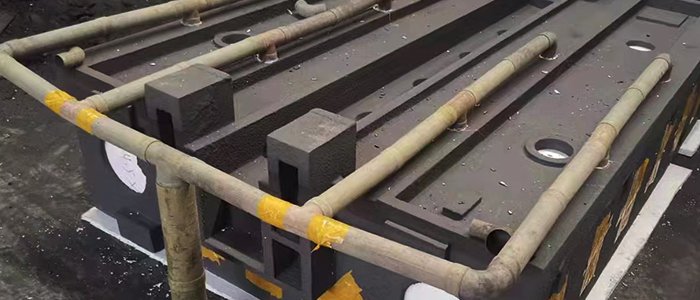
3. Curved or Elbow Runner
An elbow or curved runner changes the direction of molten-metal flow.
In practical foundry systems, prefabricated runner elbows can simplify the construction of complex gating layouts.
For example, SF-Foundry offers paper casting runner components including straight pipes and pouring elbows as part of its gating-system product range.
4. Tee Runner
A runner tee divides or redirects the metal flow into different branches.
It can be useful for multi-gate arrangements where the gating system needs to distribute metal to several areas of the mold.
Prefabricated runner tees can also make gating-system assembly faster and more consistent.
5. Filtered Runner System
A filter can be incorporated into the runner system to remove or reduce non-metallic inclusions before the metal reaches the casting cavity.
Depending on the gating design, the filter may be positioned in a pouring cup, sprue well, runner, or dedicated filter box.
The correct filter location depends on the alloy, casting design, pouring conditions, filter specifications, and gating geometry.
Casting Runner Design: What Should Be Considered?
Runner design is not simply a matter of choosing a pipe diameter.
A proper runner design should consider the entire gating system and the specific casting requirements.
1. Runner Cross-Section
The cross-sectional shape and area influence metal velocity, heat loss, filling behavior, and gating-system volume.
Common runner cross-sections include:
- Rectangular
- Trapezoidal
- Semicircular or rounded
- Circular, particularly for prefabricated runner products
For sand casting, the preferred cross-section depends on the alloy, mold design, gating philosophy, and foundry practice.
For engineered gating systems, runner geometry should be considered together with the sprue, choke, gates, and casting volume rather than selected independently.
2. Runner Size
Runner size must provide enough flow capacity without creating unnecessary excess metal.
Important factors include:
- Casting weight
- Pouring rate
- Metal type
- Filling time
- Number of gates
- Number of cavities
- Runner length
- Mold temperature
- Metal superheat
- Required casting quality
For production castings, runner dimensions should be calculated or validated using established gating principles and, where appropriate, casting simulation.
3. Runner Length
A longer runner generally means more surface area through which the molten metal can lose heat.
An excessively long runner can therefore increase the risk of premature solidification.
However, the runner must still be long enough to distribute metal effectively and accommodate the required gate positions.
The correct length is therefore determined by the casting geometry and gating layout rather than by a universal number.
4. Runner Layout
Runner layout should promote balanced filling.
For example, when several gates are connected to one runner, the distance and flow resistance to each gate should be considered.
Poorly balanced runner layouts can cause:
- Uneven filling
- Localized turbulence
- Premature freezing
- Cold shuts
- Misruns
- Inconsistent temperature distribution
5. Runner Extension
A runner extension is a section of runner that extends beyond the final gate.
It can be used as part of the gating strategy to help collect the first portion of metal entering the runner, which may contain oxides, slag, or other contaminants.
Runner extensions are especially relevant when designing gating systems for iron and steel castings where melt cleanliness is important.
6. Runner Connection With the Gate
The transition between the runner and gate should be carefully designed.
The gate controls how metal enters the casting cavity, while the runner supplies the metal.
An unsuitable transition can increase turbulence or produce an unbalanced filling pattern.
The runner and gate should therefore be designed as a connected system rather than as two independent components.
What Materials Are Casting Runners Made From?
Casting runners can be created directly in the mold or manufactured as separate refractory or support components.
The appropriate material depends heavily on the casting process.
1. Sand
In conventional sand casting, the runner is often formed directly in the mold using the mold pattern or manually prepared gating channels.
This approach is economical and flexible, especially for conventional sand molds.
2. Refractory Ceramic
Ceramic or refractory runner components can be used where high-temperature resistance and dimensional consistency are required.
Traditional ceramic runner systems can provide a robust pathway for molten metal, but their weight, handling, assembly, and disposal characteristics may be considerations for some foundries.
3. Paper-Based Casting Runner
A newer alternative is the paper casting runner, which is manufactured as a lightweight prefabricated gating component.
SF-Foundry’s Paper Casting Runner is designed as an alternative to traditional refractory ceramic runners. The product range includes straight pipes, elbows, pouring cups, sprue connectors, runner tees, and filter boxes.
The company states that its paper runner system is designed for applications including iron casting and can be integrated with ceramic foam filters and other gating-system components.
The practical advantages of a prefabricated paper runner can include:
- Lightweight handling
- Faster gating-system assembly
- Consistent dimensions
- Easy integration with other components
- Reduced handling effort
- Lower residue after casting
- Compatibility with foundry recycling practices, depending on the specific process
For foundries considering a paper runner, however, the correct size and configuration should be selected according to the alloy, casting weight, pouring temperature, gating design, and actual operating conditions.
Paper Casting Runner vs. Traditional Ceramic Runner
For foundries evaluating different runner materials, the comparison is not simply about material cost.
The total operating impact should be considered.
| Factor | Paper Casting Runner | Traditional Ceramic Runner |
|---|---|---|
| Weight | Lightweight | Generally heavier |
| Handling | Easy to handle | More handling effort |
| Assembly | Designed for convenient assembly | Depends on system |
| Customization | Available in different sizes and configurations | Depends on product |
| Thermal performance | Designed for controlled thermal behavior | High-temperature refractory performance |
| Waste / cleanup | Low-residue characteristics | Depends on ceramic system |
| Application | Selected iron and other casting applications | Wide high-temperature applications |
| Integration with filters | Can be designed with filter components | Can also be integrated |
The important point is that the best runner is not necessarily the cheapest runner per piece.
A foundry should consider:
Runner cost + labor + assembly time + casting yield + defect rate + cleanup + waste handling
rather than material price alone.
This is where a properly engineered prefabricated runner system can provide value.
Applications of Casting Runners
Casting runners are used across many metal casting processes.
Common applications include:
Iron Casting
Runners are widely used in:
- Gray iron casting
- Ductile iron casting
- Automotive castings
- Pump and valve castings
- Engineering machinery
- Heavy industrial components
For iron foundries, runner design must pay particular attention to turbulence, inclusions, filling time, and temperature loss.
Steel Casting
Steel has a higher pouring temperature and demanding thermal requirements.
Runner materials and configurations must therefore be selected to withstand the actual process conditions.
Aluminum Casting
Aluminum casting requires careful control of oxide formation and turbulence.
Runner layout and gating design are particularly important for minimizing air and oxide entrainment.
Copper and Copper Alloys
Copper and copper-alloy castings also require appropriate runner dimensions and refractory compatibility according to the alloy and casting method.
Lost Foam and Other Specialized Processes
Prefabricated runner components can also be used in specialized molding processes where the gating system requires repeatable dimensions and convenient assembly.
SF-Foundry specifically lists lost foam casting among the applications for its paper casting runner.
Common Casting Problems Related to Runner Design
A poorly designed runner can contribute to several casting defects.
1. Turbulence
Excessive velocity or sudden changes in flow direction can increase turbulence.
This may contribute to:
- Oxide formation
- Air entrainment
- Mold erosion
- Non-metallic inclusions
2. Premature Solidification
If the runner is too small, too long, or has excessive heat loss, molten metal may begin to solidify before the mold cavity is completely filled.
This can contribute to:
- Misruns
- Cold shuts
- Incomplete filling
3. Slag and Inclusion Problems
If the gating system does not provide sufficient control of inclusions, slag and oxides can enter the cavity.
Runner extensions, appropriate gating design, and ceramic foam filtration can be used together to improve melt cleanliness.
4. Excessive Gating Metal
An oversized runner can increase the amount of metal contained in the gating system.
This reduces the ratio of finished casting weight to total poured metal and can increase:
- Metal consumption
- Cutting and fettling work
- Remelting requirements
- Production cost
The objective is therefore not simply to make the runner larger, but to make it appropriately sized for the casting.
How to Choose the Right Casting Runner
When selecting a casting runner or prefabricated runner component, foundries should consider at least the following factors:
1. What metal are you casting?
Iron, steel, aluminum, copper, and other alloys have different thermal and flow characteristics.
2. What is the casting weight?
Larger castings generally require a different gating capacity from small castings.
3. What is the required pouring rate?
Runner capacity should be compatible with the intended filling time and pouring conditions.
4. How many gates are required?
A single-gate casting and a multi-gate casting require different runner layouts.
5. What is the runner length and configuration?
Straight, elbow, tee, and branched configurations may be selected according to mold geometry.
6. Is filtration required?
If the casting requires improved melt cleanliness, the runner can be designed around an appropriate ceramic foam filter or filter box.
7. What runner material is appropriate?
The choice between a mold-formed runner, ceramic runner, paper casting runner, or another solution should be based on process temperature, handling requirements, production volume, casting quality, and total operating cost.
Why Use a Prefabricated Paper Casting Runner?
For foundries looking to improve the assembly and handling of their gating systems, a prefabricated paper casting runner can be an alternative to manually formed or traditional refractory runner components.
SF-Foundry provides paper runner components in different configurations and sizes, including straight pipes from approximately 25 mm to 100 mm diameter in its listed product range, with custom sizes available according to the product page.
The system can also be combined with:
- Ceramic Foam Filters
- Filter Boxes
- Pouring Cups
- Sprue Connectors
- Runner Tees
- Other gating-system components
This allows foundries to build a more integrated pouring + runner + filtration system instead of treating each component separately.
Casting Runner Selection: A Practical Checklist
Before ordering a runner, a foundry should provide its supplier with as much of the following information as possible:
- Metal alloy
- Casting weight
- Casting dimensions
- Mold type
- Number of cavities
- Required pouring time
- Pouring temperature
- Runner diameter or cross-section
- Runner length
- Number and location of gates
- Filter requirements
- Existing gating-system design
- Required runner configuration
- Annual or monthly consumption
With this information, a supplier can recommend a more suitable runner size and configuration instead of simply supplying a standard component.
FAQ About Casting Runners
What is a runner in casting?
A runner is a channel in the gating system that distributes molten metal from the sprue toward one or more gates before the metal enters the mold cavity.
What is the difference between a sprue and a runner?
The sprue normally carries molten metal vertically downward, while the runner distributes the metal laterally toward the gates.
What is the difference between a runner and a gate?
The runner distributes molten metal through the gating system. The gate is the final passage through which molten metal enters the mold cavity.
What is the purpose of a runner in sand casting?
The runner distributes molten metal while helping control flow, filling behavior, temperature loss, and the overall performance of the gating system.
What materials are used for casting runners?
Depending on the casting process, runners can be formed directly in sand molds or produced from refractory ceramic, paper-based materials, and other suitable high-temperature materials.
What is a paper casting runner?
A paper casting runner is a prefabricated lightweight gating component designed to replace or supplement traditional runner components in selected casting applications.
Can a paper casting runner be used with a ceramic foam filter?
Yes. Paper runner systems can be designed and assembled with ceramic foam filters or filter boxes. SF-Foundry specifically offers paper runner components designed to work with its ceramic foam filtration solutions.
How do I choose the correct runner size?
Runner size depends on the alloy, casting weight, pouring rate, filling time, number of gates, runner length, mold design, and gating-system configuration. For production applications, runner dimensions should be selected using the complete gating-system design rather than a single standard size.
Conclusion
The casting runner is much more than a simple channel in a mold. It is a key part of the gating system that influences how efficiently and cleanly molten metal reaches the mold cavity.
A suitable runner design should balance:
- Metal flow
- Filling time
- Turbulence
- Temperature loss
- Inclusion control
- Casting yield
- Assembly efficiency
- Production cost
For foundries, the choice of runner material is also becoming increasingly important. Traditional mold-formed and ceramic runner solutions remain widely used, while paper casting runners provide a lightweight, prefabricated alternative for selected applications.
SF-Foundry supplies paper casting runner components including straight pipes, elbows, pouring cups, sprue connectors, runner tees, and filter boxes, with options for integration with ceramic foam filters and other gating-system components.
If you are looking for a paper casting runner, runner system, or customized gating-system component for iron or steel casting, provide your casting weight, alloy, runner dimensions, and existing gating-system design. SF-Foundry can help evaluate a suitable runner configuration for your application.
Explore SF-Foundry Paper Casting Runner → Request a Quote