

If you’ve spent any time in the foundry industry, you’ve likely encountered these three terms—carbon cup, sampling cup, and CE cup—often used interchangeably. But are they actually the same thing? And if so, why so many names?
The short answer is yes, they refer to the same product. All three names describe the thermal analysis cup—a small, disposable container used for rapid molten iron analysis in foundries.
But the longer answer is more interesting. Each name emphasizes a different aspect of what this product does. Understanding these nuances can help you communicate more effectively with suppliers, engineers, and customers.
What Is a Thermal Analysis Cup?
Before diving into the naming differences, let’s establish what the product actually is.
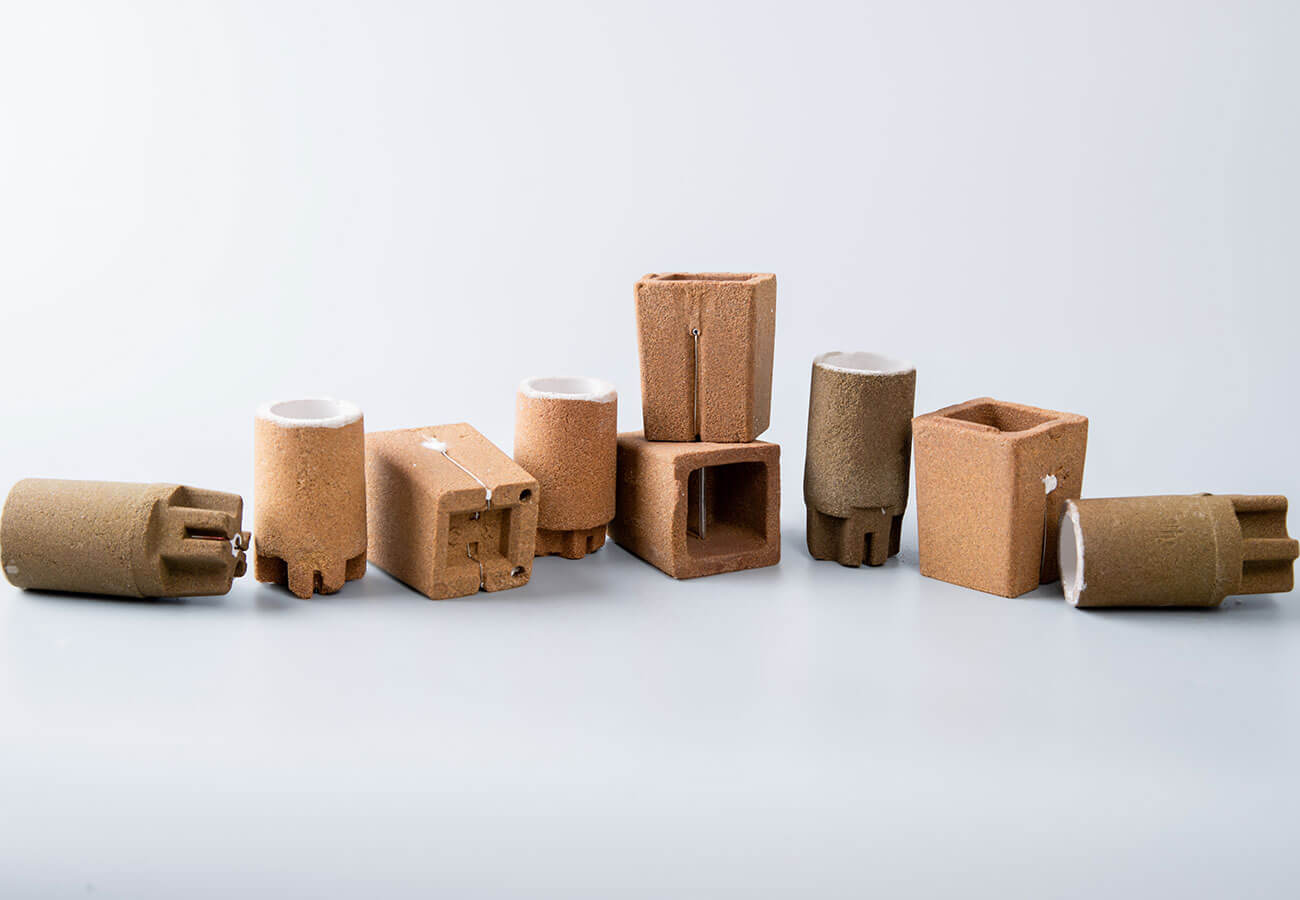
A thermal analysis cup is a small, disposable container made from refractory material—typically ceramic or silica sand with a binder. It holds a sample of molten metal while a thermocouple (usually Type K) measures the cooling curve as the metal solidifies. By analyzing key phase changes in the cooling curve, the instrument calculates carbon equivalent (CE), carbon content (C%), and silicon content (Si%).
The cup consists of several key components: the cup body (high-temperature resistant ceramic material), a high-precision thermocouple with a quartz protection tube for fast response, and connection wires that link to the thermal analysis instrument.
So what’s the product called? That depends on who you’re talking to and what they care about most.
Carbon Cup: Focus on What It Measures
Carbon cup is perhaps the most common name in the industry. The name comes from the product’s primary function: measuring carbon content in molten iron.
When you call it a “carbon cup,” you’re emphasizing that this is the tool used to determine carbon levels. That’s critical because carbon content directly affects the mechanical properties of cast iron—too much or too little carbon, and your castings won’t meet specification.
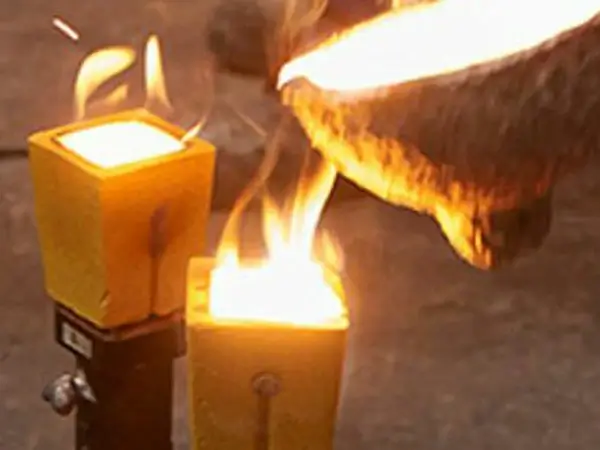
In practice, carbon cups are used with carbon-silicon analyzers (also called CE meters) to quickly analyze carbon content, silicon content, and carbon equivalent in molten iron–. The measurement takes only about three minutes, making it an essential tool for front-of-furnace quality control.
Sampling Cup: Focus on the Process
Sampling cup emphasizes the action—taking a sample. The name highlights that this is the cup used to obtain a sample of molten metal for analysis.
Think of it this way: in the foundry, you take samples of molten metal for various purposes—chemical analysis, temperature measurement, quality inspection. The “sampling cup” is the specific consumable used for thermal analysis sampling. It’s the vessel that collects the sample and enables the analysis to happen.
The sampling process is straightforward: the operator connects the thermal analysis cup to the carbon-silicon analyzer, uses a ceramic fiber sampling spoon to collect hot metal, and pours it into the cup. The instrument then quickly determines the composition.
Some suppliers—like SinterCast—offer premium sampling cups fabricated from stamped steel sheet with reusable thermocouples, though most foundries use the more common disposable sand cups.
CE Cup: Focus on the Result
CE cup (or C.E. cup) emphasizes the primary output: Carbon Equivalent (CE).
Carbon equivalent is a calculated value that combines the effects of carbon and silicon on solidification behavior. It’s one of the most important parameters for controlling casting quality. When you call it a “CE cup,” you’re highlighting that this is the tool used specifically for CE determination.
In the industry, you’ll often see “CE cup” used in technical contexts—product specifications, quality control documentation, and instrument manuals. It’s the term that resonates with metallurgists and quality engineers who focus on the numerical results of the analysis–.
Some suppliers offer different versions of CE cups—for example, Cup-CE without tellurium is used for carbon equivalent determination, while Cup-C with tellurium provides reliable data for reading CE, C, and Si.
What About “Thermal Analysis Cup”?
You might also encounter the term thermal analysis cup—and yes, that’s the same product too–.
In fact, “thermal analysis cup” is arguably the most technically accurate name. It describes the method (thermal analysis) rather than the input (sampling), the output (CE), or one specific parameter (carbon). It’s the umbrella term that encompasses all the others.
When you see product listings that say “carbon cup (also known as thermal analysis sample cup, pour sample cup),” or “thermal analysis cup (also called a sampling cup, carbon cup, or CE cup),” you’re looking at the same product, just described from different angles.
Why So Many Names?
The multiple names reflect the diverse perspectives of different stakeholders in the foundry industry:
| Name | Perspective | What It Emphasizes |
|---|---|---|
| Carbon Cup | Furnace operator | What it measures (carbon content) |
| Sampling Cup | Production manager | What it does (takes a sample) |
| CE Cup | Quality engineer | What result it delivers (carbon equivalent) |
| Thermal Analysis Cup | Technical specialist | How it works (thermal analysis method) |
It’s similar to how a single tool might be called a “hammer” by a carpenter, a “nail driver” by a DIY enthusiast, and a “percussion instrument” by a musician—all correct, just different ways of looking at the same thing.
Variations Within the Same Product Category
While carbon cup, sampling cup, and CE cup all refer to the same basic product type, there are important variations within this category that foundries should be aware of.
Round vs. Square
Thermal analysis cups come in both round and square shapes–. A study comparing the four different cup types found that “round and plain” and “square and tellurium” cups performed superiorly to the other combinations.
With Tellurium vs. Plain (Without Tellurium)
This is perhaps the most important distinction. Cups with tellurium promote white iron solidification, which makes the cooling curve easier to interpret. Plain cups (without tellurium) are used for carbon equivalent determination in specific applications.
The choice between these variations depends on your specific foundry application, the type of iron you’re producing, and your quality control requirements.
How to Choose the Right Term
When communicating with different audiences, choosing the right name matters:
-
Talking to furnace operators? Use “carbon cup”—they care about the carbon reading.
-
Talking to production managers? Use “sampling cup”—they care about the process efficiency.
-
Talking to quality engineers? Use “CE cup”—they care about the carbon equivalent result.
-
Writing a technical specification? Use “thermal analysis cup”—it’s the most precise and comprehensive term.
And when you’re selling these products, it’s best to use multiple names in your product descriptions so customers can find you regardless of what they call it. That’s why many suppliers list their products as “thermal analysis cup (carbon cup / sampling cup / CE cup)”.
Summary
| Question | Answer |
|---|---|
| Are carbon cup, sampling cup, and CE cup the same? | Yes—they all refer to the thermal analysis cup. |
| Why so many names? | Each name emphasizes a different aspect: what it measures (carbon), what it does (sampling), or what result it delivers (CE). |
| Which name should I use? | Use the term that your audience understands best—and use multiple terms in product listings for better searchability. |
| Are there variations? | Yes—round vs. square, with tellurium vs. plain. These are sub-categories within the same product family. |
The bottom line: Carbon cup, sampling cup, CE cup, and thermal analysis cup all describe the same essential consumable for front-of-furnace molten iron analysis. The name you choose depends on your perspective and your audience—but the product itself remains the same: a fast, reliable, and cost-effective tool for quality control in the foundry.