


If you’ve been reading our blog, you’re already familiar with ceramic foam filters and how they help clean molten metal before it enters the mold. But there’s another important consumable in modern foundries that deserves attention: thermal analysis cups (also called sampling cups or C.E. cups).
You may have seen them in your quality control lab or on the foundry floor. But what exactly do they do? And why do they matter for your casting quality?
This guide explains what thermal analysis cups are, how they work, and why they’re essential for consistent casting results.
What Is a Thermal Analysis Cup?
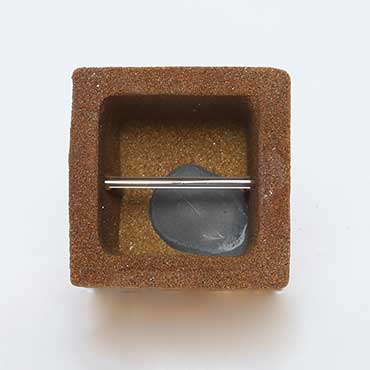
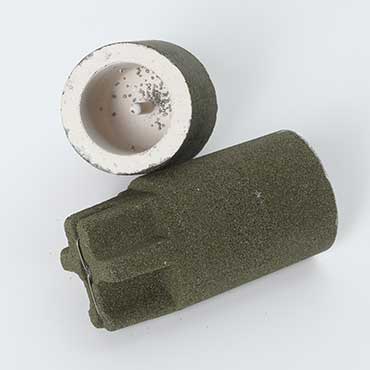
A thermal analysis cup is a small, disposable container made from refractory material (typically ceramic or silica sand with a binder) used to take a sample of molten metal for quality analysis.
The cup holds a sample of molten metal—usually iron or aluminum—while a thermocouple inserted into the cup measures the cooling curve as the metal solidifies.

Basic Components
| Component | Function |
|---|---|
| Cup body | Refractory material (ceramic, silica sand, etc.) that holds the molten metal sample |
| Thermocouple | Temperature sensor (typically Type K or Type R) inserted into the cup |
| Connection wires | Connect to the thermal analysis instrument (C.E. meter) |
| Sample cavity | Precision-molded interior shape that ensures consistent cooling |
Why Thermal Analysis Matters
When you cast metal, the final properties depend heavily on the metal’s composition and how it solidifies. Thermal analysis gives you real-time information about your melt:
| Information Provided | What It Tells You |
|---|---|
| Carbon Equivalent (CE) | The combined effect of carbon and silicon on solidification |
| Carbon content | Critical for gray and ductile iron properties |
| Silicon content | Affects graphite formation and matrix structure |
| Liquidus temperature | Where solidification begins |
| Eutectic temperature | Where graphite forms in cast iron |
| Cooling curve shape | Indicates nodularization quality in ductile iron |
In short: Without accurate thermal analysis, you’re pouring blind.
How It Works
Step 1: Sample Collection
A small amount of molten metal is taken from the ladle or furnace and poured into the sampling cup.
Step 2: Temperature Measurement
A thermocouple inserted into the cup continuously measures the temperature as the metal cools and solidifies.
Step 3: Cooling Curve Analysis
The thermal analysis instrument (C.E. meter) plots the cooling curve and identifies key phase changes:
-
Liquidus arrest — where primary phase (austenite or graphite) begins to form
-
Eutectic arrest — where the remaining liquid solidifies
-
Solidus — where solidification completes
Step 4: Composition Calculation
Based on the arrest temperatures, the instrument calculates carbon content, silicon content, and carbon equivalent value.
Types of Thermal Analysis Cups
Standard Cups for Gray Iron
| Feature | Details |
|---|---|
| Application | Gray iron casting |
| What it measures | Carbon equivalent, carbon, silicon, liquidus temperature |
| Typical shape | Cylindrical with thermocouple at bottom or side |
| Additives | Sometimes includes tellurium to stabilize carbide formation |
Cup Design Matters
The design of the sampling cup directly affects the accuracy of your results.
Key Design Factors
| Factor | Why It Matters |
|---|---|
| Wall thickness | Affects cooling rate; inconsistent thickness gives inconsistent results |
| Cup geometry | Controls how heat dissipates; influences the shape of the cooling curve |
| Thermocouple placement | Must be precisely positioned for consistent temperature readings |
| Material composition | Affects how quickly heat is transferred from the metal to the cup wall |
Check Your Instrument
Make sure the cup you choose is compatible with your thermal analysis instrument (C.E. meter). Most manufacturers have specific cup models for specific instruments.
Proper Use and Handling
Storage
| Requirement | Why |
|---|---|
| Dry environment | Moisture in the cup can cause gas defects in the sample |
| Room temperature | Extreme temperatures can affect the thermocouple or binder |
| Protected from damage | Cracks in the cup can cause leaks or inaccurate readings |
Before Pouring
-
Inspect the cup for cracks or damage
-
Check that the thermocouple is properly seated
-
Ensure connection wires are clean and secure
During Pouring
-
Fill the cup in one smooth pour
-
Avoid overfilling or splashing
-
Do not move the cup until the sample has fully solidified
After Testing
-
Dispose of the used cup properly
-
Do not reuse—cups are single-use consumables
Interpreting Results
While detailed interpretation requires training, here are basic guidelines:
Gray Iron
| Observation | Indication |
|---|---|
| High CE (>4.3) | Potential graphite flotation |
| Low CE (<3.8) | May require more carbon/silicon addition |
| Liquidus temperature too high | Low carbon content |
Ductile Iron
| Observation | Indication |
|---|---|
| Cooling curve shape | Nodularity quality (specific shape analysis) |
| Eutectic undercooling | Affects shrinkage tendency |
Common Questions
Q1: What’s the difference between a sampling cup and a filter?
A: They serve completely different purposes:
-
Sampling cup = quality control tool. It tests a small sample to verify your melt is correct.
-
Filter = production tool. It cleans the metal before it enters every casting.
You use a sampling cup before pouring to confirm your melt is right. Then you use filters during pouring to keep it clean.
Q2: How often should I use thermal analysis?
A: For consistent production, sample every ladle or at regular intervals. For jobbing foundries, sample each heat or when alloy additions are made.
Q3: Can I reuse a sampling cup?
A: No. Cups are single-use. The sample solidifies in the cup, and removing it would damage the cup and thermocouple.
Q4: What’s tellurium, and why is it sometimes added to cups?
A: Tellurium is added to some cups to stabilize the formation of cementite (white iron structure) during cooling, making it easier to interpret the cooling curve and calculate carbon content accurately.
Q5: How do I know if my cup results are accurate?
A: Consistency is key. If your results vary significantly from batch to batch, check:
-
Are you using cups from the same manufacturer?
-
Are cups stored properly?
-
Is your pouring technique consistent?
-
Is your instrument calibrated?
Summary
| Aspect | Key Point |
|---|---|
| What it is | Disposable cup with thermocouple for testing molten metal quality |
| What it measures | Carbon equivalent, carbon, silicon, cooling curve |
| Why it matters | Ensures melt composition is correct before pouring |
| Key factor | Consistent cup quality gives consistent results |
| Quality control tool | Essential for modern foundry operations |
Where to Get Thermal Analysis Cups
At SF-Foundry, we supply a complete range of foundry consumables. Our thermal analysis cups are manufactured with precision-molded geometries and consistent wall thickness to ensure reliable, repeatable results.
Related Products You May Need
Thermal analysis is just one part of foundry quality control. We also supply:
| Product | Purpose |
|---|---|
| Ceramic foam filters | Remove inclusions from molten metal |
| Honeycomb filters | Cost-effective filtration for iron and aluminum |
| Fiberglass mesh filters | Economical filtration for smaller castings |
| Riser sleeves | Improve feeding efficiency and casting yield |
| Pouring cups / Sprue cups | Control metal flow into the mold |
| Ceramic sampling spoons | Collect molten metal samples for analysis |
| Thermocouples | Temperature measurement for furnaces and ladles |
Whatever your foundry needs—from melt control to filtration to feeding—we’re here to help.
Need Help?
If you have questions about thermal analysis cups, filters, or any other foundry consumables, our technical team is ready to assist.
Contact us:
-
Email: info@sf-foundry.com
-
Technical Support: 8618636913699
-
Websites: www.sf-foundry.com