


When molten metal pours into a mold, it begins an invisible battle against a fundamental physical law: as it cools, it shrinks. Without intervention, this shrinkage creates voids that compromise casting integrity. This is where riser sleeves (also called feeders) perform their essential function.
But how exactly do these simple reservoirs of metal accomplish the complex task of compensating for solidification shrinkage? This article explores the mechanisms, physics, and engineering behind this critical casting process.
The Problem: Understanding Solidification Shrinkage
The Physical Reality of Shrinkage
Most metals are less dense in their liquid state than in their solid form . This means that as molten metal cools and transforms from liquid to solid, it occupies less volume. This volumetric contraction is not optional—it is a fundamental characteristic of metallic materials.
The shrinkage occurs in three distinct stages:
| Stage | Description | Contribution |
|---|---|---|
| Liquid contraction | Cooling from pouring temperature to liquidus temperature | ~1% for steel |
| Solidification shrinkage | Phase change from liquid to solid | ~3-4% for steel |
| Solid contraction | Cooling from solidus to room temperature | ~7% for steel |
While all three stages affect the final dimensions, it is the solidification shrinkage—the phase change itself—that creates the most immediate problem for casting integrity. During this stage, the metal is part liquid, part solid, and shrinkage creates voids that cannot be filled by the surrounding solid material.
The Consequence: Shrinkage Porosity
Without compensation, solidification shrinkage manifests as:
-
Macro-shrinkage: Large, concentrated cavities, often at thermal centers
-
Micro-shrinkage: Interconnected or sponge-like porosity distributed throughout thick sections
Both forms are unacceptable in most engineering applications, causing leakage in pressure-tight components, reduced mechanical properties, and machining surprises when apparently sound surfaces reveal internal voids.
The Fundamental Challenge
The challenge is timing. By the time the casting has fully solidified and shrinkage is complete, there is no way to add more metal. Compensation must happen during solidification, while the casting still has liquid pathways connected to external metal sources.
This is the problem risers solve—they remain liquid longer than the casting, providing metal precisely when and where it is needed.


The Solution: How Risers Compensate
The Reservoir Principle
At its simplest, a riser is a reservoir of molten metal attached to the casting . It contains more metal than the section it feeds and is positioned so that gravity (or atmospheric pressure) can deliver that metal to the solidifying casting.
Think of it as a backup water tank connected to a cooling engine. As the engine (casting) contracts, it draws fluid from the tank (riser) to maintain fullness.
The Timing Requirement
For this to work, one condition is absolutely essential: the riser must solidify after the casting. If the riser freezes first, it cannot provide liquid metal when the casting needs it. The casting would be left to shrink on its own, forming cavities.
This timing requirement drives all riser design decisions—size, shape, placement, and whether insulating or exothermic materials are needed.
The Path Requirement
Even with a still-liquid riser and a contracting casting, compensation requires an uninterrupted liquid pathway. The connection between riser and casting (called the neck or gate) must remain open throughout solidification. If this path freezes early, the riser becomes isolated—full of liquid metal but unable to deliver it to the starving casting.
This is why neck design is as critical as riser design itself. The neck must be large enough to stay open during feeding but small enough for easy removal after casting.
The Mechanism: The Physics of Feeding
Mass Feeding
In the early stages of solidification, when the casting is mostly liquid with some solid crystals forming, feeding occurs through mass feeding. The entire liquid mass moves as a fluid, flowing easily from riser into casting to compensate for initial contraction.
This stage requires minimal pressure—gravity alone is sufficient to move the liquid metal through open channels.
Interdendritic Feeding
As solidification progresses, the casting becomes a network of solid dendrites (tree-like crystals) with liquid metal trapped between them. At this stage, feeding requires liquid to flow through narrow, tortuous channels between dendrites—a process called interdendritic feeding.
This is where pressure becomes important. The riser must provide sufficient pressure to force liquid through these increasingly constricted passages. This pressure comes from:
-
Metallostatic head: The height of liquid metal in the riser
-
Atmospheric pressure: For risers designed to utilize it
-
Gas pressure: In specialized pressure risers
Burst Feeding
The final stage of feeding occurs when solidification is nearly complete, and isolated liquid pockets remain trapped within the solid network. These pockets solidify last, and their shrinkage creates the highest risk of microporosity.
At this stage, feeding is virtually impossible—the paths have closed. This is why the earlier feeding stages must be so effective, and why directional solidification toward the riser is critical.
The Role of Pressure Gradients
Throughout feeding, a pressure gradient exists between the riser and the solidification front. The riser, with its liquid metal and atmospheric connection, is at higher pressure. The solidification front, with metal contracting and pulling away, is at lower pressure. Metal flows from high to low pressure, following this gradient.
If the pressure at the solidification front drops too low, gases dissolved in the metal may come out of solution, forming gas porosity in addition to shrinkage porosity. This is why maintaining adequate feeding pressure is essential for both shrinkage prevention and gas porosity control.
Design Principles for Effective Compensation
The Modulus Rule
The most fundamental design principle is based on modulus—the ratio of volume to cooling surface area (V/A). According to Chvorinov’s Rule, solidification time is proportional to the square of the modulus.
For a riser to compensate effectively, its modulus must exceed the modulus of the casting section it feeds. Typical design practice calls for:
-
Riser modulus = 1.2 × casting modulus for general applications
-
Riser modulus = 1.5 × casting modulus for difficult-to-feed alloys or geometries
This ensures the riser remains liquid longer than the casting, maintaining feeding capability throughout solidification.
The Volume Rule
Modulus ensures proper timing, but the riser must also contain enough metal to supply the shrinkage volume. The required riser volume depends on:
-
Casting volume being fed
-
Shrinkage percentage of the alloy
-
Feeding efficiency of the riser (how much of its volume is usable)
Traditional sand risers have feeding efficiencies of only about 15%—meaning 85% of the metal in the riser is waste that must be cut off and remelted . Modern exothermic risers can achieve efficiencies up to 70% .
The Thermal Gradient Principle
Effective feeding requires a specific temperature pattern: the casting should be coolest at its extremities and hottest near the riser. This directional solidification ensures that:
-
Solidification progresses from the casting toward the riser
-
Liquid pathways remain open toward the riser until the end
-
The riser is the last region to solidify
This gradient can be engineered through:
-
Strategic riser placement
-
Use of chills in distant sections
-
Differential heating through exothermic materials
-
Insulation around risers
The Atmospheric Connection
For blind risers (those completely enclosed in the mold), a special design feature is essential: a connection to the atmosphere. This is typically achieved through a sharp recess or Williams core that creates a hot spot at the riser’s highest point.
This atmospheric connection serves two purposes:
-
Allows air to enter as metal is withdrawn, preventing vacuum formation
-
Ensures atmospheric pressure acts on the liquid metal, providing additional feeding force
Without this connection, a blind riser would be sealed by its own solidified skin, trapping any vacuum and stopping further feeding.
How Different Riser Types Compensate
Open Risers
Open risers extend to the top of the mold and are exposed to the atmosphere. They compensate through:
-
Gravity: The metallostatic head of liquid metal pushes downward
-
Atmospheric pressure: Acts on the exposed surface until it solidifies
-
Post-pouring interventions: Operators can add exothermic toppings or even additional hot metal
However, the open top also allows significant heat loss through radiation and convection, reducing the riser’s effective feeding time.
Blind Risers
Blind risers are completely enclosed in sand. They compensate through:
-
Slower cooling: Surrounding sand insulates the riser, extending liquid life
-
Atmospheric pressure: When properly designed with atmospheric connections
-
Placement flexibility: Can be positioned closer to hot spots, reducing feeding distance
Their feeding efficiency is approximately 30% higher than open risers .
Insulated Risers
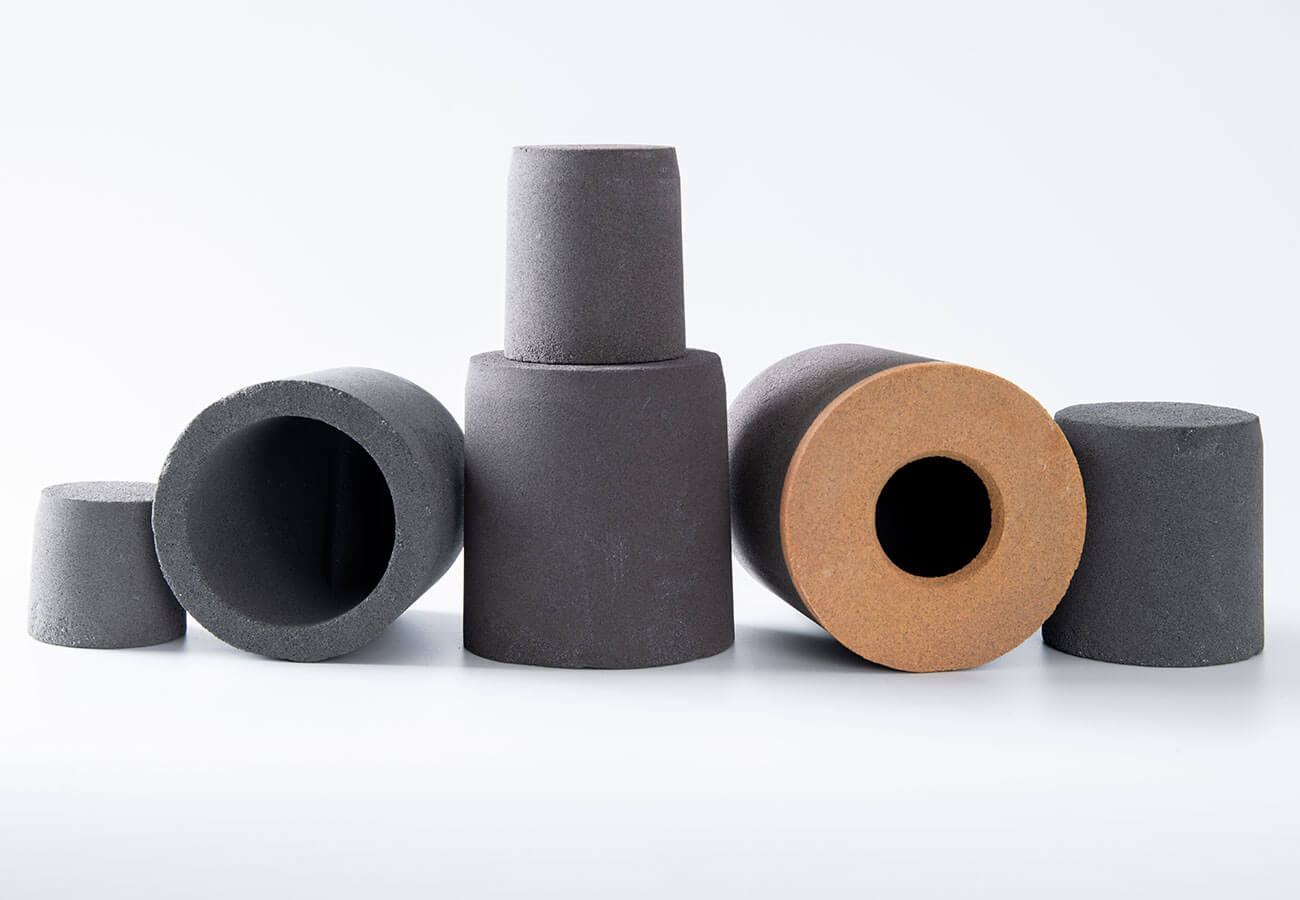
Insulated risers use sleeves of low-thermal-conductivity material (such as ceramic hollow spheres) to slow heat loss. This extends liquid life without increasing riser size, improving efficiency.
Exothermic Risers
Exothermic risers take compensation a step further. When molten metal enters, it triggers an aluminothermic reaction in the sleeve material, generating additional heat. This:
-
Significantly extends liquid life
-
Allows dramatic size reduction (mini-risers)
-
Achieves feeding efficiencies up to 70%
-
Enables feeding of difficult alloys and geometries
The exothermic reaction essentially “reheats” the riser from within, counteracting the natural cooling that would otherwise end feeding.
Compensation Across Different Alloys
Steel Castings
Steel has high shrinkage (3-4% during solidification) and high pouring temperatures. Compensation requires:
-
Large risers or high-efficiency exothermic sleeves
-
Short feeding distances (risers must be close)
-
Multiple risers for complex geometries
-
Careful attention to modulus requirements
Ductile Iron
Ductile iron presents a unique compensation scenario. During solidification, graphite formation causes expansion that partially offsets shrinkage . This “self-feeding” effect means:
-
Smaller risers may suffice
-
Blind risers are preferred to utilize internal pressure
-
Highly exothermic formulations combat specific defects like “fish-eye”
Gray Iron
Gray iron also benefits from graphitic expansion. In some cases, if the mold is rigid enough, gray iron castings can be produced without risers—the internal expansion completely compensates for shrinkage. However, this requires precise control and is not universal.
Aluminum Alloys
Aluminum alloys have high thermal conductivity and specific shrinkage characteristics. Compensation requires:
-
Attention to feeding distance limitations
-
Consideration of mold filling before solidification begins
-
Sometimes, specialized riser designs for thin sections
When Compensation Fails: Common Problems
Even with risers, compensation can fail. Understanding these failure modes helps in design:
| Problem | Cause | Result |
|---|---|---|
| Riser freezes first | Insufficient modulus | Shrinkage cavity in casting |
| Neck freezes early | Neck too small | Isolated riser, casting starved |
| Insufficient volume | Riser too small | Riser empties, casting still shrinks |
| No atmospheric connection | Blind riser sealed | Vacuum stops feeding |
| Poor placement | Riser too far from hot spot | Localized shrinkage at hot spot |
| Wrong alloy assumption | Overestimating self-feeding | Unexpected porosity |
Each failure mode has specific design remedies, highlighting the importance of comprehensive riser engineering.
Modern Tools for Compensation Design
Solidification Simulation
Software like MAGMASOFT®, NovaFlow&Solid®, and SOLIDCast allows engineers to:
-
Visualize temperature gradients during solidification
-
Predict where shrinkage will occur
-
Test riser designs virtually before cutting tooling
-
Optimize riser size, shape, and placement
One optimization study demonstrated increasing process yield from 63% to over 80% by downsizing risers—saving 100 pounds of metal per casting .
Thermal Analysis
Real-time thermal analysis of risers during solidification provides data on:
-
Cooling rates
-
Solidification progression
-
Effectiveness of insulating or exothermic materials
This information helps validate designs and improve future applications.
3D Printing for Novel Geometries
Recent research using 3D sand printing has enabled riser geometries previously impossible to manufacture. Spherical risers created through additive manufacturing provide up to 45% yield improvement and allow 77% reduction in riser neck diameter compared to traditional designs .
Conclusion: The Art and Science of Compensation
Risers compensate for solidification shrinkage through a carefully orchestrated combination of physics and engineering. They provide liquid metal exactly when needed, maintain pressure to drive feeding through narrowing channels, and remain liquid longer than the casting through careful modulus design and, increasingly, through advanced materials that generate their own heat.
The fundamental requirements are simple but exacting:
-
The riser must outlast the casting
-
The path must remain open
-
The volume must be sufficient
Meeting these requirements across different alloys, geometries, and casting processes is the art and science of riser design. When done correctly, the result is invisible—sound castings with no evidence of the shrinkage that would otherwise occur. When done poorly, the evidence is unmistakable—cavities, porosity, and scrap.
Modern foundries have unprecedented tools to get it right: simulation software that reveals the invisible, exothermic materials that defy cooling, and additive manufacturing that creates optimal geometries. But the fundamental principles remain those understood by the earliest foundrymen: the riser must be the last to freeze, and it must have enough metal to share.
Understanding these basics is the first step toward mastering the compensation that makes sound castings possible.
For assistance with riser design, selection of appropriate feeding systems, or optimization of your casting processes, contact our technical team.