


In the foundry, thermocouple protection tubes are often viewed as generic consumables. However, switching from a zinc alloy to an aluminum melting application isn’t just a change of metal—it’s a fundamental shift in the operating environment that demands a critical reevaluation of your tube material. The choice of material isn’t just important; it is decisive for reliability, accuracy, and cost.
Using the wrong tube in aluminum can lead to rapid, catastrophic failure, while in zinc, it may cause premature wear and unplanned downtime. This article delves into the distinct challenges posed by both metals and provides a clear framework for selecting the optimal protection tube.
Part 1: Understanding the Battlefield – Core Differences Between Al and Zn Melting
The selection process begins with understanding the fundamental properties and process demands of each metal.
| Parameter | Aluminum Alloy Melting | Zinc Alloy Melting |
|---|---|---|
| Typical Melting Range | 580°C – 750°C | 380°C – 450°C |
| Metal Chemical Activity | Extremely High. A strong reducing agent, readily reacts with oxides. | Relatively Low. More inert, less corrosive. |
| Primary Failure Mechanism | Chemical Corrosion/Penetration, Thermal Shock, Metal Adhesion. | Thermal Fatigue, Mechanical Wear/Impact. |
| Process Stresses | Fluxing, degassing, frequent alloy changes, higher superheat. | Rapid cycling, metal flow abrasion, steady holding. |
| Demand on Tube | Superior Chemical Inertness and Thermal Shock Resistance. | Excellent Thermal Fatigue Resistance and Mechanical Toughness. |
Part 2: Failure Analysis – How Tubes Fail Differently
In Aluminum Melts: A “Chemical War”
Failure is primarily driven by chemical attack.
Corrosion & Penetration: Molten aluminum reacts with most oxide ceramics (like alumina), penetrating grain boundaries and causing internal degradation.
Dross Buildup & Adhesion: Many ceramics are “wetted” by aluminum, leading to tenacious metal adherence. This uneven crust creates localized stress during temperature cycles, promoting cracking.
Thermal Shock: Higher temperatures and frequent process variations (charging, stirring) place significant thermal stress on the tube.
Conclusion for Al: The tube material must be inherently resistant to chemical attack by molten aluminum.
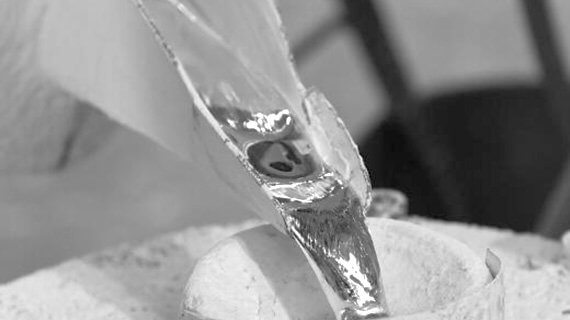
In Zinc Melts: A “Physical Wear” Battle
With lower temperatures, the threat shifts to physical and mechanical stresses.
Thermal Fatigue: The fast cycles of die casting subject tubes to high-frequency thermal cycling between bath and ambient temperatures, leading to crack initiation from fatigue.
Abrasion & Impact: Zinc’s fluidity causes constant surface abrasion from bath movement. Physical impact from ladles during metal transfer is also common.
Conclusion for Zn: The tube requires high toughness and thermal fatigue strength to endure cyclic stress, coupled with good wear resistance.
Part 3: Material Showdown – Ceramic Performance Comparison
Alumina Ceramics: A Cautionary Tale
In Zinc: A marginal, short-term choice. While hard, its brittleness makes it susceptible to crack propagation from thermal fatigue and impact.
In Aluminum: A poor choice. It is highly susceptible to wetting and rapid corrosive attack by aluminum, leading to very short service life and inaccurate readings.
Reaction-Bonded Silicon Nitride (RBSN): A Mid-Range Option
In Zinc: A good, cost-effective choice. Its improved thermal shock resistance and toughness over alumina better handle the cyclic environment.
In Aluminum: Better than alumina, but with limitations. Residual porosity and free silicon can allow slow metal penetration over extended periods, limiting ultimate lifespan in aggressive holds.
Gas-Pressure Sintered Silicon Nitride (GPS-Si₃N₄): The High-Performance Standard
In Zinc: The performance leader. Its exceptional fracture toughness and thermal shock resistance virtually eliminate thermal fatigue cracking, offering the longest, most predictable service life.
In Aluminum: The definitive solution. Its non-wetting, fully dense microstructure provides fundamental resistance to chemical attack and penetration. Despite a higher initial cost, it delivers the lowest total cost of ownership (TCO) through extended service life and process stability.
The Rule of Thumb: A tube that works acceptably in zinc may fail rapidly in aluminum. Conversely, a premium tube engineered for aluminum will provide outstanding, albeit possibly “over-engineered,” reliability in zinc.
Part 4: Selection Guide & actionable Advice
Selecting for Zinc Alloy Melting:
Priority: Thermal fatigue resistance and mechanical toughness.
Recommended Material: Reaction-Bonded Silicon Nitride (RBSN) for excellent value. For maximum uptime and stability, invest in Gas-Pressure Sintered Si₃N₄.
Avoid: Low-cost, low-toughness alumina tubes for critical applications.
Selecting for Aluminum Alloy Melting:
Priority: Corrosion and penetration resistance (non-wettability).
Uncompromising Choice: High-density, Gas-Pressure Sintered Silicon Nitride (GPS-Si₃N₄). This is the proven solution for achieving reliable, multi-year service life.
Strictly Avoid: Standard alumina tubes. The costs of frequent replacement, temperature inaccuracy, and potential metal contamination far outweigh the initial savings.
For Operations Melting Both Metals:
Implement a classified management strategy. Standardize on high-performance GPS-Si₃N₄ tubes from SF-Foundry for all aluminum lines. For zinc lines, you can opt for RBSN or standardize on GPS-Si₃N₄ for simplified inventory and guaranteed performance. This strategic approach maximizes component value and streamlines maintenance.
Conclusion
The material of your protection tube is a critical technical specification, dictated by the chemical nature of your molten metal and the physical demands of your process. For zinc, choose a material that wins the battle against fatigue; for aluminum, you need a material that wins the war against corrosion. Making the informed, correct choice is a direct investment in process stability, product quality, and minimized total operational cost.
About SF-Foundry: SF-Foundry provides advanced ceramic solutions, including Silicon Nitride Heater Protection Tubes and Riser Tubes, engineered specifically for the distinct challenges of aluminum and zinc processing environments.