


Frequent heater tube failure due to corrosion in aluminum melting furnaces is a major pain point for foundries. It leads to unplanned downtime, increased spare part costs, and can compromise bath temperature control, affecting metal quality and operational efficiency.
This article analyzes the root causes of corrosion and provides actionable strategies to significantly extend the service life of these critical components.
Understanding the Enemy: Mechanisms of Corrosion
In the harsh environment of an aluminum melt, tube degradation is rarely due to a single factor. It’s typically a combination of:
-
Chemical Attack: Molten aluminum and its alloying elements (like magnesium or silicon) are highly reactive. At operating temperatures, they can penetrate and react with the tube material—especially standard oxide ceramics—leading to grain boundary degradation and loss of structural integrity.
-
Electrochemical Corrosion: The presence of different mineral phases or impurities in the tube material can create micro-galvanic cells in the melt, accelerating localized dissolution. Salts from fluxes and dross compounds can intensify this process.
-
Thermal Shock & Erosion: Frequent charging, temperature cycling, and bath movement create severe thermal stress and mechanical abrasion. Materials with low thermal shock resistance develop micro-cracks, providing easy pathways for molten metal penetration and rapid internal failure.
Four Key Strategies for Prevention
A systematic approach combining material science, process control, and maintenance is essential.
Strategy 1: Upgrade the Core Material — Opt for High-Performance Silicon Nitride
This is the most fundamental and effective solution. Compared to traditional alumina ceramics, Silicon Nitride (Si₃N₄) offers revolutionary advantages:
-
Non-Wettability: Molten aluminum has significantly lower adhesion to Si₃N₄, drastically reducing metal sticking and penetration.
-
Superior Thermal Shock Resistance: Its high fracture toughness and low thermal expansion coefficient allow it to withstand rapid temperature fluctuations without cracking.
-
Excellent High-Temperature Strength: It maintains high hardness and mechanical strength at operating temperatures, resisting erosion from bath movement.
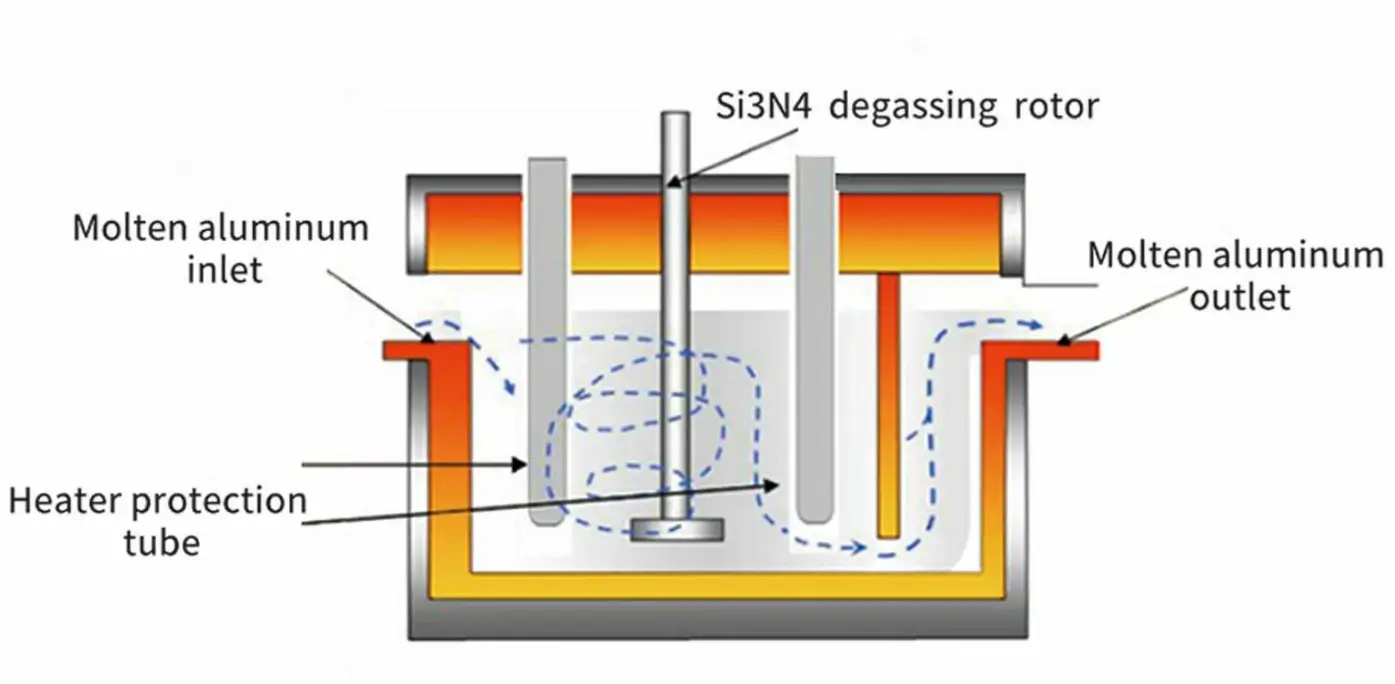
Key Selection Point: Ensure your silicon nitride tubes are manufactured via Gas Pressure Sintering (GPS). This process yields a near-theoretically dense material with minimal open porosity, essentially blocking the primary paths for corrosive attack. This is the core technology behind SF-Foundry’s Si₃N₄ heater protection tubes.
Strategy 2: Optimize Process Operations
-
Control Melt Temperature: Avoid unnecessary superheating. Corrosion rates increase exponentially with temperature.
-
Refine Charging and Stirring Practices: Perform these operations as gently as possible to minimize direct abrasion against the tubes.
-
Manage Charge Materials and Fluxes: Use clean, dry charge materials and carefully control the amount of aggressive fluxes (especially chloride salts) to reduce corrosive agents.
Strategy 3: Implement a Proactive Maintenance Regime
-
Schedule Regular Inspections: Visually check exposed sections of tubes for discoloration, deformation, buildup, or hairline cracks during routine furnace downtime.
-
Ensure Correct Installation: Install tubes with proper, even clamping to avoid stress concentrations. Ensure flange seals are tight to prevent air ingress or fume exposure that can cause localized attack.
-
Maintain Failure Logs: Record the installation date, operating conditions, and time-to-failure for each tube. This data is invaluable for analyzing mean time between failures (MTBF) and optimizing replacement schedules.
Strategy 4: Consider a Holistic System Upgrade
Corrosion protection works best as a system-wide approach. Key aluminum contact points beyond the heater tube—such as transfer troughs, launder systems, and riser tubes—endure similar harsh conditions. Upgrading the entire high-temperature aluminum contact system (including components like SF-Foundry’s Silicon Nitride Riser Tubes) to silicon nitride ensures consistent longevity and eliminates weak links that can cause unscheduled stops.
Case in Point: From Reactive Replacement to Proactive Management
A die-casting foundry specializing in automotive components struggled with alumina tube failures every 3-4 months. After a process audit, they implemented a combined strategy:
-
Upgraded critical temperature measurement points to high-density Silicon Nitride protection tubes from SF-Foundry.
-
Adjusted refining practices and tightened the operating temperature window.
-
Standardized on silicon nitride riser tubes for their associated metal transfer system to ensure material consistency throughout the flow path.
The result was an extension of average tube life to over 14 months and a correlated drop in related component failures, leading to an annual reduction in total maintenance costs of more than 35%.
Conclusion
Preventing heater tube corrosion is an achievable goal. The most impactful step is moving from materials that merely withstand corrosion to those that inherently resist it. By upgrading to high-performance silicon nitride ceramics and coupling them with optimized process and maintenance practices, you can transform tube corrosion from a persistent operational cost into a managed, predictable factor of reliability.
About SF-Foundry: SF-Foundry specializes in advanced ceramic solutions for the global aluminum and high-temperature processing industries. Our product range includes Silicon Nitride Heater Protection Tubes for extreme environments, as well as Silicon Nitride Riser Tubes, Thermocouple Sheaths, and related components—all manufactured via advanced Gas Pressure Sintering to help our clients solve core operational challenges.