


In the demanding world of iron and steel foundries, producing a casting that is geometrically correct is only half the battle. The true measure of success lies in its internal soundness—freedom from shrinkage cavities and porosity that can catastrophically weaken an otherwise perfect part. This is where feeding technology moves from a supplementary practice to the very core of metallurgical control.
Feeding is the science and engineering of managing solidification shrinkage. As molten iron or steel cools and transitions to a solid, its volume decreases. If this volumetric loss is not continuously compensated by a reservoir of liquid metal, internal voids form. At SF-Foundry, we have seen firsthand that advanced feeding systems are the most direct lever foundries have to improve yield, guarantee mechanical properties, and reduce costly scrap and rework. This article delves into the critical feeding technologies that modern iron and steel foundries must master.
The Foundational Principle: Directional Solidification
All effective feeding is built upon one core principle: Directional Solidification. This means the casting must be designed and cooled so that solidification progresses steadily from the furthest points and thinnest sections back toward the feeder heads (risers). The risers, being the last to solidify, act as liquid reservoirs that “feed” the casting, compensating for shrinkage.
Achieving this in complex iron and steel castings requires a holistic approach involving:
-
Casting Design: Modifying part geometry to eliminate isolated heavy sections (hot spots) that solidify last.
-
Chill Application: Strategically placing metal or graphite chills to accelerate cooling in specific areas, forcing solidification to progress toward the riser.
-
Gating Design: Positioning ingates to create a favorable temperature gradient.
-
Riser Technology: The focus of this article—employing advanced riser systems to maximize feeding efficiency.
Core Feeding Technologies: From Traditional to Advanced
Conventional Top Risers & Side Risers
These are the classic, open reservoirs of metal positioned above (top) or attached to the side of a casting. While simple, their efficiency is often low because they lose heat rapidly to the air and surrounding mold sand, solidifying before their job is complete. This necessitates oversized risers, which drastically reduce yield.
The Game Changer: Exothermic and Insulating Feeding Aids
This technology revolutionized feeding efficiency by actively managing the thermal conditions of the riser.
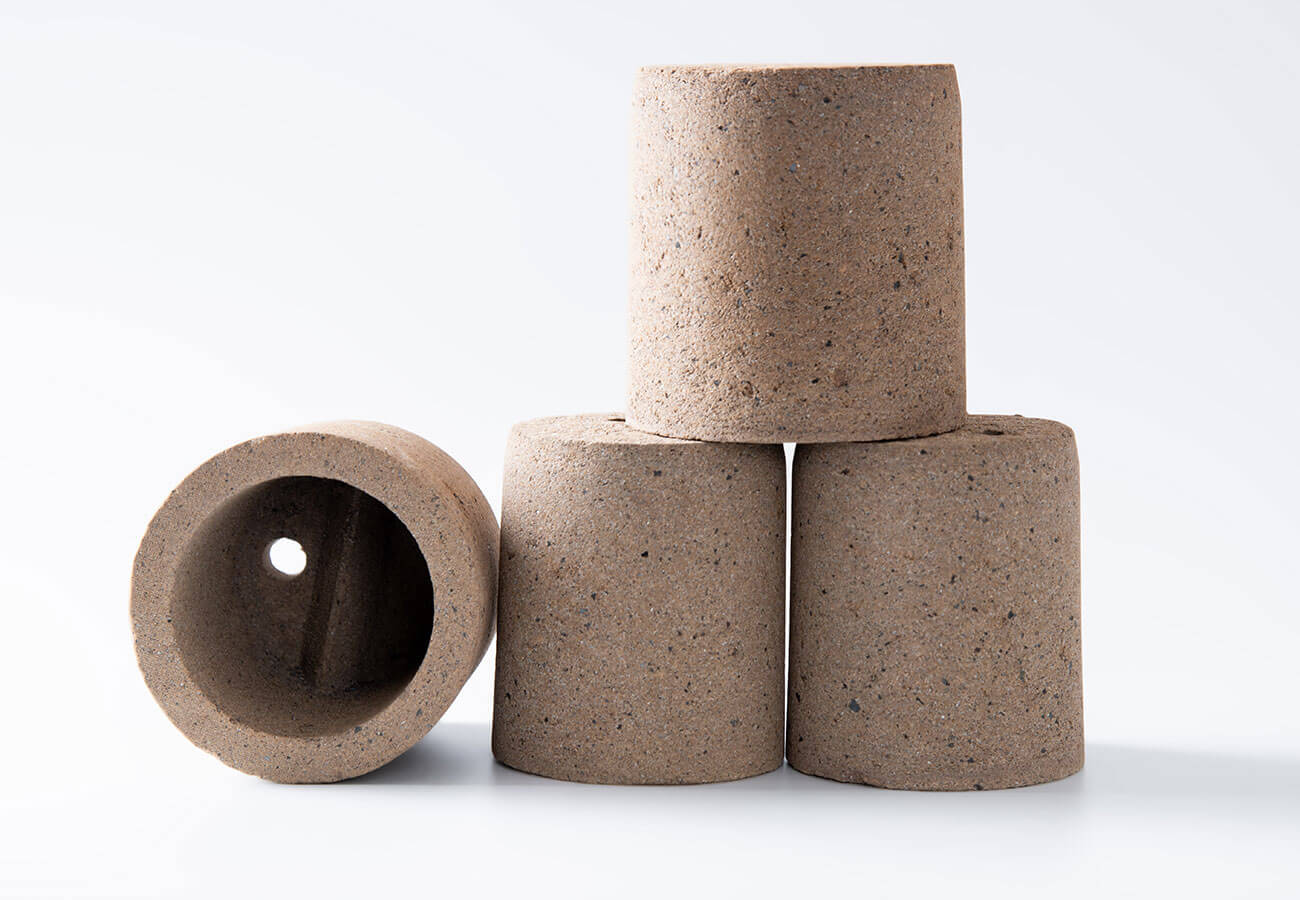
Exothermic Sleeves: These products contain a chemical mixture (often aluminum-based) that ignites upon contact with molten metal. The reaction releases intense heat, creating a super-hot riser that remains liquid significantly longer than the casting. This allows for smaller, more efficient risers and extends their effective feeding range.
Insulating Sleeves: Made from low-thermal-conductivity ceramic materials, these sleeves form a protective barrier that dramatically slows heat loss. They are highly effective and cleaner than exothermic options, often used for ductile iron and steel.
From our experience at SF-Foundry, the shift from conventional sand risers to these aided systems typically improves casting yield by 10-25%, translating directly into tons of saved metal and energy per year.
Pressurized Feeding with Blind Risers
Especially critical for steel casting, this technique involves designing the gating system so that the metal in the riser is under slight metallostatic pressure. When combined with an exothermic/insulating sleeve and a breaker core (a thin sand section that separates the riser from the casting), it creates a highly efficient “blind riser” that feeds effectively and is easy to remove.
Special Considerations for Iron vs. Steel
While the principles are shared, the distinct metallurgy of iron and steel demands tailored approaches.
Feeding Technology for Iron Foundries
Graphitization Expansion: A unique advantage with gray and ductile iron. As the iron solidifies, the precipitation of graphite crystals causes an internal expansion that can offset much of the shrinkage. Feeding systems must be designed to accommodate and utilize this expansion, often requiring less total feeding volume than steel.
Ductile Iron Challenge: The late-stage post-solidification shrinkage (micro-shrinkage) in ductile iron requires risers that stay active longer. Exothermic sleeves are often the preferred choice here.
Application Insight: We commonly see insulating sleeves paired with ductile iron for cleaner metal, while exothermic products are favored for heavy-section gray iron to combat severe shrinkage.
Feeding Technology for Steel Foundries
No Compensating Expansion: Steel undergoes only contraction during solidification, making it entirely dependent on external feeding. The demand on riser efficiency is therefore higher.
Hot Tearing Sensitivity: Poor feeding and incorrect solidification patterns can lead to hot tears (cracks) in steel, which are often irreparable. Precise thermal control via chills and efficient risers is critical.
High-Temperature Demands: Steel’s higher pouring temperature (1500-1650°C) requires feeding aids with superior refractoriness and thermal stability.
The Modern Edge: Simulation, Yield, and the SF-Foundry Partnership
Today’s leading foundries don’t guess—they simulate. Solidification simulation software (like MAGMASOFT, ProCAST, or NovaFlow) is indispensable. It allows engineers to virtually test riser placement, size, and type (insulating vs. exothermic) before making a single mold. This predictive power minimizes costly trial runs and maximizes yield from the start.
Our role at SF-Foundry is to be the material solutions partner in this high-tech ecosystem. We provide the proven, high-performance exothermic and insulating sleeves that the simulation software specifies. But our partnership goes deeper:
Integrated Filtration-Feeding Systems: We understand that clean metal is just as important as sound metal. We offer systems that combine our ceramic foam filters for inclusion removal with our optimized feeding sleeves, ensuring the liquid metal feeding the casting is free of detrimental oxides and slag.
Technical Collaboration: Our team works with foundry engineers to analyze defect patterns, recommend feeding system upgrades, and help implement solutions that turn feeding from a cost center into a yield-generating asset.
Conclusion
For iron and steel foundries, advanced feeding technology is not an optional extra; it is a fundamental requirement for profitability and quality in a competitive global market. Moving from traditional methods to engineered systems using insulating/exothermic aids and simulation-led design delivers undeniable returns: higher quality castings, significantly improved material yield, reduced energy consumption per ton of saleable casting, and lower cleaning room costs.
Is your feeding technology operating at its full potential?
Contact SF-Foundry today. Let our experts review your current methods and casting defects. Together, we can design and supply a feeding solution—from sleeves to integrated systems—that will solidify your reputation for quality and boost your bottom line.