


In the high-stakes world of metal casting, the difference between a component that performs flawlessly and one that fails prematurely often lies in the unseen. At SF-Foundry, we operate on a global scale as more than just a supplier; we are your dedicated engineering partner in achieving metallurgical excellence. Our mission is rooted in a fundamental truth: the integrity of a casting is irrevocably tied to the cleanliness of the molten metal. We specialize in developing and providing the advanced materials and technologies—from precision filtration to advanced treatment systems—that empower foundries to control what many consider uncontrollable: the insidious problem of non-metallic inclusions.
The Invisible Enemy: Understanding Non-Metallic Inclusions
Non-metallic inclusions (NMIs) are solid, non-metal compounds trapped within the metal matrix during the casting process. Think of them as “internal flaws” or “contaminants.” They are not part of the intended alloy chemistry but are instead unwanted byproducts of melting, pouring, and solidification.
From our experience collaborating with foundries worldwide, we categorize inclusions not just by their chemistry, but by their origin and impact, which dictates how we combat them.
Common Types and Their Sources:
Oxide Inclusions (e.g., Al₂O₃ in aluminum, SiO₂, MnO in steel)
- Source: The most common type. Formed when molten metal reacts with oxygen in the air during melting, transfer, and pouring. Even a seemingly smooth pour can create oxide films (“bifilms”) that fold into the metal.
- Appearance: Often appear as clustered, jagged, or string-like defects under a microscope. They are brittle and act as perfect crack initiators.
Slag or Dross Inclusions
- Source: A mixture of oxides, fluxes, and eroded refractory materials that float on the surface of the molten metal in the furnace or ladle. They are entrapped into the casting when the “skin” of slag is disturbed during pouring.
- Appearance: Irregular, often large pockets of non-metallic material, usually found in the upper sections or cope surfaces of a casting.
Refractory Inclusions
- Source: Particles that erode from furnace linings, ladles, or pouring systems (like ceramic filters or runners) and are carried into the melt.
- Appearance: Distinct, angular particles of the refractory material itself (e.g., fragments of alumina or silica).
Reaction Products
- Source: Formed from chemical reactions between the metal and mold/core sand (e.g., “sand burn-on” in iron castings) or from deoxidation practices in steelmaking (creating silicates or aluminates).
Why Are They So Detrimental?
NMIs are more than just cosmetic flaws. They are stress concentrators—tiny notches that dramatically reduce the metal’s:
-
Ductility and Toughness: Making the casting brittle and prone to sudden failure.
-
Fatigue Strength: Severely shortening the component’s life under cyclic loads.
-
Machinability: Causing rapid tool wear and poor surface finish during machining.
-
Pressure Tightness: Creating leak paths in valves, pumps, or hydraulic components.
The Proactive Defense: A Multi-Stage Strategy to Avoid Inclusions
Avoiding inclusions is not about a single action; it’s about implementing a defense-in-depth strategy across the entire melting and pouring process. At SF-Foundry, we structure this as a four-stage battle plan.
Stage 1: Minimize Formation (At the Source)
The best inclusion is the one never formed.
-
Practice Clean Melting: Use clean, dry charge materials. Melt under protective atmospheres or with covering fluxes where possible to minimize oxidation.
-
Control Pouring: Minimize the height of metal fall and avoid turbulent transfer. Using a preheated, ceramic-lined pouring ladle (like those we supply) reduces temperature loss and re-oxidation during transfer.
-
Proper Fluxing & Slag Management: Use appropriate fluxes to coalesce and remove oxides from the melt surface before pouring. Skim thoroughly and effectively.
Stage 2: Remove from the Melt (Active Treatment)
This is where targeted technology takes over.
-
Degassing/Deoxidation: For aluminum, degassing rotor with inert gas (Ar/N₂) is critical. The fine bubbles not only remove hydrogen but also float oxide particles to the surface. In steelmaking, proper deoxidation practice (e.g., with aluminum) forms clumpable oxide particles that can rise.
-
Flotation and Settling: Allowing sufficient holding time after treatment lets larger inclusions float up (to the slag) or settle down.
Stage 3: Prevent Entry into the Casting (The Final Gatekeeper)
This is the most critical and reliable stage, and the core of SF-Foundry’s solution offering.
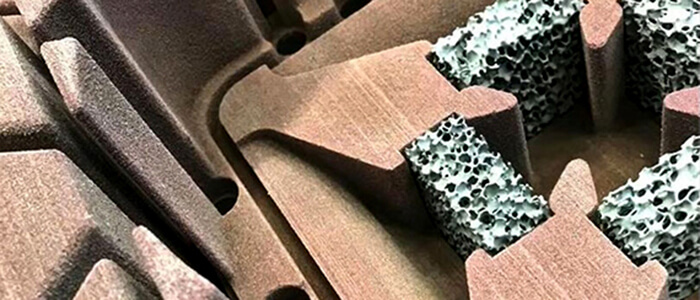
Ceramic Foam Filtration (CFF): This is the industry-proven, most effective method. A high-quality ceramic foam filter placed in the gating system acts as a physical sieve.
- How it works: As metal flows through the intricate, porous structure of the filter, inclusions are trapped via mechanisms of direct interception, cake filtration, and deep bed filtration.
- Our Role: We don’t just sell generic filters. We provide engineered solutions—selecting the optimal pore size (e.g., 10, 20, 30 PPI), ceramic composition (alumina, silicon carbide), and shape for your specific alloy, casting size, and quality requirement. For challenging applications, we develop custom-designed filter systems that integrate seamlessly into your runner.
Stage 4: Engineer the Process (Holistic Design)
-
Gating System Design: Design systems that promote laminar, quiescent flow to prevent re-entrainment of inclusions or slag. Filters should be placed in calm, pressurized zones of the runner.
-
Mold and Core Quality: Prevent sand erosion by using strong, well-coated molds and cores, as eroded sand becomes a major source of refractory inclusions.
The SF-Foundry Advantage: From Products to Process Partnership
What sets us apart is our commitment to integrating solutions and providing actionable expertise.
-
Synergistic Product Systems: We understand that filtration works best with clean metal. We offer complementary products like degassing rotors and ceramic thermocouple protection tubes to ensure the entire metal treatment process is protected.
-
Technical Diagnostics & Support: Share your inclusion problems with us. Our team can often analyze defect patterns and trace them back to a specific stage (formation, treatment, or filtration failure), recommending a targeted corrective action plan.
-
Global Reliability: We ensure a consistent, high-quality supply of these critical consumables, because a foundry’s production cannot halt due to a lack of reliable filters or treatment tools.
Conclusion: Quality is a Choice, Made Molten Ounce by Molten Ounce
In the end, achieving inclusion-free castings is a conscious choice to invest in process control and superior metallurgy. It requires moving from reactive inspection to proactive prevention. By implementing a staged defense—minimizing formation, actively treating the melt, and finally, employing precision-engineered ceramic foam filtration—foundries can dramatically elevate the reliability, performance, and value of their castings.
Are non-metallic inclusions impacting your yield and product performance?
Partner with SF-Foundry. Let us help you build your defense. Contact us today to discuss how our engineered filtration systems and metal treatment solutions can be tailored to cleanse your metal, strengthen your castings, and solidify your reputation for quality.