


In precision casting, the battle for quality is often won or lost at the interface between molten metal and the mold. Two of the most persistent and costly defects foundries face are Sand Inclusions and Metal Penetration. From our experience at SF-Foundry, these are not merely surface blemishes; they are symptoms of systemic process issues that compromise a casting’s structural integrity, increase machining costs, and lead to high rejection rates.
While distinct in appearance—sand inclusions manifest as embedded foreign particles, while metal penetration appears as a rough, fused metal-sand layer—they frequently share common root causes. Addressing them requires a holistic approach focused on mold integrity, metal quality, and process control. This guide draws on our global collaboration with foundries to outline actionable strategies for prevention, highlighting how the right materials and practices are indispensable.
What Are Sand Inclusions?
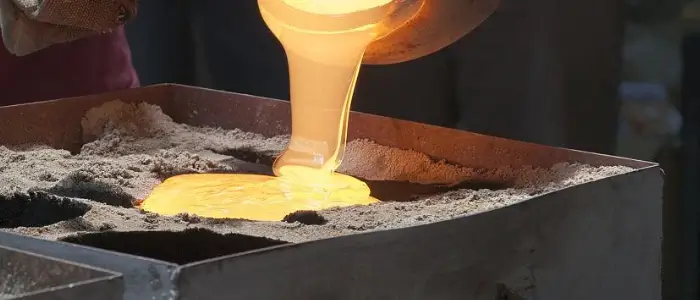
Sand inclusions occur when grains of molding sand break away from the mold or core surface and become entrapped in the solidifying metal. They appear as loose or clustered sand particles on or just beneath the casting surface, often requiring costly repair or causing scrap.
Root Causes and Mechanis
-
Inadequate Mold/Core Strength: Low binder strength, improper compaction, or incorrect sand mixture can create a weak mold surface that erodes easily.
-
Thermal and Mechanical Shock: The intense heat and velocity of the molten metal during pouring can thermally shock and physically scour the mold surface.
-
Turbulent Metal Flow: An improperly designed gating system that creates chaotic, high-velocity flow directly impinges on and washes away sand.
SF-Foundry’s Prevention Strategies
Preventing sand inclusions is a multi-front effort centered on protecting the mold boundary.
Fortify the Mold Wall with Premium Coatings:
The first line of defense is a robust, well-applied mold or core coating. A high-quality refractory coating acts as a sacrificial, thermally resistant barrier. It must have:
- Excellent Adhesion to prevent peeling.
- High Refractoriness to withstand metal temperature.
- Sufficient Permeability to allow gases to escape.
From our experience, the method of application (spraying, dipping, brushing) and consistent coating thickness are as critical as the coating quality itself.
Engineer for Laminar Flow:
Redesigning the gating system to ensure quiet, laminar filling is transformative. Techniques include:
- Using choke gates or tapered sprues to control speed.
- Employing runner extensions and wells to trap slag and initial turbulent flow before it enters the cavity.
- Strategic placement of ceramic filters (discussed below) to calm the stream.
Optimize Sand and Binder Systems:
Ensure your base sand has the correct grain size and distribution (AFS fineness number), and that binder ratios are optimized for both green strength and collapsibility.
What Is Metal Penetration?
Metal penetration is a surface defect where molten metal invades the gaps between sand grains, creating a rough, alloyed layer that is difficult to remove. It results in a finish that appears “spiky” or “fused,” often leading to excessive cleaning and machining.
Root Causes and Mechanism
-
High Metal Penetration Pressure: This can be static (from metallostatic head pressure) or dynamic (from pouring velocity). High pressure forces metal into sand interstices.
-
Oversized Sand Grain Pores: Sand with too coarse a grain size or a wide grain distribution creates large pores that metal can easily enter.
-
High Pouring Temperature: Excessively hot metal remains fluid longer, has lower surface tension, and is more chemically reactive, all of which increase penetration tendency.
SF-Foundry’s Prevention Strategies
Combating metal penetration focuses on creating an impermeable, refractory barrier and managing process parameters.
Create a Dense, Refractory Surface Barrier:
This is where a high-quality mold coating proves its worth again. A coating with very fine refractory particles (like zircon) fills the surface pores of the sand, creating a smooth, non-wettable layer that metal cannot penetrate.
- Key Insight: The coating’s “sag resistance” is vital—it must not crack or peel under heat, which would create direct pathways for metal.
Refine Sand Granularity and Compaction:
Using a finer base sand and ensuring uniform, high-density compaction reduces pore size at the mold surface, physically blocking metal entry.
Control Process Parameters:
- Minimize Pouring Temperature: Use the lowest temperature that ensures complete filling to reduce fluidity and reactivity.
- Reduce Metallostatic Pressure: Design the casting orientation and gating to minimize the necessary height of the sprue.
Integrated Solutions from SF-Foundry
At SF-Foundry, we view mold integrity holistically. Our products are engineered to work in concert, providing a unified defense system.
1. Advanced Filtration for Cleaner, Calmer Metal
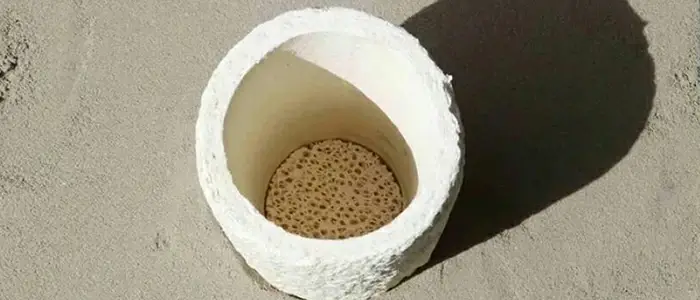
A Ceramic Foam Filter (CFF) placed in the gating system is a dual-purpose tool. It not only removes inclusions that could seed erosion but, crucially, it also promotes laminar, non-erosive flow into the mold cavity. This directly reduces the mechanical scrubbing force that causes both sand wash and penetration initiation.
2. Precision Engineered Coatings and Binders
We supply refractory coatings formulated for specific alloys and sand types, ensuring optimal barrier performance. Similarly, our expertise extends to binder systems that deliver the right balance of surface strength and thermal stability to withstand the initial thermal shock of pouring.
3. Process Diagnostics and Partnership
Often, the solution lies in fine-tuning the interaction between material and method. We partner with foundries to analyze defect patterns, recommend integrated solutions—from the right filter pore size to coating application parameters—and help implement a controlled process.
Conclusion: Building a Proactive Quality Culture
Preventing sand inclusions and metal penetration is not about a single silver bullet. It is about building a robust, controlled process centered on:
- Protecting the Mold with strong, well-coated surfaces.
- Taming the Metal through filtration and laminar flow design.
- Controlling the Variables of temperature, pressure, and sand quality.
By adopting this integrated approach, foundries can move from defect correction to defect prevention, achieving significantly higher yields, lower finishing costs, and superior casting quality.